


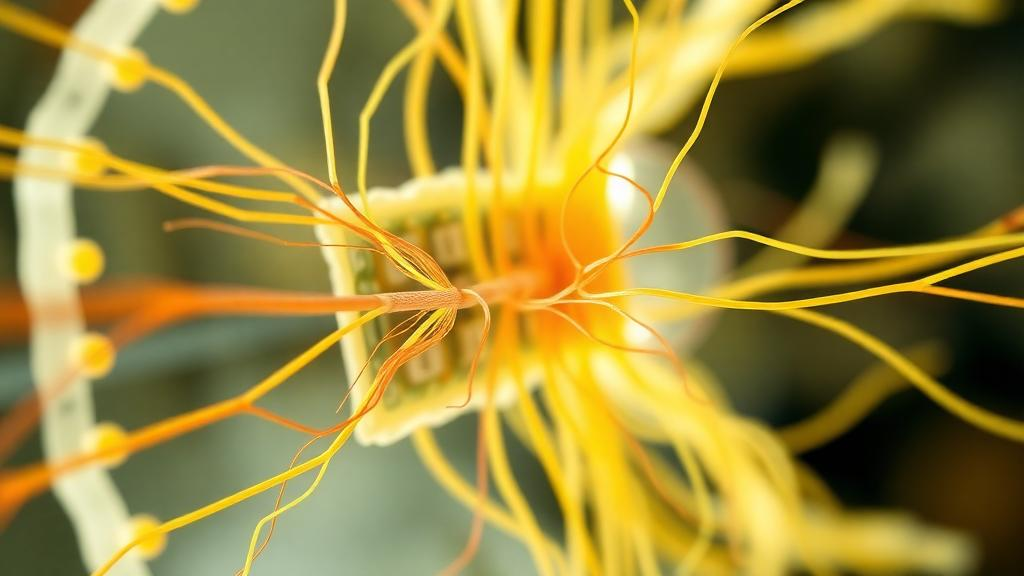
Few structures in biology are as deceptively simple in appearance and as staggeringly complex in operation as the motile cilium. These hair-like appendages, protruding from the surfaces of countless cells in the human body and throughout the living world, beat rhythmically to propel sperm through fluid, sweep mucus and debris out of the airways, and circulate cerebrospinal fluid through the brain ventricles. At the heart of every one of these movements lies a molecular engine of extraordinary sophistication: arrays of dynein motor proteins that grip and slide along microtubule tracks, converting chemical energy into the coordinated bending waves that define ciliary motion. A new review published in Cellular and Molecular Life Sciences by Yusuke Kondo and Stephen M. King of the University of Connecticut Health Center brings together the rapidly expanding body of knowledge on how these motors are regulated, and it paints a picture of a machine governed not by a single switch but by an intricate, multi-layered network of interacting control axes.
The scale of the machinery involved is worth pausing to appreciate. Dyneins are among the largest motor proteins known in nature, with complete assemblies approaching two megadaltons in mass. Each motor is built around one or more heavy chains, which contain the ATP-hydrolyzing engine and the microtubule-binding stalk, and these cores are decorated with a constellation of intermediate chains, light chains, and associated regulatory proteins. In the ciliary axoneme, the cylindrical scaffold of microtubule doublets that gives the organelle its structure, hundreds of these motors are arrayed in precise, repeating patterns along the length of each doublet. When motors on one side of the axoneme activate, they slide the adjacent doublet toward the cilium tip, and because the doublets are cross-linked by elastic connectors, this sliding is converted into bending. The alternating activity of motors on opposite sides of the axoneme produces the characteristic back-and-forth beat.
What the review by Kondo and King makes clear is that this mechanical cycle is only the beginning of the story. The parameters of the ciliary beat, including its frequency, its amplitude, and the precise shape of the waveform it traces through space, are not fixed properties of the machine. Instead, they are subject to a remarkable diversity of signaling inputs that allow cells to adjust ciliary output in real time in response to changing environmental conditions. This plasticity is not a curiosity; it is essential to physiology. Airway cilia must increase their beat frequency when faced with irritants or pathogens. Sperm must modulate their swimming pattern as they navigate the female reproductive tract and respond to chemical gradients. In simple organisms such as the green alga Chlamydomonas, cilia, called flagella in that context, must react within milliseconds to changes in light and mechanical load to steer the cell toward favorable conditions.
One of the central themes the authors develop is that dynein regulation operates at multiple levels simultaneously, and that understanding ciliary behavior requires understanding how these levels are integrated. The first level involves interactions within individual dynein molecules. The heavy chain motor domain is itself allosterically regulated: the position of its linker arm, the state of its ATPase cycle, and the engagement of its microtubule-binding stalk are all coordinated through long-range conformational communication within the protein. Adjacent to these intrinsic mechanisms, the non-catalytic domains of the heavy chain and the associated intermediate and light chains provide docking sites for regulatory factors that can alter motor activity. Some light chains, for example, have been shown to modulate the motor’s response to calcium or to participate in redox-sensitive pathways, meaning that even the smallest components of the assembly can have outsized effects on function.
The second level of regulation involves interactions between neighboring dyneins along the axoneme. Ciliary beating is not simply the sum of independent motors firing on their own schedules. Instead, regions of dynein activity travel along the cilium in organized waves, a phenomenon that requires communication between motors at different positions. Mechanical feedback plays a crucial role here: the curvature and sliding velocity of the axoneme at any given point influence which motors are active at that moment, creating a self-organizing system in which the mechanical state of the organelle shapes its own chemical activity. This coupling between mechanics and motor chemistry is what allows the traveling waves of bending to emerge from what would otherwise be a chaotic collection of independent enzymes. The review emphasizes that this mechanochemical feedback is a fundamental organizing principle of ciliary motility, one that theoretical models have increasingly captured but that experimental dissection continues to reveal in greater detail.
External signaling inputs add yet another layer of control. Calcium ions are among the best-characterized regulators of ciliary waveform. Changes in intraciliary calcium concentration, whether arising from mechanosensitive channels or from voltage-gated channels responding to membrane potential, can dramatically alter the shape of the beat, converting a symmetric beat into an asymmetric one that steers the cell. The molecular targets of calcium within the axoneme include calcium-binding proteins associated with the dynein arms as well as components of the central apparatus, and the review discusses how these targets translate a simple ionic signal into a complex change in motor coordination. Viscous load represents a complementary input: the resistance the cilium encounters as it moves through fluid feeds back onto the motors, and dyneins respond to this load in ways that help maintain productive beating across a range of external conditions.
Perhaps the most striking examples of environmental coupling come from organisms in which cilia respond directly to light. In Chlamydomonas, a dedicated blue light sensor has been found associated with the flagellar apparatus, allowing the photosensitive alga to modulate its motility in direct response to illumination. This photoreceptor-based pathway represents an extreme case of a general principle: cilia are not autonomous oscillators sealed off from the cell, but rather integrators of information arriving from multiple sensory modalities. The redox state of the cilium provides another such channel. Oxidative conditions can modify specific cysteine residues and alter the activity of redox-sensitive proteins within the axoneme, and the review highlights evidence that ciliary redox state functions as a genuine regulatory axis rather than a passive consequence of cellular metabolism.
Beyond these reversible signaling mechanisms, dynein motors are subject to an extensive repertoire of post-translational modifications. Phosphorylation is the most extensively studied, with kinases both inside and outside the cilium capable of altering motor assembly, activity, and beat parameters. But the review also draws attention to less widely appreciated modifications, including methylation and N-terminal acetylation, which often occur at sub-stoichiometric levels, meaning that only a fraction of the target molecules carry the mark at any given time. This partial modification raises intriguing questions about how such sparse chemical changes can produce coherent functional effects. The authors suggest that sub-stoichiometric modifications may act on specific subsets of dyneins within the axoneme, or that they may tune the probability of certain motor states rather than switching them deterministically, providing a fine-grained layer of control that complements the more dramatic effects of calcium and mechanical feedback.
The concept that emerges from synthesizing all of these mechanisms is that of integrated regulatory axes. No single input acts in isolation. Calcium signaling interacts with phosphorylation pathways. Mechanical load influences the accessibility of regulatory sites. Redox state modulates the sensitivity of motors to other signals. The result is a control network in which the final beat parameters reflect the weighted integration of many concurrent inputs, each of which can be adjusted independently by the cell. This architecture confers both robustness and flexibility: the cilium can maintain productive motility even when one regulatory channel is disrupted, yet it can also execute rapid, precise changes in behavior when conditions demand it. For organisms ranging from algae to humans, this integrative capacity is what makes motile cilia such versatile and successful biological machines.
The clinical significance of this regulatory complexity is difficult to overstate. Defects in dynein assembly or regulation underlie a family of inherited disorders known as primary ciliary dyskinesia, characterized by chronic respiratory infections, situs abnormalities, and infertility. Understanding how the many regulatory axes converge on dynein function may eventually illuminate why certain mutations produce such variable clinical presentations, and may point toward therapeutic strategies that target regulatory pathways rather than the motor core itself. As Kondo and King’s review demonstrates, the era of viewing dynein as a simple sliding engine has given way to a far richer picture, one in which a two-megadalton molecular machine listens simultaneously to calcium, light, mechanical force, redox chemistry, and a chorus of covalent modifications, and translates that cacophony of signals into the elegant, life-sustaining rhythm of the ciliary beat.
Subject of Research: Regulatory mechanisms controlling dynein motor protein activity in the motile ciliary axoneme
Article Title: Integrated regulatory axes controlling dynein motors in the ciliary axoneme
Article References: Kondo, Y., & King, S. M. (2026). Integrated regulatory axes controlling dynein motors in the ciliary axoneme. Cellular and Molecular Life Sciences. https://doi.org/10.1007/s00018-026-06397-6
Image Credits: AI Generated
DOI: 10.1007/s00018-026-06397-6
Keywords: dynein, cilia, flagella, axoneme, motor proteins, calcium signaling, redox regulation, phosphorylation, mechanochemistry, post-translational modification, ciliary beating, primary ciliary dyskinesia
Cite Scienmag News
Drew Townsend. (October 5, 2026). Inside the cilium: how dynein motors are tuned by a web of regulatory signals. Scienmag. https://scienmag.com/inside-the-cilium-how-dynein-motors-are-tuned-by-a-web-of-regulatory-signals/
Drew Townsend. "Inside the cilium: how dynein motors are tuned by a web of regulatory signals." Scienmag, 5 October 2026, https://scienmag.com/inside-the-cilium-how-dynein-motors-are-tuned-by-a-web-of-regulatory-signals/. Accessed 5 October 2026.
Drew Townsend. "Inside the cilium: how dynein motors are tuned by a web of regulatory signals." Scienmag. October 5, 2026. https://scienmag.com/inside-the-cilium-how-dynein-motors-are-tuned-by-a-web-of-regulatory-signals/


