


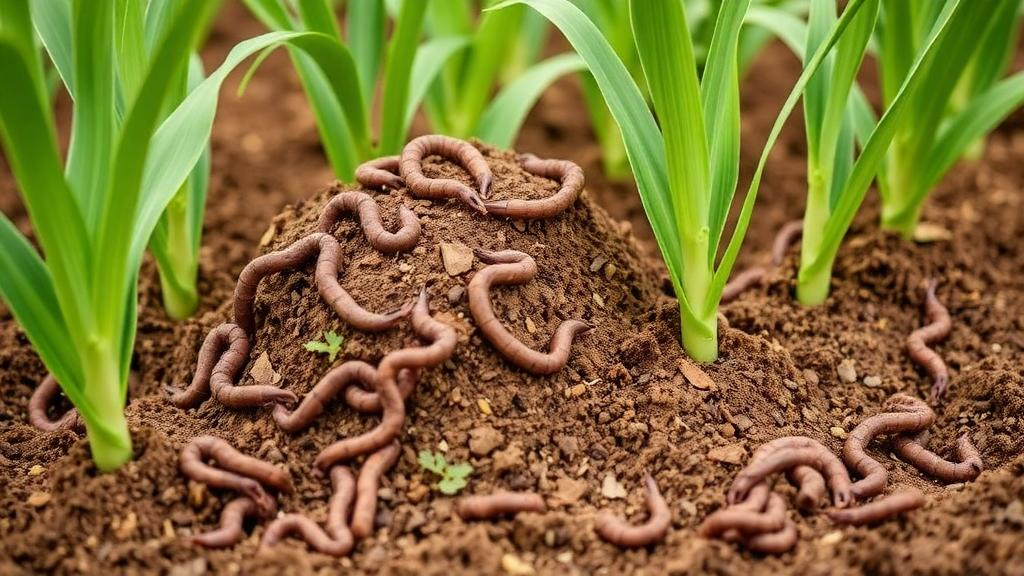
Maize farmers across the intensively cultivated cereal belts of Asia and Africa have long faced an uncomfortable trade-off: the mineral fertilizers that keep their yields high are slowly draining the life from their soils. A new field study from the western Himalayan region of India offers a carefully quantified way out of that dilemma, showing that a quarter of the standard mineral nitrogen, phosphorus and potassium dose can be replaced with vermicompost and a bacterial duo without sacrificing grain, profit, or the biological engine of the soil itself. The work, published in the journal Discover Soil, was carried out by researchers at CSK Himachal Pradesh Agricultural University in Palampur and provides some of the most complete evidence yet that integrated nutrient management can work as a genuine fertilizer-saving strategy rather than a compromise.
The experiment took place at Palampur in Kangra district, at an elevation of roughly 1,290 metres, on a silty clay loam Alfisol classified as Typic Hapludalf. The starting soil was acidic, with a pH of 5.63, moderate organic carbon of 7.89 grams per kilogram, and available nitrogen, phosphorus and potassium of 255.2, 17.5 and 188.6 kilograms per hectare respectively. Rainfall during the June-to-October 2022 maize season totalled an abundant 1,847.4 millimetres, and the crop was grown entirely rainfed with no supplemental irrigation. The researchers sowed the maize variety Kanchan at 20 kilograms of seed per hectare and applied the recommended fertilizer dose of 120:60:40 kilograms of nitrogen, phosphorus pentoxide and potassium oxide per hectare through urea, single superphosphate and muriate of potash, splitting the nitrogen between a basal application and two top-dressings at knee-high and pre-tasselling stages.
What made the trial distinctive was its nine-treatment structure, arranged in a randomized block design with three replications, which pitted full, moderate and reduced mineral fertilizer levels against combinations of farmyard manure, vermicompost and a mixed inoculant of Azotobacter and Bacillus species. The organic amendments differed meaningfully in composition: vermicompost carried 1.27 percent nitrogen on a dry-matter basis against 0.89 percent in farmyard manure, along with somewhat higher phosphorus. The bioinoculants, obtained from the university’s Department of Organic Agriculture and Natural Farming, were mixed into the organic amendment before field application, a practical delivery method that farmers could replicate. The central question was how much mineral fertilizer could be trimmed while still sustaining yield, nutrient uptake, soil fertility and economic returns in a system where cation exchange capacity, microbial biomass and enzyme activity jointly govern fertilizer efficiency.
The answer, at least under these conditions, was 25 percent. The treatment combining 75 percent of the recommended NPK with 5 tonnes of vermicompost per hectare and the Azotobacter-Bacillus consortium produced the highest observed grain yield of 40.8 quintals per hectare and stover yield of 62.5 quintals per hectare. Compared with the conventional full-fertilizer control, that represents a 34.4 percent increase in grain yield, a figure that will catch the attention of any agronomist who has watched yield stagnate under fertilizer-only regimes. Total nutrient uptake told the same story: the leading treatment accumulated 121.0 kilograms of nitrogen, 31.3 kilograms of phosphorus and 92.2 kilograms of potassium per hectare, increases of 36.6, 78.9 and 53.4 percent respectively over sole mineral fertilization. Grain protein and ash content also peaked under the integrated packages, reflecting the tighter coupling between nutrient supply and grain filling.
Importantly, the researchers were careful about their statistics. The vermicompost-based treatment did not differ significantly from its farmyard manure counterpart at 75 percent NPK for most measured responses; the two formed a single leading statistical group across yield components, nutrient uptake and most soil indicators. Available soil potassium was the only variable that separated them significantly, favouring the vermicompost package. This nuance matters because it means farmers with ready access to either amendment have viable options, with the choice potentially driven by local availability and price rather than by a fixed agronomic hierarchy. The study also showed that the integration cannot be reduced to a single ingredient: the responses reflect the combined effect of fertilizer level, amendment type and inoculation within each package, and the trial design did not isolate the bioinoculant effect factorially.
The soil story may prove even more consequential than the yield numbers. Post-harvest measurements revealed that the integrated treatments lowered bulk density, improved water-holding capacity, and raised soil organic carbon to 8.48 grams per kilogram under the leading treatment. Microbial biomass carbon reached 112 milligrams per kilogram and dehydrogenase activity 4.4 micrograms of triphenyl formazan per gram per hour, gains of 32.9 and 51.7 percent respectively over the full-fertilizer control. Dehydrogenase activity is a particularly telling metric because it quantifies the oxidative metabolism of living microbial communities rather than a static chemical pool, so its sharp rise signals a genuine reactivation of the soil’s biological machinery. DTPA-extractable iron, manganese, zinc and copper also peaked under the integrated treatments, linking micronutrient availability to the broader fertility response.
To understand whether these individual improvements were connected, the team turned to principal component analysis of the post-harvest soil indicators. Two components explained 93.40 percent of the total variance, with the first alone accounting for 85.45 percent. That dominant axis aligned water-holding capacity, organic carbon, available nitrogen and phosphorus, micronutrients and microbial biomass carbon, while bulk density loaded in the opposite direction. The correlation matrix confirmed strong positive associations among organic carbon, available nutrients, micronutrients and the biological indicators, and consistent negative associations between bulk density and nearly every fertility measure. Soil pH, by contrast, barely moved, remaining in a narrow and statistically non-significant range of 5.6 to 5.7 across treatments. The authors interpret this covariance structure as evidence that the response to integrated nutrient management was functionally integrated across physical, chemical and biological domains, driven by enhanced nutrient buffering and biologically mediated nutrient cycling rather than by nutrient addition alone.
Economics added a final, pragmatic dimension. The vermicompost-based package generated gross returns of 99,340 rupees per hectare, equivalent to about 1,264 US dollars, net returns of 59,722 rupees per hectare, and an economic efficiency of 567.66 rupees per hectare per day, the highest of any treatment. Yet the conventional full-fertilizer control retained the best benefit-cost ratio and return per rupee invested simply because its input costs were lower. This distinction is crucial for policy: the integrated package delivered the strongest productivity and soil outcomes, but only when yield gains were large enough to offset the additional expense of amendments and inoculants. At 50 percent NPK, that equation failed. The heavily reduced treatments improved several soil and biological indicators relative to the control but could not sustain comparable nutrient acquisition or profitability, demonstrating that organic and microbial inputs require an adequate mineral backbone to function.
The study’s conclusions are deliberately bounded. The findings come from a single season at a single site in an acidic Himalayan Alfisol, and the authors state plainly that wider recommendation requires multi-season and multi-location validation of nutrient-recovery efficiency, residual fertility, inoculant persistence, carbon stabilization and direct greenhouse-gas emissions, which were not measured here. Even so, the message is a significant one for a world grappling with fertilizer price volatility and widespread soil degradation. Fertilizer reduction, the authors argue, should not be approached as a simple decrease in mineral input but as a redesign of nutrient supply through mineral, organic and biological integration. Where vermicompost is available, pairing 75 percent of the standard NPK dose with the Azotobacter-Bacillus consortium offers a practical, economically defensible template for growing more maize while rebuilding the soil that makes future harvests possible.
Subject of Research: Integrated nutrient management combining vermicompost, Azotobacter-Bacillus inoculation and reduced mineral NPK for sustainable maize production
Article Title: Vermicompost-assisted Azotobacter and Bacillus inoculation enables partial substitution of mineral NPK and improves maize yield, nutrient uptake, soil fertility, and biological activity
Article References: Bahman, M., Singh, D., Venkateswarlu, M., Sankhyan, N. K., Thakur, P., & Kumari, S. (2026). Vermicompost-assisted Azotobacter and Bacillus inoculation enables partial substitution of mineral NPK and improves maize yield, nutrient uptake, soil fertility, and biological activity. Discover Soil, 3(1), Article 176. https://doi.org/10.1007/s44378-026-00336-4
Image Credits: AI Generated
DOI: 10.1007/s44378-026-00336-4
Keywords: maize, integrated nutrient management, vermicompost, Azotobacter, Bacillus, NPK fertilizer, soil fertility, microbial biomass carbon, dehydrogenase activity, nutrient uptake, Alfisol, sustainable agriculture
Cite Scienmag News
Alan Morgan. (October 5, 2026). Worm-Compost and Bacteria Team Up to Cut Maize Fertilizer Use by a Quarter. Scienmag. https://scienmag.com/worm-compost-and-bacteria-team-up-to-cut-maize-fertilizer-use-by-a-quarter/
Alan Morgan. "Worm-Compost and Bacteria Team Up to Cut Maize Fertilizer Use by a Quarter." Scienmag, 5 October 2026, https://scienmag.com/worm-compost-and-bacteria-team-up-to-cut-maize-fertilizer-use-by-a-quarter/. Accessed 5 October 2026.
Alan Morgan. "Worm-Compost and Bacteria Team Up to Cut Maize Fertilizer Use by a Quarter." Scienmag. October 5, 2026. https://scienmag.com/worm-compost-and-bacteria-team-up-to-cut-maize-fertilizer-use-by-a-quarter/


