


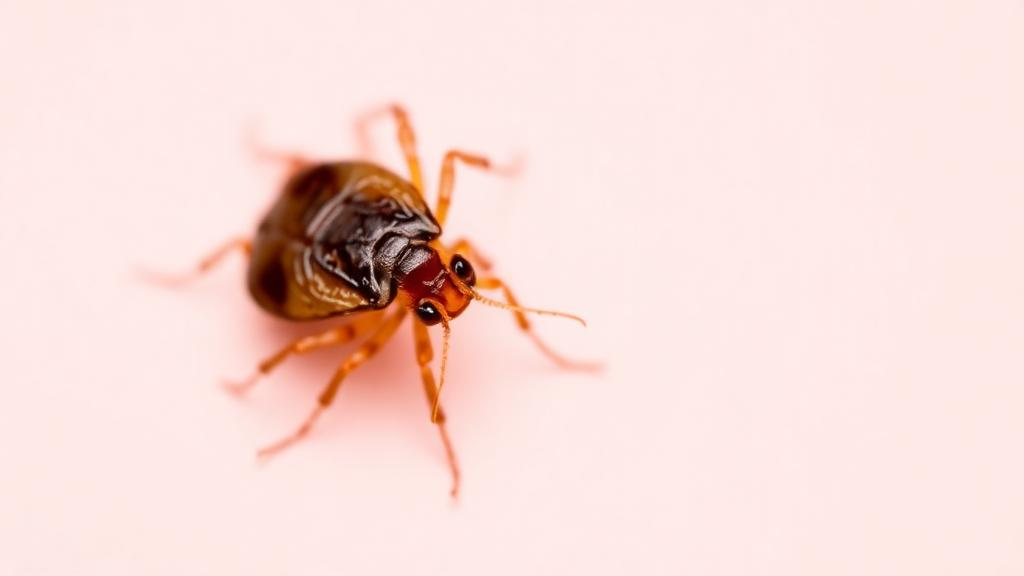
Head lice are such a familiar feature of childhood that they are often dismissed as a minor nuisance, nothing more than an itchy inconvenience that sends children home from school with a note to their parents. But a new study from eastern Thailand suggests that the tiny parasites crawling through schoolchildren’s hair may be quietly evolving into something considerably harder to control. Researchers screening nearly a thousand pupils in Chonburi Province found that one in five children carried head lice, and that many of the insects collected from their scalps carried genetic mutations long associated with resistance to the most widely used over-the-counter treatments. The findings, published in the journal Parasites & Vectors, add Thailand to the growing list of countries where the standard chemical arsenal against Pediculus humanus capitis may be losing its potency.
The research team, led by Tongjit Thanchomnang of Mahasarakham University together with colleagues at Burapha University and the University of Lincoln, screened 960 schoolchildren attending five public schools in urban and rural areas of Chonburi Province between May and July 2024. The overall prevalence of pediculosis, the medical term for head louse infestation, came out at 20.42 percent, with a 95 percent confidence interval of 17.91 to 23.11 percent. That figure masks a striking geographic pattern: infestation was markedly more common in rural schools than in urban ones. The study was approved by the Institutional Review Board of Burapha University, and written informed consent was obtained from parents or legal guardians before any child took part, with age-appropriate assent from the children themselves.
Beyond the headline prevalence number, the team used logistic regression to identify which characteristics of the children were statistically associated with carrying lice. Four factors stood out: sex, school level, hair length, and a reported history of pediculicide use, meaning the use of chemical lice treatments. The association with reported pediculicide use is perhaps the most intriguing of the four, because it hints at a self-reinforcing cycle in which children who have been treated remain infested, either because the treatment failed or because reinfection occurred quickly, prompting yet more rounds of chemical exposure. The authors are careful to frame these as epidemiological associations rather than proof of causation, but the pattern is consistent with what happens in populations where the parasites are no longer reliably killed by the standard drugs.
To understand what was happening at the molecular level, the researchers collected lice from infested children and first confirmed their identity. Every sample examined was morphologically identified as Pediculus humanus capitis, the head louse, and analysis of the mitochondrial cytochrome c oxidase subunit 1 gene, known as cox1, placed the insects in mitochondrial clades A or C. These clades describe the deep maternal lineages of head lice and are used by researchers worldwide to track louse populations. Clade A is the most widespread lineage globally, while clade C has a more patchy distribution, and finding both in the same school settings gives a snapshot of the genetic diversity circulating among Thai schoolchildren.
The heart of the study, however, lies in its exploratory search for knockdown resistance mutations, commonly abbreviated as kdr. These mutations occur in the gene encoding the voltage-sensitive sodium channel, or VSSC, a protein in the nerve cell membranes of insects that is the primary molecular target of pyrethroid insecticides. Pyrethroids, the synthetic compounds modeled on natural chrysanthemum-derived toxins, work by binding to this channel and holding it open, paralyzing and killing the insect. Permethrin, the pyrethroid most commonly formulated against head lice, depends entirely on this mechanism. When specific amino acid substitutions appear in the sodium channel protein, the insecticide binds less effectively, the insect survives exposure, and the mutation spreads through the population under the relentless selection pressure of repeated treatments.
Two such mutations are the classic markers of pyrethroid resistance in head lice: T917I, in which the amino acid threonine at position 917 of the channel protein is replaced by isoleucine, and L920F, in which leucine at position 920 is replaced by phenylalanine. Using polymerase chain reaction and sequencing on a stratified subsample of the collected lice, the researchers detected these resistance-associated mutations in the Thai lice populations. More significantly, they identified homozygous resistant genotypes, in which an individual louse carries two copies of the resistance-associated allele, one inherited from each parent. These homozygous resistant individuals, the genotype most strongly linked to survival after pyrethroid exposure, were found in lice collected from four of the sampled schools, indicating that the resistance-associated variants are not isolated curiosities but established features of the local louse populations.
Perhaps the most sobering detail is that resistance-associated genotypes were detected among lice collected from children both with and without reported histories of permethrin treatment. This suggests that the resistant insects are circulating through the school community regardless of whether an individual child has been directly exposed to the drug, carried from head to head by the close contact that defines childhood social life. A louse carrying resistance mutations does not need its host to have used permethrin; it simply needs to have descended from a lineage that survived such exposure somewhere in the local population. In this way, individual treatment decisions ripple outward, shaping the genetic composition of parasites that infest the entire community.
The authors are appropriately measured in their interpretation. Molecular detection of kdr mutations, they emphasize, cannot by itself confirm clinical resistance, because genotype is a proxy rather than a direct measurement of treatment failure. Confirming that permethrin genuinely fails in the clinic would require phenotypic validation studies, in which live lice are exposed to controlled doses of the insecticide and their survival is measured. Nevertheless, the molecular findings carry weight in context. Previous studies in the region have reported incomplete treatment outcomes following permethrin use, and the new genetic data provide a plausible mechanism for those observations. The convergence of epidemiological signals, molecular markers, and prior clinical reports paints a coherent picture of a treatment under strain.
What makes this study particularly valuable is its integrated design. Rather than measuring prevalence, risk factors, and molecular resistance in separate investigations, the team combined all three within the same school settings, allowing a direct link to be drawn between the children experiencing infestations and the genetic character of the lice infesting them. This kind of joined-up surveillance is exactly what public health authorities need when deciding how to respond. If resistance mutations are present, simply recommending more frequent permethrin applications may be futile or even counterproductive, intensifying the selection pressure that drives resistance further. Alternative non-pyrethroid therapies exist, and the study’s ethical protocol already reflected this reality: when treatment failure was suspected, alternative non-pyrethroid treatments were recommended in consultation with local healthcare professionals.
The broader implications extend well beyond Chonburi Province. Pyrethroid resistance in head lice has now been documented across multiple continents, and each new geographic confirmation reinforces the case for coordinated management approaches rather than ad hoc, drug-by-drug responses. The researchers call for continued molecular surveillance, phenotypic validation studies, and future evaluation of coordinated management strategies in endemic settings. For the millions of families worldwide who reach for a permethrin shampoo at the first sign of lice, the message is that the era of assuming the first bottle will work is drawing to a close. Head lice remain a common and treatable condition, but treating them effectively in the twenty-first century increasingly requires knowing what the local lice look like, genetically speaking, before choosing the weapon. Studies like this one provide exactly that knowledge, and they suggest that in eastern Thailand, the lice have already adapted to the old playbook.
Subject of Research: Head louse infestation prevalence and knockdown resistance mutations in schoolchildren in eastern Thailand
Article Title: High prevalence of pediculosis, associated factors, and exploratory detection of the knockdown resistance mutations in head lice from school settings in Chonburi Province, eastern Thailand
Article References: Thanchomnang, T., Gordon, C. N., Krittanan, P., Yangthaworn, K., Thetkathuek, A., Clegg, S. R., Mano, C., & Yingklang, M. (2026). High prevalence of pediculosis, associated factors, and exploratory detection of the knockdown resistance mutations in head lice from school settings in Chonburi Province, eastern Thailand. Parasites & Vectors, 19(1), Article 391. https://doi.org/10.1186/s13071-026-07672-y
Image Credits: AI Generated
DOI: 10.1186/s13071-026-07672-y
Keywords: head lice, pediculosis, kdr mutations, pyrethroid resistance, permethrin, schoolchildren, Thailand, molecular surveillance, voltage-sensitive sodium channel, cox1, public health, Parasites & Vectors
Cite Scienmag News
Drew Townsend. (October 5, 2026). Head Lice in Thai Schools Carry Mutations Linked to Pyrethroid Resistance. Scienmag. https://scienmag.com/head-lice-in-thai-schools-carry-mutations-linked-to-pyrethroid-resistance/
Drew Townsend. "Head Lice in Thai Schools Carry Mutations Linked to Pyrethroid Resistance." Scienmag, 5 October 2026, https://scienmag.com/head-lice-in-thai-schools-carry-mutations-linked-to-pyrethroid-resistance/. Accessed 5 October 2026.
Drew Townsend. "Head Lice in Thai Schools Carry Mutations Linked to Pyrethroid Resistance." Scienmag. October 5, 2026. https://scienmag.com/head-lice-in-thai-schools-carry-mutations-linked-to-pyrethroid-resistance/


