


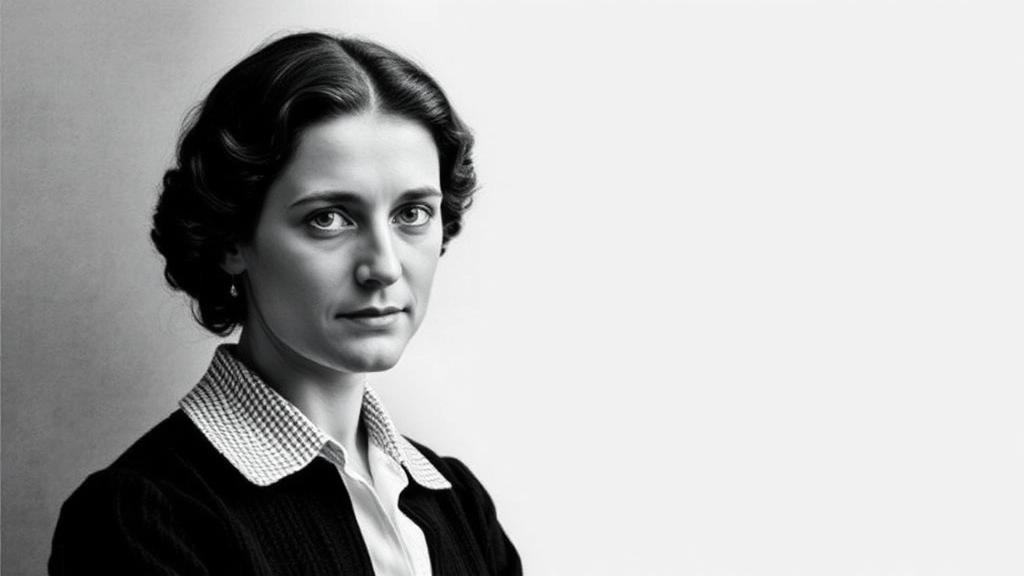
In the crowded history of early twentieth-century neurology, the names that survive in eponyms are usually those of men. Yet one of the most elegant clinical descriptions of a hereditary neurological disorder came from a woman whose name is now largely confined to a single hyphenated syndrome. Gabrielle Lévy, born in 1886 and dead at just forty-eight in 1934, was a French neurologist whose collaboration with Gustave Roussy produced one of the classic papers of clinical genetics before the era of molecular medicine. A new historical account published in the Journal of Neurology, part of the journal’s long-running Pioneers in Neurology series, revisits her life and scientific legacy, and in doing so restores a crucial figure to the story of how clinicians learned to read families the way later geneticists would read chromosomes.
The centerpiece of Lévy’s reputation is a 1926 paper published in the Revue Neurologique, co-authored with Roussy, under a title that translates as Seven cases of a particular familial disease: gait disturbances, clubfeet and generalized tendon areflexia, with, incidentally, slight clumsiness of the hands. The seven patients, drawn from a single family, displayed a striking and reproducible combination of features. They walked with difficulty, a problem the authors captured in the term dystasia, and they had congenital or early-onset deformities of the feet. Most tellingly, their tendon reflexes were absent throughout, even though the clinical picture was far milder than that of the better-known hereditary ataxia of Friedreich, with which it was immediately compared.
The disorder they described became known as Roussy-Lévy syndrome, and its definition was a triumph of careful phenotyping. At a time when the tools of neurology were the hammer, the tuning fork, the ophthalmoscope and the clinical eye, Lévy and Roussy recognized that a syndrome could be defined by a constellation of signs rather than by any single finding. The combination of areflexia, pes cavus and other foot deformities, distal weakness and an essentially static or slowly progressive course distinguished their patients from those with Friedreich’s ataxia, who typically show pyramidal signs, scoliosis and cardiomyopathy, and from other hereditary neuropathies described in the same era. The 1926 paper stands as an early exercise in what would now be called genotype-phenotype correlation, conducted entirely at the bedside.
Lévy did not stop at description. In 1934, the year of her death, she and Roussy published a follow-up paper on hereditary areflexic dystasia framed as a contribution to the study of the genesis of familial diseases and their kinship with one another. That subtitle matters. The authors were explicitly wrestling with the question of how related clinical entities fit together, whether the syndrome they had described was a disease in its own right, a fruste or abortive form of Friedreich’s ataxia, or part of a broader family of hereditary degenerations. This was a conceptual debate that ran through French neurology of the period, and the 1933 paper by Darré, Mollaret and Landowski, which asked directly whether Roussy-Lévy disease was merely a mild form of Friedreich’s disease using labyrinthine and chronaxie examinations, shows how contested the boundaries remained.
The question was not settled for decades, and the eventual answer vindicated the distinctness of the syndrome in a way neither Lévy nor her contemporaries could have imagined. In 1956, Joseph Lapresle traced and re-examined four of the seven original patients, thirty years after the first publication, confirming the persistence of the phenotype and the remarkable stability of the clinical picture across the decades. Then, in 1973, Lapresle and Salisachs reported a finding that moved the debate from the clinic to the laboratory: a nerve biopsy specimen from one of the original cases of Roussy-Lévy disease showed onion bulb formations, the whorled proliferations of Schwann cell processes that are the pathological signature of a demyelinating and remyelinating hereditary neuropathy. The syndrome was, at its core, a disease of the peripheral nerves.
The molecular coda arrived at the end of the twentieth century. In 1998, Auer-Grumbach and colleagues demonstrated that the Roussy-Lévy syndrome is a phenotypic variant of Charcot-Marie-Tooth disease type 1A, associated with the characteristic duplication on chromosome 17p11.2 that underlies the commonest form of hereditary motor and sensory neuropathy. A year later, Planté-Bordeneuve and colleagues, in a paper pointedly titled The Roussy-Lévy family: from the original description to the gene, closed the loop by studying the descendants of the original kindred and confirming the genetic diagnosis. A clinical picture sketched in 1926 from seven patients and a family tree had been anchored, seventy-three years later, to a specific segment of the human genome.
That trajectory, from bedside description to chromosomal duplication, is precisely why historians of neuroscience find Lévy worth recovering. Her work illustrates how the great nosological debates of interwar neurology, over whether syndromes were separate diseases or variants of one another, were resolved not by better rhetoric but by accumulated follow-up data and, eventually, by molecular genetics. The Roussy-Lévy syndrome is now understood as part of the demyelinating Charcot-Marie-Tooth spectrum, yet its recognition as a distinct phenotype in 1926 helped clinicians for decades to counsel families, predict prognosis and distinguish patients whose disease would remain relatively static from those facing the progressive disability of Friedreich’s ataxia.
Lévy’s scientific range extended beyond hereditary neuropathy. In 1925 she published a monograph on the late manifestations of epidemic encephalitis, the prolonged and delayed forms of the disease that swept Europe in the wake of the First World War and left many patients with parkinsonian and other sequelae years after the acute infection. The work places her among the clinicians who grappled with encephalitis lethargica, one of the great unsolved puzzles of the era, and shows a career that engaged with both the degenerative and the infectious frontiers of neurology. Contemporaries remembered her within the vibrant Parisian school that included figures such as Jean Lhermitte, and the historical literature, notably Peter Koehler’s 2018 study of Lévy and the Roussy-Lévy syndrome in the Journal of the History of the Neurosciences, has begun to piece together the details of her short but productive career.
Her early death in 1934, at the age of forty-eight, cut short a career that had already produced two landmark papers on hereditary areflexic dystasia and a substantial monograph on post-encephalitic disease. It also helps explain why her name faded. Eponyms tend to attach to those who survive to promote, extend and defend their syndromes, and Lévy had no such opportunity. The new biographical account, written by Carlos Alvarado-De la Hoz, Andres Felipe Cardenas-Cruz and Alba Lucia Marentes-Cubillos, neurologists at the Hospital Universitario San Ignacio and the Pontificia Universidad Javeriana in Bogotá, forms part of a deliberate effort by the Journal of Neurology to document the pioneers whose contributions underpin modern practice, and it appeared in volume 273 of the journal as article number 601.
For a modern readership, the story carries a broader lesson about how medicine accumulates knowledge. The seven patients described in 1926 were examined with none of the instruments that would eventually explain their condition, yet the precision of the original observation was good enough that a biopsy in 1973 and a gene study in 1999 could be anchored to those very cases. Clinical description, often dismissed as the antiquarian wing of neuroscience, proved to be durable data. Gabrielle Lévy’s legacy is a reminder that the careful documentation of a single family, done well, can outlast the career and even the life of the observer, and that some of the most consequential figures in the history of the neurosciences are those whose names survive only in the hyphen of a syndrome they never lived to see explained.
Subject of Research: Historical biography of neurologist Gabrielle Lévy and the Roussy-Lévy syndrome
Article Title: Gabrielle Lévy (1886–1934)
Article References: Alvarado-De la Hoz, C., Cardenas-Cruz, A. F., & Marentes-Cubillos, A. L. (2026). Gabrielle Lévy (1886–1934). Journal of Neurology, 273(10), Article 601. https://doi.org/10.1007/s00415-026-14135-y
Image Credits: AI Generated
DOI: 10.1007/s00415-026-14135-y
Keywords: Gabrielle Lévy, Roussy-Lévy syndrome, hereditary areflexic dystasia, Charcot-Marie-Tooth disease, Friedreich's ataxia, neurology history, hereditary neuropathy, peripheral nerve, genetics, Pioneers in Neurology, Journal of Neurology, medical eponyms
Cite Scienmag News
Juliet Wilcox. (October 4, 2026). Gabrielle Lévy: The Forgotten Neurologist Who Described a Hereditary Syndrome. Scienmag. https://scienmag.com/gabrielle-levy-the-forgotten-neurologist-who-described-a-hereditary-syndrome/
Juliet Wilcox. "Gabrielle Lévy: The Forgotten Neurologist Who Described a Hereditary Syndrome." Scienmag, 4 October 2026, https://scienmag.com/gabrielle-levy-the-forgotten-neurologist-who-described-a-hereditary-syndrome/. Accessed 4 October 2026.
Juliet Wilcox. "Gabrielle Lévy: The Forgotten Neurologist Who Described a Hereditary Syndrome." Scienmag. October 4, 2026. https://scienmag.com/gabrielle-levy-the-forgotten-neurologist-who-described-a-hereditary-syndrome/


