


When a patient cannot be intubated and cannot be oxygenated, the only option left is a cricothyroidotomy: a scalpel incision through the cricothyroid membrane in the neck, followed by insertion of a tube directly into the trachea. It is one of the most dramatic procedures in medicine, and also one of the rarest. Reported incidence sits as low as 2.3 per 1000 tracheal intubation attempts, which means most clinicians will go through an entire career without ever performing one. In the United States, only 48 percent of graduating emergency medicine residents have even witnessed a cricothyroidotomy, and roughly one in five has done one on a patient. That scarcity is precisely the problem: high-acuity, low-occurrence procedures are the hardest to learn, because there is almost no opportunity to encode and rehearse the skill in real life.
Simulation is the obvious answer, but commercial cricothyroidotomy simulators cost hundreds of dollars, putting them out of reach for many of the settings where trauma training is needed most. Traumatic injury requiring surgical intervention accounted for 19.1 percent of the global burden of disease in 2021, with low- and middle-income countries disproportionately affected. Existing low-cost alternatives have their own drawbacks: 3D-printed models depend on printing technology that is not reliably available in resource-poor environments, pig tracheas require special handling and storage and can be used only once, and other homemade designs rely on epoxy or silicone resin that may not be easy to source. A team led by Lukas Shum-Tim, with collaborators spanning medical students, surgical residents, surgeons, nurses and biomedical engineers from five institutions, set out to break that trade-off between cost and accessibility.
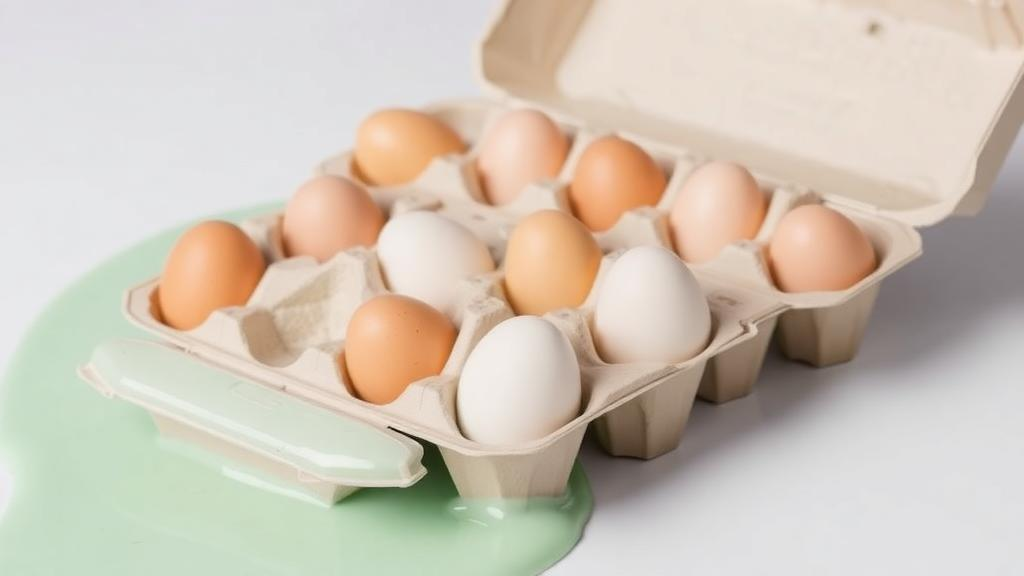
Their solution is disarmingly simple. The simulator is built from an egg carton, a 500 mL water bottle, a nitrile glove and homemade slime made from laundry detergent, glue, corn starch and sodium bicarbonate. To the authors’ knowledge, no other simulator in the literature has used slime as a cheap, infinitely reusable material that mimics soft tissue. The total materials cost is about 0.53 USD per unit, dropping further if materials are recycled, and assembly from scratch takes less than five minutes, with a per-use cost of roughly 0.05 USD, lower than most previously described low-cost simulators. The full design and manufacturing process was described in a separate publication, and the team deliberately chose materials that are accessible essentially anywhere in the world.
A cheap trainer is only useful if it can actually measure skill, so the team set out to generate validity evidence for using the simulator in formative assessment. They anchored the study in Messick’s unified validity framework, the approach recommended by the American Educational Research Association and the American Psychological Association, gathering evidence across five sources: content, response process, internal structure, relations to other variables, and consequences. The study was conducted at McMaster University between December 2024 and April 2025, with the British Columbia Children and Women’s Research Ethics Board deeming it quality improvement and waiving full ethics review.
Twenty-six participants were recruited through convenience sampling: 19 novices, mostly surgical residents, and seven experts, defined as physicians with at least five years of postgraduate clinical experience in trauma or head and neck surgery. None had seen the simulator before. Each participant completed a pre-test survey, performed a cricothyroidotomy on the model while a camera recorded their hand movements, and then filled out a 43-item post-test questionnaire covering anatomy, realism, instrument handling and confidence. Guidance was given only after the performance, never during it, so that the recorded attempts reflected unaided skill.
Two trauma surgeons independently scored the anonymized videos using two standardized instruments. The procedure-specific checklist contained nine items corresponding to critical steps of a Rapid Four-Step Cricothyroidotomy, adapted from a validated bougie-assisted checklist so that the assessment would work even in settings where bougies are unavailable; each step earned five points if achieved, three if in progress, and one if not observed. The error checklist contained seven items drawn from a multicenter expert collaboration on mistakes to avoid, with one point awarded for each error avoided. The raw score, ranging from nine to 52, was then divided by procedure time in seconds, a deliberate design choice reflecting the clinical reality that airway compromise must be resolved quickly and that errors or delays can cause irreversible harm.
The results showed the simulator does what a training tool should: it separates the skilled from the unskilled. Experts completed significantly more procedural steps than novices (Mann-Whitney U z = -2.52, p = 0.012), committed fewer errors (z = -3.07, p = 0.002), achieved better raw scores (z = -2.69, p = 0.007) and better final timed scores (z = -3.21, p = 0.001), and finished faster (z = -2.86, p = 0.004). In other words, experts were more accurate, made fewer mistakes and worked quicker, exactly the pattern expected if the simulator captures the essential elements of the real procedure. Internal consistency was excellent across the board, with Cronbach’s alpha of 0.86 for the procedure checklist, 0.85 for the error checklist, 0.84 for novice questionnaire responses and 0.97 for expert responses, all more than adequate for low-stakes formative assessment.
The study was candid about its weaknesses. Interrater reliability was only moderate for the procedure checklist, with an intraclass correlation of 0.54, and poor for the error checklist at 0.36, likely because composite scores are harder to agree on than binary ones and because the raters received no formal rating standardization. The authors calculated, using the Spearman-Brown formula, that about four raters would be needed to reach a targeted reliability of 0.5 on the error checklist, a burden they argued is hard to justify for a formative tool. Defining expertise also proved tricky, since multiple specialties perform the procedure with slightly different techniques, and one checklist item, a vertical skin incision, cost experts points even though a horizontal incision would be clinically valid in some contexts. Notably, no expert achieved a perfect score, which the authors read as a sign the simulator is better suited to assessing and teaching novices than to certifying experts.
Confidence data added a cautionary nuance. Novice pre-test confidence, averaging 1.68 on a five-point scale, rose to 3.80 after the exercise, while expert confidence dipped slightly from 3.78 to 3.00. One expert warned that a low-fidelity model risks underrepresenting the skillset required and could foster false confidence, a reminder that training on a single unidimensional model may not build the adaptive expertise needed to handle varied patient presentations. The authors counter that their conclusions align with studies using high-fidelity models, consistent with a growing literature showing that low-fidelity simulation training for procedural skills is not inferior to high-fidelity training, and that simulation of any kind beats no intervention at all.
The bigger picture is one of democratized surgical education. By slashing the cost of a cricothyroidotomy trainer to half a dollar and designing it from materials found in any household, the team has removed the procurement barrier that keeps simulation out of hospitals, training programs and medical schools in low-resource settings, where trauma burdens are highest and learning alternatives are scarcest. The findings provide preliminary validity evidence that checklist-based assessment of simulated cricothyroidotomy performance works on this humble device, and the authors are explicit that further research is needed to determine its educational effectiveness. But the concept has an appeal that goes beyond one procedure: if a slime-and-egg-carton model can reliably distinguish expert from novice performance on a life-saving emergency airway maneuver, the same design philosophy, frugal, reproducible and globally accessible, could be applied to a whole family of high-acuity, low-occurrence skills that clinicians everywhere struggle to practice before the moment they matter most.
Subject of Research: Validation of a low-cost, low-fidelity cricothyroidotomy training simulator for surgical education
Article Title: Evaluation and performance assessment on a low-cost, low-fidelity cricothyroidotomy simulator
Article References: Shum-Tim, L., Desaigoudar, V., Mashat, A., Hsiao, H., Malik, P. R. A., Malone, K. R., Abdalla, M. H., Rajagopalan, S., Mourad, N., Bos, C., Joos, E., & Joharifard, S. (2026). Evaluation and performance assessment on a low-cost, low-fidelity cricothyroidotomy simulator. Global Surgical Education – Journal of the Association for Surgical Education, 5(1), Article 138. https://doi.org/10.1007/s44186-026-00545-z
Image Credits: AI Generated
DOI: 10.1007/s44186-026-00545-z
Keywords: cricothyroidotomy, surgical simulation, medical education, global surgery, validity evidence, low-cost simulator, emergency airway, trauma training, Messick framework, checklist assessment, low-resource settings, surgical skills
Cite Scienmag News
Courtney Benton. (October 3, 2026). Slime, Egg Cartons and a 53-Cent Trainer That Could Save Lives. Scienmag. https://scienmag.com/slime-egg-cartons-and-a-53-cent-trainer-that-could-save-lives/
Courtney Benton. "Slime, Egg Cartons and a 53-Cent Trainer That Could Save Lives." Scienmag, 3 October 2026, https://scienmag.com/slime-egg-cartons-and-a-53-cent-trainer-that-could-save-lives/. Accessed 3 October 2026.
Courtney Benton. "Slime, Egg Cartons and a 53-Cent Trainer That Could Save Lives." Scienmag. October 3, 2026. https://scienmag.com/slime-egg-cartons-and-a-53-cent-trainer-that-could-save-lives/


