


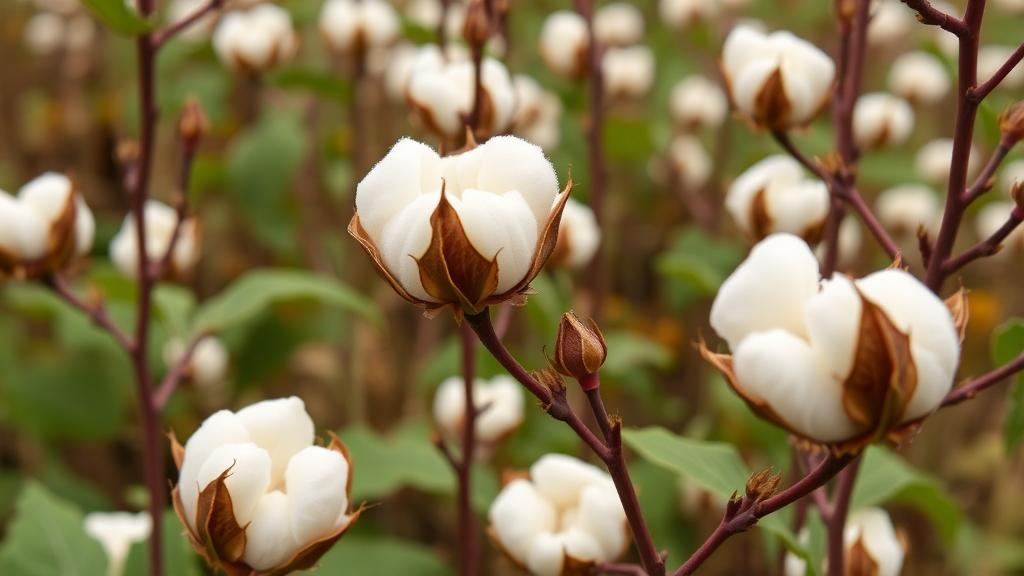
Cotton is one of the most economically important fiber crops on the planet, yet its fields are increasingly battered by heat waves, cold snaps, soil salinity, and drought. A new genome-wide investigation published in BMC Genomics has now mapped out an entire family of enzymes—beta galactosidases, or BGALs—that appear to sit at the crossroads of plant growth and stress survival. The study, led by Cun Guo and Weifeng Guo of Tarim University together with colleagues, systematically identified and classified BGAL genes across four cotton species and traced how they respond to environmental punishment and to gibberellin, a key plant growth hormone. The work offers breeders a fresh catalogue of candidate genes for engineering cotton varieties that can hold their yield under increasingly hostile conditions.
Beta galactosidases belong to glycoside hydrolase family 35, a class of enzymes that cleave terminal beta-linked galactose residues from complex carbohydrates such as pectins and arabinogalactan proteins. In practical terms, these enzymes remodel the cell wall and the glycans attached to cell-surface proteins, processes that influence cell expansion, organ development, fruit softening, and even how a plant senses and responds to stress. Because the cell wall is the first line of defense against drought, salt, and temperature extremes, enzymes that modify its architecture are prime suspects in any search for stress-tolerance mechanisms. Yet before this study, the evolutionary history and stress-linked behavior of BGALs across multiple cotton genomes remained largely uncharted territory.
The research team cast a wide net across the genus Gossypium, screening the genomes of four species that represent the major cultivated and wild lineages of cotton. They identified 58 BGAL genes in Gossypium barbadense, the species behind extra-long-staple Egyptian-style cotton; 38 in Gossypium hirsutum, the upland cotton that dominates global production; 25 in Gossypium herbaceum, an Old World diploid species; and 26 in Gossypium raimondii, the D-genome diploid whose genome is a reference for the polyploid cottons. The pattern is telling: the two cultivated allotetraploid species, which carry combined A and D genomes, harbor substantially more BGAL genes than their diploid relatives, a signature of genome doubling followed by differential gene retention and loss during cotton’s evolutionary history.
To make sense of this expanded gene family, the researchers built phylogenetic trees that placed the cotton BGALs alongside their counterparts in Arabidopsis thaliana, the reference plant of molecular biology. The analysis sorted the family into eight distinct groups, each presumably reflecting a shared ancestral function and, in many cases, conserved sequence motifs in the catalytic domain. Mapping the genes onto cotton chromosomes revealed their physical distribution across the genome, and a genome-wide duplication analysis delivered one of the study’s central evolutionary findings: segmental duplication—large-scale duplication of chromosomal blocks rather than duplication of single genes—was the dominant engine driving the expansion and diversification of the BGAL family in cotton. This mode of duplication is a well-known feature of plant genome evolution, but pinning it down for this specific enzyme family clarifies how cotton acquired its enlarged BGAL repertoire.
Gene count alone says little about function, so the team turned to expression profiling. Across multiple tissues, the GhBGAL genes of upland cotton showed varied and tissue-specific activity patterns, consistent with the idea that different family members have been recruited for different developmental jobs—some likely active in rapidly expanding fibers, others in roots, leaves, or reproductive structures. More striking were the responses to abiotic stress. When cotton plants were subjected to cold, heat, salt, and drought treatments, distinct subsets of GhBGAL genes switched on or off with clear, stress-specific signatures. That differential responsiveness suggests these cell-wall-modifying enzymes are not passive bystanders during stress but active participants in the plant’s adaptation machinery, potentially reshaping wall flexibility and porosity to help tissues cope with water deficit or thermal injury.
The hormone connection adds another layer of intrigue. Promoter analysis—the computational scan of DNA sequences upstream of each gene for regulatory motifs—revealed that most GhBGAL genes carry gibberellin-responsive cis-elements, the short DNA sequences that hormone-activated transcription factors recognize. Gibberellins are the hormones that drive stem elongation, seed germination, and, critically for cotton, fiber development. To test whether the promoter evidence translated into real biology, the researchers performed quantitative real-time PCR, a laboratory technique that measures gene expression with high sensitivity. The results showed that GhBGAL expression responded rapidly to gibberellin treatment, indicating that the BGAL family may operate in coordination with GA signaling to regulate cotton growth and development. In other words, the same genes that help cotton survive stress may also be wired into the hormone pathways that determine how long and strong its fibers grow.
Why does this matter beyond the laboratory? Cotton breeding has long focused on fiber quality and yield, but climate volatility is pushing tolerance traits to the top of the priority list. The systematic catalogue produced by this study gives geneticists a ranked set of candidates: genes that are stress-inducible, hormone-responsive, and evolutionarily conserved are exactly the kind of targets that can be validated by knockout or overexpression experiments and eventually moved into breeding programs through marker-assisted selection or genome editing. Because the study spans four Gossypium species, it also illuminates which BGAL copies were retained or lost after polyploidization—information that helps breeders understand whether a tolerance trait in one species might be transferable to another.
The study also exemplifies a broader trend in plant genomics: the move from single-gene curiosity to family-wide, cross-species systematic analysis. By combining phylogenetics, chromosomal mapping, duplication analysis, expression atlases, promoter mining, and experimental qRT-PCR validation in a single framework, the researchers built a multi-layered evidence base rather than a one-dimensional gene list. This kind of integrative approach is becoming the standard for gene family studies, and it dramatically shortens the path from genome sequence to functional hypothesis. For BGALs, whose roles span cell wall biochemistry, development, and stress physiology, that path is now clearly signposted.
Open questions remain. Expression data and promoter motifs are strong circumstantial evidence, but they do not prove causation; follow-up work will need to demonstrate directly that specific GhBGAL enzymes alter cell wall composition under stress and that this alteration improves tolerance. It is also not yet clear how gibberellin signaling mechanistically controls BGAL transcription—which transcription factors bind those cis-elements, and under what developmental or environmental conditions. Still, the study’s conclusions are measured and grounded in its data: the systematic characterization of cotton BGALs reveals their evolutionary and functional landscape and delivers a set of key candidate genes for dissecting stress tolerance mechanisms and accelerating the genetic improvement of cotton. For a crop grown on tens of millions of hectares and facing a warming, salinizing world, that is a contribution with real-world stakes.
The research, funded by China’s National Key R&D Program and the Tarim University President’s Fund, was published as an open-access article in BMC Genomics, making the full gene catalogue and expression datasets available to cotton researchers worldwide. As extreme weather tightens its grip on agricultural regions from Xinjiang to the Texas High Plains, studies like this one—quietly cataloguing the molecular toolkit that lets a plant bend without breaking—are laying the groundwork for the resilient crop varieties of the coming decades.
Subject of Research: Evolution and stress-responsive expression of the beta galactosidase gene family in Gossypium cotton species
Article Title: Systematic analysis of cotton beta galactosidases and their expression profiles under abiotic stresses and gibberellin treatment
Article References: Guo, C., Guo, W., Ma, S., Zhao, G., Li, L., Hu, Q., Liang, X., Sun, J., & Chen, G. (2026). Systematic analysis of cotton beta galactosidases and their expression profiles under abiotic stresses and gibberellin treatment. BMC Genomics. https://doi.org/10.1186/s12864-026-13327-0
Image Credits: AI Generated
DOI: 10.1186/s12864-026-13327-0
Keywords: cotton, Gossypium, beta galactosidases, BGAL, gene family, abiotic stress, gibberellin, phylogenetic analysis, segmental duplication, cell wall, qRT-PCR, BMC Genomics
Cite Scienmag News
Juliet Wilcox. (October 3, 2026). Cotton’s Hidden Stress Switches: Gene Family Study Reveals How Beta Galactosidases Shape Resilience. Scienmag. https://scienmag.com/cottons-hidden-stress-switches-gene-family-study-reveals-how-beta-galactosidases-shape-resilience/
Juliet Wilcox. "Cotton’s Hidden Stress Switches: Gene Family Study Reveals How Beta Galactosidases Shape Resilience." Scienmag, 3 October 2026, https://scienmag.com/cottons-hidden-stress-switches-gene-family-study-reveals-how-beta-galactosidases-shape-resilience/. Accessed 3 October 2026.
Juliet Wilcox. "Cotton’s Hidden Stress Switches: Gene Family Study Reveals How Beta Galactosidases Shape Resilience." Scienmag. October 3, 2026. https://scienmag.com/cottons-hidden-stress-switches-gene-family-study-reveals-how-beta-galactosidases-shape-resilience/


