


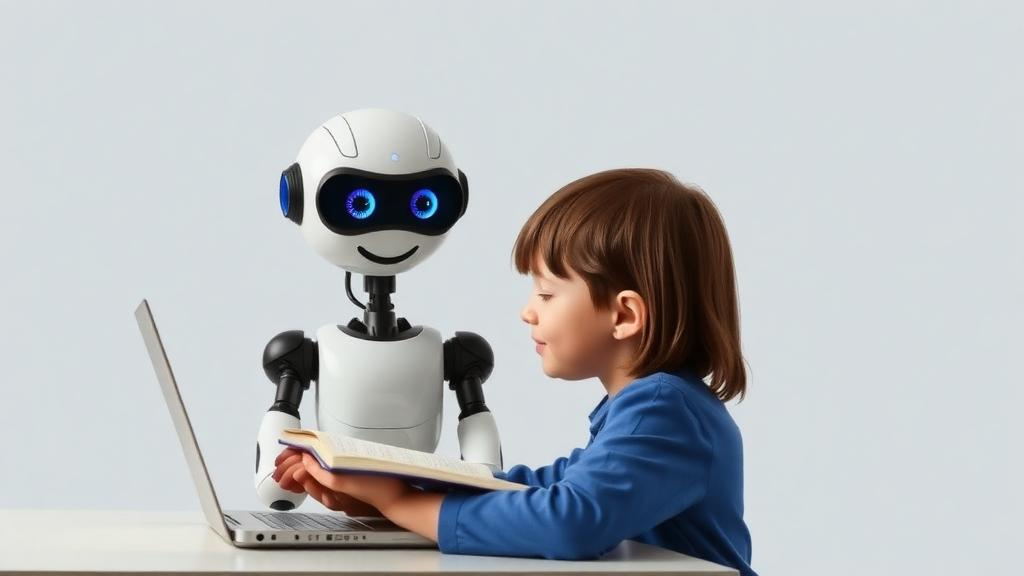
Mathematics anxiety is one of the most stubborn barriers in elementary education, and a new randomized trial suggests that a carefully engineered artificial intelligence companion may help children overcome it. In a study published in BMC Psychology, researchers report that fifth-grade students who learned mathematics through an AI-supported gamified program experienced significantly lower anxiety and higher motivation than peers who used the same gamified program without AI support or who received traditional lecture-based instruction. The findings, drawn from a two-week intervention followed by a delayed posttest four weeks later, offer one of the clearest experimental pictures yet of what artificial intelligence can and cannot add to gamified learning in the classroom.
The research team, led by Jiawei Shao of the Centre for Instructional Technology and Multimedia at Universiti Sains Malaysia, together with Ju Jinming and Shupeng Tang, recruited 174 Chinese fifth-grade students. Using individual-level random assignment, the researchers divided the children into three groups. One group learned with the full AI-supported Gamified Learning Program, which the authors abbreviate as AI-GILP. A second group used a gamified learning program without AI support, known as GILP, while a third received traditional lecture-based instruction. The design is notable for its rigor: rather than comparing a new technology against nothing, the study isolated the specific contribution of the AI layer by holding the gamification constant across two of the three conditions.
Mathematics anxiety, learning motivation, and achievement were measured at three points: before the intervention, immediately after the two-week program, and again four weeks later at a delayed posttest. The researchers analyzed the data using analysis of covariance and mixed-design analyses of variance, standard statistical techniques for detecting group differences while accounting for baseline performance. The results were striking on the emotional and motivational front. The AI-supported condition produced significantly lower mathematics anxiety and significantly higher learning motivation than both the gamified-only condition and traditional instruction, with overall group effects corresponding to partial eta-squared values of .208 for anxiety and .184 for motivation, both of which represent substantial effects in educational research.
The achievement results told a more nuanced story. Both gamified conditions outperformed traditional lecture-based instruction on mathematics achievement, confirming that gamification itself carries real academic benefits. However, the AI-supported group did not significantly outperform the gamified-only group on achievement, with a Cohen’s d of 0.19, a small difference that did not reach statistical significance. In other words, the AI companion appeared to work primarily on how children felt about mathematics rather than on how much mathematics they learned, at least over the timescale of this study. At the delayed posttest, the descriptive means for anxiety and motivation retained the same favorable ordering for the AI-supported group, although the authors note that pairwise significance at that assessment was not formally tested.
Perhaps the most revealing detail lies in where the motivational advantage came from. The researchers found that the AI-supported program’s motivational benefit was concentrated in intrinsic motivation and perceived competence, two dimensions closely tied to whether learners engage with a subject because they genuinely enjoy it and believe they can succeed. Notably, there was no significant difference in the effort/importance dimension. This pattern suggests that the AI companion did not simply push children to work harder; instead, it appears to have nurtured a sense of capability and genuine interest, which many learning scientists consider more durable drivers of long-term engagement.
The technology behind these effects is documented in unusual detail in the study’s appendix, and it is the engineering that makes the findings credible. The AI Learning Companion, as the system is called, is built on a modular workflow architecture with four functional modules: a dialogue module, a hint-hierarchy module, a behavior-triggered support module, and a personality-configuration module. When students watch recorded instructional videos or complete gamified mathematics tasks, they can activate the companion through a robot icon and ask questions by speech or text. An Intent Classifier categorizes each input as conceptual, procedural, help-seeking, or another predefined interaction type, and a Knowledge Router retrieves relevant concepts, common misconceptions, and illustrative examples from an embedded knowledge base.
The hint system follows a deliberately escalating structure based on a clue-reasoning-example sequence. At the first level, clue-based prompts direct students’ attention to key information and activate prior knowledge without giving anything away. If a learner makes three consecutive errors on the same task or remains inactive for a predefined period, the system advances to the second level, where reasoning-oriented prompts identify the relevant mathematical relationships and guide the student toward the required problem-solving procedure. Only at the final level does the system present a worked example or visual demonstration. This design gives children the chance to attempt tasks independently before receiving the most explicit assistance, a structure informed by Self-Determination Theory’s principles of competence support and learner choice.
Crucially, the system does not claim to read minds. The Behavior-Triggered Support Module does not measure students’ emotional states or diagnose anxiety and frustration. Instead, it monitors observable interaction indicators such as error frequency, time-on-task, repeated inactivity, and the frequency of hint requests. When predefined combinations of these indicators are reached, the companion offers supportive messages through voice or text, with examples including encouragement to try again together or reminders of what the learner has already mastered. The system also delivers gamified rewards, adding points and displaying badges after correct responses, and it allows students to choose among three interaction personalities: scholarly, humorous, or adventurous, each with a different communication tone that children can switch at will.
The authors are refreshingly careful about what their study does and does not demonstrate. The proposed mechanisms involving psychological-need support, emotional regulation, adaptive feedback, and motivational internalization were not directly tested, and the study did not isolate the effects of individual companion modules or measure their mediating processes. The supportive messages should not be interpreted as evidence that the system detected a learner’s emotional state or that children perceived the messages as empathic. What the experiment does establish is that the complete AI-supported package, compared against both a well-matched gamified control and traditional teaching, produced meaningful reductions in anxiety and gains in specific motivational dimensions, while the achievement gains were attributable primarily to gamification itself.
For educators and developers watching the rapid arrival of AI tutors in classrooms, the study offers a valuable calibration. The biggest wins from adding an AI layer to gamified learning may not show up immediately in test scores but in the emotional climate of the mathematics classroom, where anxiety quietly erodes participation and confidence. If future process-oriented research confirms that adaptive feedback, tiered hints, and configurable companionship are the active ingredients, the blueprint documented here, from intent classification to escalating hints to behavior-triggered encouragement, could become a reference architecture for learning technologies that treat children’s feelings as seriously as their answers.
Subject of Research: Effects of an AI-supported gamified learning program on elementary students' mathematics anxiety, motivation, and achievement
Article Title: The effects of an AI-supported gamified learning program on elementary students' mathematics anxiety, learning motivation, and achievement
Article References: Shao, J., Jinming, J., & Tang, S. (2026). The effects of an AI-supported gamified learning program on elementary students' mathematics anxiety, learning motivation, and achievement. BMC Psychology. https://doi.org/10.1186/s40359-026-05367-8
Image Credits: AI Generated
DOI: 10.1186/s40359-026-05367-8
Keywords: artificial intelligence, gamified learning, mathematics anxiety, learning motivation, elementary education, randomized controlled trial, Self-Determination Theory, educational technology, mathematics achievement, AI learning companion, intrinsic motivation, BMC Psychology
Cite Scienmag News
Glenn Wilkins. (October 3, 2026). AI Learning Companion Eases Math Anxiety in Elementary Students, Study Finds. Scienmag. https://scienmag.com/ai-learning-companion-eases-math-anxiety-in-elementary-students-study-finds/
Glenn Wilkins. "AI Learning Companion Eases Math Anxiety in Elementary Students, Study Finds." Scienmag, 3 October 2026, https://scienmag.com/ai-learning-companion-eases-math-anxiety-in-elementary-students-study-finds/. Accessed 3 October 2026.
Glenn Wilkins. "AI Learning Companion Eases Math Anxiety in Elementary Students, Study Finds." Scienmag. October 3, 2026. https://scienmag.com/ai-learning-companion-eases-math-anxiety-in-elementary-students-study-finds/


