


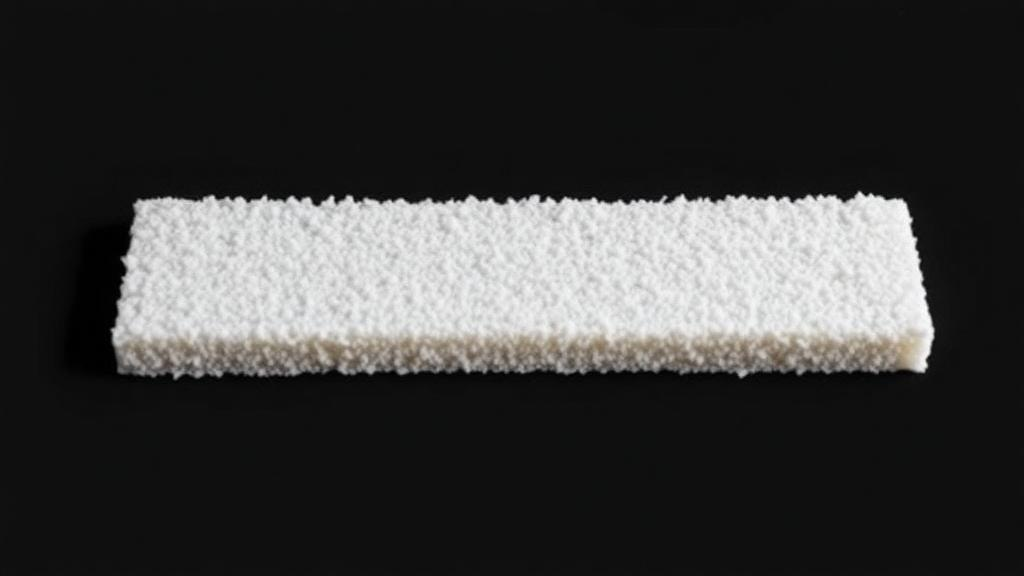
Invisible to most people but indispensable to heavy industry, inorganic fiber-based insulation materials quietly line the hottest corners of modern technology. They shield steel ladles, insulate aerospace structures, and conserve energy in power systems, all while remaining astonishingly light. Yet behind their unassuming appearance lies a stubborn engineering dilemma that has frustrated materials scientists for decades: the binders that glue these fragile fibers into strong, handleable boards tend to sabotage the very heat resistance that makes the boards valuable. A new study published in the Journal of Materials Science by a team at Wuhan University of Science and Technology, working with collaborators at Morgan Thermal Ceramics and Wuhan Kenusi New Materials, now maps this trade-off in quantitative detail and points toward a practical way to steer it.
The research, led by Fei Yu and corresponding author Shujing Li, focuses on a deceptively simple question: what happens when you swap the binder that holds an insulation fiberboard together? The team fabricated inorganic fiber-based insulation boards using mechanical compression molding, a process in which fibers and a liquid binder are pressed into a dense, coherent body. They systematically compared two of the most common sol-gel binders in the refractory world, silica sol and alumina sol, and then went a step further by blending the two in varying ratios to see whether the strengths of each could be captured in a single material.
The results are striking. Boards bonded with alumina sol showed dramatically enhanced mechanical performance at room temperature, with compressive strength increases ranging from 74.6 percent to 331.0 percent compared with boards bonded with silica sol. That is not an incremental improvement; in some formulations it means a board that can carry more than four times the load before crushing. For manufacturers of insulation panels, which must survive handling, stacking, machining, and installation without crumbling, such a leap in green and finished strength could translate directly into lower breakage rates, thinner support structures, and more design freedom.
But there is no free lunch in high-temperature materials. The same alumina-bonded boards that shrugged off mechanical loads at ambient conditions showed reduced stability and poorer thermal insulation performance when the temperature climbed. The underlying reasons trace back to how each sol behaves during drying and heating. Silica sol, a colloidal suspension of amorphous silica nanoparticles, gels into a network that preserves porosity and resists the densification and shrinkage that degrade insulation at high temperature. Alumina sol, by contrast, forms bonding bridges that lock fibers together far more effectively at room temperature, but the resulting microstructure evolves differently under heat, compromising the board’s ability to resist shrinkage and maintain its insulating pore network in service.
This tension between mechanical integrity and thermal performance is the central challenge the authors identify. Insulation boards work by trapping air in a labyrinth of fine pores between fibers; anything that collapses those pores, or that introduces phases which sinter or crystallize aggressively at operating temperature, erodes the material’s function. At the same time, a board with insufficient binder simply falls apart before it ever reaches a furnace. Achieving an optimal balance between room-temperature mechanical integrity and high-temperature insulation performance remains, as the team puts it, a critical challenge, particularly when selecting suitable binder systems.
The elegant part of the study lies in its exploration of mixed sol systems. By blending alumina and silica sols in controlled ratios, the researchers created hybrid binders whose boards partially integrate the complementary advantages of both components. As the alumina sol content in the hybrid system increases, the microstructure and overall performance of the fiberboards progressively approach those of the pure alumina system. In other words, the two binders do not merely average their properties; the mixture behaves in a predictable, tunable way that follows the composition. This gives engineers something rare in refractory materials: a continuous dial rather than a binary choice.
The practical implications of that dial are considerable. A steel plant lining a ladle wall might prioritize high-temperature stability and low thermal conductivity, favoring a silica-rich formulation. A manufacturer producing insulation modules that must be shipped across the country and bolted into place might accept somewhat reduced high-temperature performance in exchange for boards that survive transport without cracking, favoring a higher alumina fraction. Between those extremes lies a spectrum of compositions, each with a characteristic balance of strength, shrinkage resistance, and insulating capacity. The study establishes that tailoring the type and proportion of composite sol enables directional property design for fiberboards, providing a viable strategy to meet specific application requirements across diverse thermal environments.
The scientific context makes the work more than a recipe book. Silica sols have long served as refractory fiber binders, valued for forming stable siloxane networks on heating, while alumina sols have gained attention for their ability to bond high-alumina refractory castables and promote strong ceramic bridges between particles and fibers. Sol-gel processing itself, in which colloidal oxide nanoparticles are dispersed in liquid and gelled in place, allows binders to be deposited at the nanoscale precisely where fibers touch, maximizing bonding efficiency with minimal added mass. The Wuhan team’s contribution is to bring these two binder chemistries into direct, systematic comparison within the same fiber system and molding process, eliminating the confounding variables that make cross-study comparisons unreliable.
The work also connects to a broader push toward energy-efficient thermal materials. Lightweight porous ceramics, fiber aerogels, and foam-gelcast structures are all racing to push thermal conductivity lower while maintaining mechanical robustness, driven by industrial decarbonization and the demands of hypersonic flight and next-generation energy systems. Fiberboards occupy a crucial niche in this landscape because they are cheap, scalable, and easy to fabricate into large panels, but their performance ceiling is set by the binder. A binder strategy that can be tuned composition by composition, as this study demonstrates, effectively raises that ceiling without requiring new fiber chemistries or exotic processing equipment.
For now, the message of the research is one of controlled compromise rather than miracle materials. Alumina sol delivers exceptional room-temperature strength at a documented cost in high-temperature performance; silica sol preserves thermal function but leaves boards mechanically fragile; and mixed sols occupy the ground in between in a predictable, designable way. The team, supported by the National Natural Science Foundation of China and Hubei provincial research funds, has provided the quantitative map that lets engineers navigate that compromise deliberately. In a field where binder selection has often been guided by habit and trial, the ability to choose a sol ratio and know, in advance, roughly where the resulting board will land on the strength-insulation spectrum is a quiet but meaningful advance for the materials that keep the hottest machines on Earth running safely.
Subject of Research: Sol binder selection and mixing for thermal insulation fiber composites
Article Title: Preparation, performance and underlying mechanisms of single and mixed sols in thermal insulation fiber composites
Article References: Preparation, performance and underlying mechanisms of single and mixed sols in thermal insulation fiber composites. (n.d.). https://doi.org/10.1007/s10853-026-13867-6
Image Credits: AI Generated
DOI: 10.1007/s10853-026-13867-6
Keywords: silica sol, alumina sol, thermal insulation, fiber composites, ceramic fiberboards, binders, compressive strength, high-temperature materials, sol-gel, porous materials, refractories, mechanical compression molding
Cite Scienmag News
Denise Maddox. (October 3, 2026). Mixing Silica and Alumina Sols Rewrites the Rules for Heat-Shielding Fiberboards. Scienmag. https://scienmag.com/mixing-silica-and-alumina-sols-rewrites-the-rules-for-heat-shielding-fiberboards/
Denise Maddox. "Mixing Silica and Alumina Sols Rewrites the Rules for Heat-Shielding Fiberboards." Scienmag, 3 October 2026, https://scienmag.com/mixing-silica-and-alumina-sols-rewrites-the-rules-for-heat-shielding-fiberboards/. Accessed 3 October 2026.
Denise Maddox. "Mixing Silica and Alumina Sols Rewrites the Rules for Heat-Shielding Fiberboards." Scienmag. October 3, 2026. https://scienmag.com/mixing-silica-and-alumina-sols-rewrites-the-rules-for-heat-shielding-fiberboards/


