


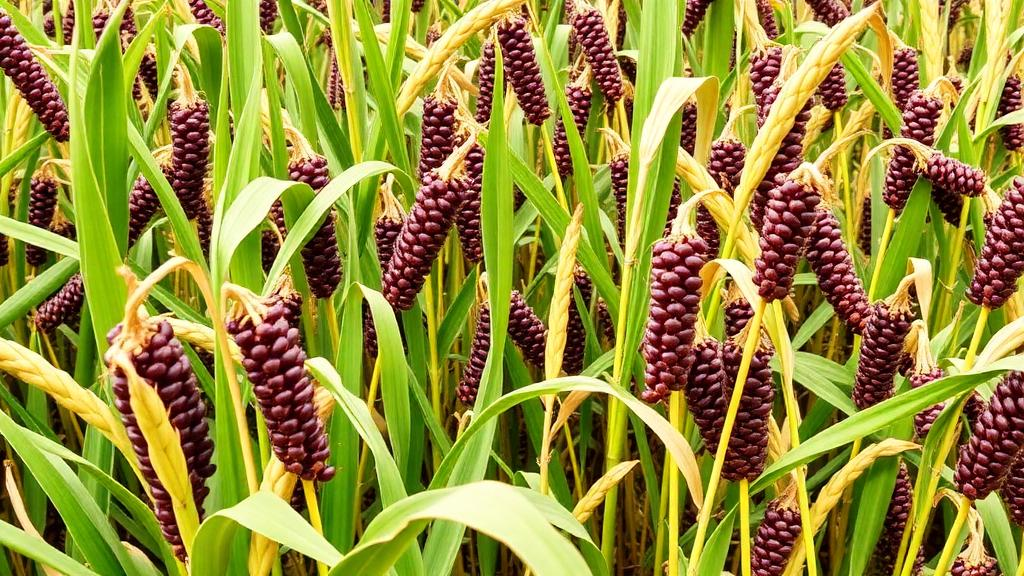
Indian farmers in the northwestern plains have a powerful new tool in their fields. Mash 878, a newly released variety of kharif urdbean, also known as black gram, has been officially approved for commercial cultivation across the North West Plain Zone, one of the most productive agricultural regions in the country. The variety, described in the Indian Journal of Genetics and Plant Breeding, was developed by breeders at Punjab Agricultural University in Ludhiana and represents a significant step forward for a crop that plays a vital role in both national food security and the sustainability of cereal-dominated rotations.
Urdbean, scientifically known as Vigna mungo L. Hepper, is a short-duration pulse grown widely during the kharif, or monsoon, season in India. It is prized for its protein-rich seeds, which are a dietary staple in the form of dal, and for its ability to fix atmospheric nitrogen through symbiotic bacteria in its root nodules. That nitrogen-fixing capacity makes urdbean an excellent rotational crop, helping to restore soil fertility in systems dominated by rice and wheat. Yet the crop has long been constrained by its vulnerability to diseases, particularly Yellow Mosaic Virus, a devastating viral infection transmitted by whiteflies that can cause severe yield losses across the pulse-growing belt.
The new variety emerged from an intraspecific cross between two established breeding lines, Pant U 19 and KUG 502. Breeders used the pedigree method, a classical selection technique in which progeny from the cross are advanced through successive generations while individual plant performance and family lines are carefully tracked. This approach allows breeders to fix desirable traits such as disease resistance, maturity duration, and yield potential into a genetically stable, uniform variety. After years of selection and multiplication, Mash 878 entered the formal testing system of the All India Coordinated Programme on MULLaRP crops, the national network that evaluates mungbean, urdbean, lentil, lathyrus, rajmash, and pea across diverse agroclimatic locations.
The evaluation process was rigorous. Mash 878 was tested in the Initial Varietal Trial during the kharif season of 2020 and subsequently in Advance Varietal Trials from 2020 through 2022, competing directly against the best existing check varieties in the zone. The results were striking. Across the trials, the new variety recorded an average yield of 14.62 quintals per hectare, a figure that outperformed four standard checks by margins ranging from roughly 13 percent to nearly 45 percent. Compared with KUG 479, which yielded 12.94 quintals per hectare, Mash 878 delivered a 12.98 percent advantage. Against Pant U 31 at 12.66 quintals per hectare, the gain was 15.48 percent. The margins widened dramatically against older checks: IPU 94-1 yielded 11.11 quintals per hectare, making Mash 878 31.59 percent superior, while KPU 405, at 10.11 quintals per hectare, trailed by 44.61 percent.
Performance of this magnitude matters in a country where pulses remain in chronic deficit. India is the world’s largest producer and consumer of pulses, yet domestic production has historically struggled to keep pace with demand, forcing imports and driving price volatility. Improving the productivity of urdbean in the kharif season, when the crop competes for land with monsoon-planted cereals, is a key strategy for closing that gap. A variety that reliably yields 30 to 45 percent more than older checks gives farmers a compelling economic reason to allocate more of their monsoon acreage to pulses, which in turn supports the broader policy goal of crop diversification away from water-intensive rice in the northwestern plains, where groundwater depletion has become a serious concern.
Beyond raw yield, the agronomic profile of Mash 878 has been tailored to the realities of the zone. The plants average about 69.3 centimeters in height and display a semi-erect growth habit, a architecture that supports good pod bearing while remaining manageable under mechanized and manual harvesting alike. The variety is morphologically distinguishable by its ovate-lanceolate green leaves and a light green stem marked with purple splashes, characteristics that help seed inspectors and farmers verify genetic purity in the field. Flowering occurs at approximately 42 days after sowing, and the plants reach maturity at around 78 days, a duration well suited to the monsoon window in the North West Plain Zone and compatible with timely sowing of the following wheat crop. Each plant bears an average of 33 pods, a component trait that underpins the variety’s high yield expression.
Disease behavior is arguably the most important dimension of the new release. Mash 878 is resistant to Yellow Mosaic Virus, the single most destructive disease of urdbean and mungbean in South Asia, and tolerant to three additional threats: web blight, anthracnose, and bacterial leaf spot. Web blight and anthracnose, both fungal diseases favored by the warm, humid conditions of the monsoon season, can defoliate plants and blemish pods, while bacterial leaf spot further erodes photosynthetic capacity. A variety combining resistance to the viral scourge with tolerance of these fungal and bacterial pathogens reduces the need for chemical intervention, lowers production risk, and stabilizes yields in years when disease pressure is high. For smallholder farmers who often lack access to effective pesticides or the resources to apply them, genetic resistance is the most economical form of plant protection available.
Grain quality, often the deciding factor in varietal adoption, also stands out. Mash 878 produces medium-bold, blackish seeds with good culinary properties. The 100-seed weight is 3.6 grams, with a 100-grain volume of 3.0 milliliters and a density of 1.20 grams per milliliter, physical parameters that indicate plump, well-filled seeds commanding favorable market prices. Cooking time for dal preparation is 28 minutes, a reasonable duration that affects household fuel consumption and consumer acceptance. Nutritionally, the seeds contain 23.01 percent protein and 2.8 percent total minerals, reinforcing the role of urdbean as an affordable source of dietary protein and micronutrients in a country where vegetarian diets dominate and protein deficiency remains a public health challenge.
The path from experimental line to farmers’ fields followed the formal machinery of Indian varietal release. The Varietal Identification Committee identified Mash 878 for release at the Annual Group Meeting of Kharif Pulses, held virtually from May 11 to 13, 2023, at the Indian Institute of Pulses Research in Kanpur. The Ministry of Agriculture and Farmers’ Welfare subsequently released and notified the variety through Notification number S.O. 1560(E), dated March 26, 2024, clearing it for commercial cultivation. The notified zone spans parts of Western Uttar Pradesh, Rajasthan, Delhi, the plains of Uttarakhand, Punjab, Haryana, and part of Jammu and Kashmir, an expansive territory covering some of India’s most intensively farmed land.
The development was a joint effort between the Pulses Section of the Department of Plant Breeding and Genetics and the Regional Research Station in Gurdaspur, both part of Punjab Agricultural University, Ludhiana. The research team, led by Ashok Kumar and including R. K. Gill, Shayla Bindra, Parul Sharma, Inderjit Singh, and Sarvjeet Singh, was involved in the testing and release of the variety. As certified seed of Mash 878 multiplies and reaches the market, breeders expect the variety to expand the area under kharif urdbean in the zone and adjoining regions, diversifying rotations, enriching soils, and adding a profitable, protein-rich legume to the monsoon landscape. In the quiet arithmetic of plant breeding, a few extra quintals per hectare and a few fewer disease outbreaks translate into more resilient livelihoods for thousands of farming households, and Mash 878 appears poised to deliver exactly that.
Subject of Research: Development and release of the high-yielding, disease-resistant kharif urdbean variety Mash 878 for the North West Plain Zone of India
Article Title: Mash 878: A New Variety of Kharif Urdbean for North West Plain Zone (NWPZ)
Article References: Kumar, A., Gill, R. K., Bindra, S., Sharma, P., Singh, I., & Singh, S. (2026). Mash 878: A New Variety of Kharif Urdbean for North West Plain Zone (NWPZ). Indian Journal of Genetics and Plant Breeding, 86(1), 103-103. https://doi.org/10.1007/s44489-026-00006-3
Image Credits: AI Generated
DOI: 10.1007/s44489-026-00006-3
Keywords: urdbean, black gram, Vigna mungo, plant breeding, Mash 878, Punjab Agricultural University, Yellow Mosaic Virus, kharif pulses, crop diversification, varietal release, North West Plain Zone, yield improvement
Cite Scienmag News
Alan Morgan. (October 2, 2026). New Black Gram Variety Mash 878 Delivers Double-Digit Yield Gains Across India’s North West Plain Zone. Scienmag. https://scienmag.com/new-black-gram-variety-mash-878-delivers-double-digit-yield-gains-across-indias-north-west-plain-zone/
Alan Morgan. "New Black Gram Variety Mash 878 Delivers Double-Digit Yield Gains Across India’s North West Plain Zone." Scienmag, 2 October 2026, https://scienmag.com/new-black-gram-variety-mash-878-delivers-double-digit-yield-gains-across-indias-north-west-plain-zone/. Accessed 2 October 2026.
Alan Morgan. "New Black Gram Variety Mash 878 Delivers Double-Digit Yield Gains Across India’s North West Plain Zone." Scienmag. October 2, 2026. https://scienmag.com/new-black-gram-variety-mash-878-delivers-double-digit-yield-gains-across-indias-north-west-plain-zone/


