


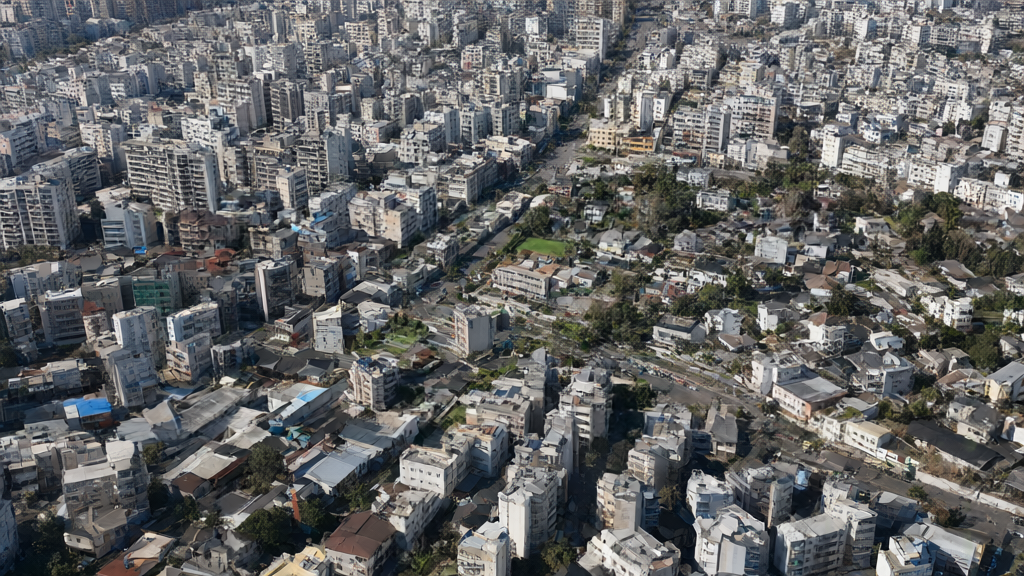
A new study published in the Proceedings of the National Academy of Sciences indicates that the legacy of 1930s redlining does not fully explain current patterns of privilege and disadvantage in American cities. The research, conducted by scientists at Emory University and Washington State University, focuses on the metropolitan area of Portland, Oregon. The authors argue that while historically discriminatory housing maps shaped urban development, the complex and evolving nature of modern inequality requires a broader analytical framework that accounts for city growth, gentrification, and displacement.
The study highlights that simply mapping neighborhoods that were originally redlined fails to capture the full scope of contemporary environmental and social disparities. Jola Ajibade, co-lead author and associate professor of environmental sciences at Emory University, notes that most U.S. cities have expanded significantly beyond their original centers. This expansion, combined with processes like gentrification, creates new and uneven landscapes of risk and opportunity that are not visible when looking solely at historical maps. Kevan B. Moffett, co-lead author and associate professor of environmental hydrology at Washington State University, Vancouver, contributed to the analysis of these shifting dynamics.
To understand the historical context, the researchers reviewed the practices of the Federal Home Loan Bank Board and the Home Owners’ Loan Corporation in 1935. These agencies created residential security maps to guide real-estate investments, ranking neighborhoods with color codes. Green indicated the most desirable areas for investment, while red indicated the highest risk for mortgage support. These redlined areas largely included African-American and other racial minority households, typically located in older city centers. This practice restricted home ownership and wealth creation for these populations, establishing a baseline of disadvantage that persisted for generations.
For the current analysis, the team utilized publicly available socio-economic data alongside more than 100 environmental and health indicators. They compared a modern map of Portland with the former borders of the HOLC residential security maps. This method allowed them to identify where environmental and health inequities persist, where they are shifting, and how different neighborhoods experience varying levels of risk and benefit. The study is a data and statistical analysis rather than an experimental trial, focusing on observational patterns within the metropolitan area.
The findings reveal a pattern of persistent privilege in affluent, predominantly white neighborhoods. Whether these areas were historically redlined or not, they generally enjoy cleaner environments, more tree cover, better access to healthcare, and lower disaster risk. However, the study also notes that these affluent areas within the city core experienced high levels of air pollution, suggesting that wealth does not always insulate residents from all environmental hazards. This nuance challenges the simplistic view that economic status alone determines environmental quality.
In contrast, poorer neighborhoods, many of which are located outside the former HOLC zones, face the worst environmental conditions. These areas are characterized by limited access to nature, aging infrastructure, and higher levels of pollution. Residents in these communities also face greater disaster risk and higher rates of chronic health conditions, including diabetes, obesity, and disability. The study indicates that the burden of environmental hazards is disproportionately concentrated in these lower-income areas, regardless of their historical redlining status.
The research also identifies distinct patterns in gentrifying areas. Neighborhoods that were once redlined but have since gentrified show improvements in transit and community resources. However, these areas also experience hotter streets, less tree cover, and increased pollution. While wealthier newcomers may have the resources to offset some health risks, long-time residents often lack the same capacity to protect themselves. This dynamic highlights the complex interplay between economic change and environmental exposure in transitioning neighborhoods.
Another key finding concerns communities that host displaced families. As gentrification forces residents to move, they often relocate to areas that are greener and less polluted. However, these receiving communities frequently lack essential services such as healthcare, quality schools, and reliable transit. This isolation threatens the long-term well-being of displaced families, suggesting that moving to a cleaner environment does not necessarily improve overall quality of life if social infrastructure is lacking. The study emphasizes that displacement creates new forms of inequality that are not captured by traditional redlining analyses.
The authors stress that their findings add complexity to the understanding of how socio-economic and environmental factors shape health and quality of life. Ajibade states that policymakers and planners must look beyond the narrow lens of redlining to build healthier and more equitable cities. The study offers a data-driven approach to identifying where inequities persist and how targeted investments in tree planting, housing improvements, health interventions, and disaster-risk reduction can make the biggest difference. While the research focused on Portland, the team hopes that these methods will be applied to other cities across the United States to address similar challenges.
The work was supported by the National Science Foundation. The study underscores the need for a more comprehensive approach to urban planning that accounts for the evolving nature of inequality. By integrating historical context with modern data, the researchers provide a framework for understanding how past discrimination interacts with current economic and environmental trends. This approach allows for a more accurate assessment of where interventions are needed most, ensuring that efforts to reduce inequality are both targeted and effective in the face of changing urban landscapes.
Subject of Research: Urban Planning and Environmental Health
Article Title: Today’s urban inequality goes far beyond legacy of ‘redlining,’ study shows
Article References: Today’s urban inequality goes far beyond legacy of ‘redlining,’ study shows. (n.d.). Original publication
Image Credits: AI Generated
DOI: Not provided
Keywords: urban inequality, redlining, environmental justice, gentrification, Portland, PNAS, Emory University, Washington State University, Today, urban, inequality, goes
Cite Scienmag News
Courtney Benton. (October 2, 2026). Portland Study Finds Inequality Extends Beyond Historical Redlining Maps. Scienmag. https://scienmag.com/portland-study-finds-inequality-extends-beyond-historical-redlining-maps/
Courtney Benton. "Portland Study Finds Inequality Extends Beyond Historical Redlining Maps." Scienmag, 2 October 2026, https://scienmag.com/portland-study-finds-inequality-extends-beyond-historical-redlining-maps/. Accessed 2 October 2026.
Courtney Benton. "Portland Study Finds Inequality Extends Beyond Historical Redlining Maps." Scienmag. October 2, 2026. https://scienmag.com/portland-study-finds-inequality-extends-beyond-historical-redlining-maps/


