


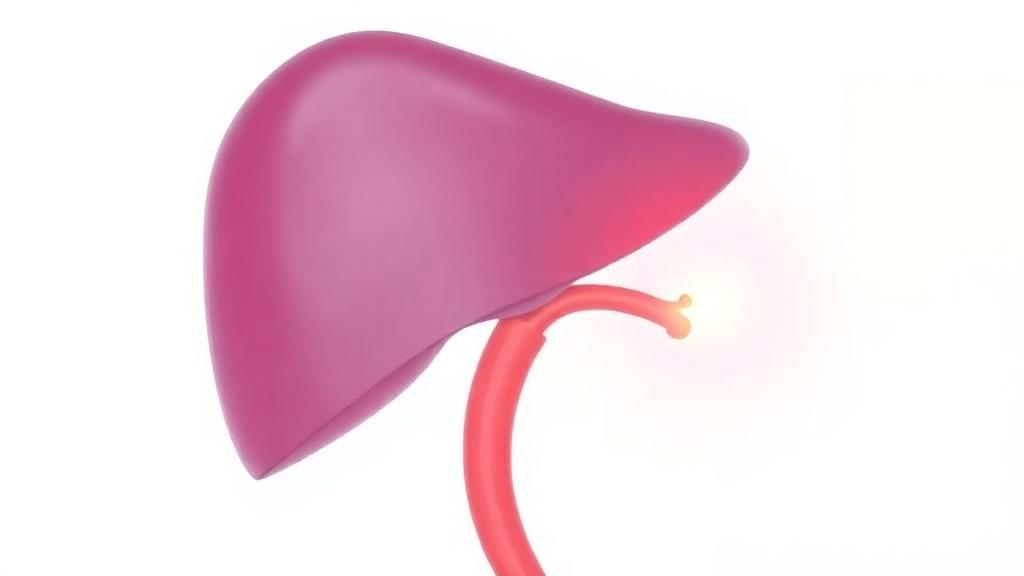
For patients with intermediate-stage hepatocellular carcinoma, the most common form of primary liver cancer, transarterial chemoembolization has long been the standard of care. The procedure threads a catheter through the arterial system to the tumour’s blood supply, delivering a toxic payload of chemotherapy emulsified in an oily contrast agent called Lipiodol, then plugging the vessel with embolic particles to trap the drug inside the tumour and starve it of oxygen. Yet despite decades of use, one deceptively simple question has never been convincingly answered: how concentrated should that chemotherapy be? A new retrospective cohort study from John Hunter Hospital in Newcastle, Australia, published in CVIR Oncology, suggests the answer may matter far less than clinicians have assumed.
The research team, led by Siobhan Lee and Christian Abel of the Department of Medical Imaging with Elliot Lee of the University of New England, took advantage of an unplanned natural experiment. In early November 2021, the locally available formulation of doxorubicin, the anthracycline antibiotic most commonly used in conventional TACE, changed from a dilute 2 mg/mL solution to a concentrated 25 mg/mL preparation. Before the switch, patients received the drug diluted in 25 mL of total emulsion volume; afterwards, the same drug arrived in just 2 mL. Because the change reflected pharmacy supply rather than a deliberate therapeutic strategy, the researchers could compare the two eras without the pressure of a formal trial, analysing 57 consecutive patients who underwent 106 cTACE procedures between September 2019 and February 2024.
The results were strikingly flat. Median overall survival was 788 days, or 25.6 months, in the low-concentration group, compared with 710 days, or 23.3 months, in the high-concentration group, a difference that fell well short of statistical significance with a log-rank p-value of 0.757. Tumour response, assessed with the modified RECIST and EASL criteria at three and six months, showed no meaningful divergence between the groups. Disease-free survival at one, two, and three years was similarly indistinguishable, although the one-year figure, 14.5 percent versus 29.4 percent favouring the high-concentration cohort, approached significance at p = 0.052, a trend the authors flag as worth watching in longer follow-up.
Safety data were equally reassuring for the concentrated formulation. Post-embolization syndrome, the constellation of fever, abdominal pain, and nausea that follows embolization in some patients, occurred in 7.3 percent of the low-concentration group and 5.9 percent of the high-concentration group, a non-significant difference. Other complications were actually numerically less frequent in the concentrated era, at 12.7 percent versus 5.9 percent, and mean hospital admission was essentially identical at 1.35 versus 1.27 days. Interestingly, patients who did develop post-embolization syndrome tended to have larger baseline tumours, with a mean maximal dimension of 52.7 mm versus 35.2 mm, and more often had multifocal disease, echoing prior literature that identifies tumour size as a major predictor of the syndrome.
What did predict survival, powerfully, was disease stage. In Cox proportional hazards regression adjusted for baseline characteristics, patients in Barcelona Clinic Liver Cancer stage B faced a 5.51-fold higher hazard of death compared with stage A, while stage C patients faced an 8.83-fold higher hazard. Mean survival fell from 1543 days in stage A to 817 days in stage B and just 440 days in stage C, a gradient so steep it dominated every other variable. Neither Child-Pugh liver function scores, ECOG performance status, tumour size, nor any treatment factor independently predicted survival once stage was accounted for.
The null result lands in the middle of a long-running and increasingly uncomfortable debate about whether chemotherapy contributes anything at all to transarterial embolization in liver cancer. A foundational 2003 systematic review by Llovet and Bruix found that chemoembolization improved survival over control arms, helping cement cTACE as standard therapy. But a 2011 Cochrane review found insufficient evidence that adding chemotherapy to embolization improved survival, noting low methodological quality and significant risk of bias across the randomised trials. More recently, two separate systematic reviews and meta-analyses of randomised controlled trials directly comparing TACE with bland transarterial embolization, which uses no chemotherapy at all, found no significant difference in overall survival, progression-free survival, or objective response rate. One of those analyses, by Wang and colleagues, went as far as recommending bland embolization on cost grounds, given similar or reduced adverse event rates.
The new study’s findings are, in that light, potentially supportive of a limited therapeutic role for chemotherapy agents in HCC embolization. If a more than twelvefold increase in doxorubicin concentration produces no measurable difference in survival, response, or toxicity, it becomes harder to argue that the drug itself is the engine of the treatment’s benefit. The authors note that the higher-concentration group actually received a higher total doxorubicin dose, a higher Lipiodol-to-doxorubicin ratio of 3.3 versus 1.3, and a smaller total emulsion volume, all differences significant at p < 0.001, yet outcomes did not budge. Lipiodol itself is not merely a carrier; it acts as an embolic agent, inducing tumour ischemia, and prior work has shown that homogeneous Lipiodol retention on post-treatment imaging correlates with better overall and progression-free survival, while higher Lipiodol doses have been linked to more complete tumour necrosis and more stable emulsions in laboratory studies.
The study also sits within the parallel debate over drug-eluting bead TACE, or DEB-TACE, which loads doxorubicin onto calibrated microspheres to standardise delivery and overcome the operator-dependent, freshly mixed emulsion that defines conventional TACE. Meta-analyses comparing the two approaches have produced a patchwork of findings: some report improved response rates with beads, one 2025 review found a small but significant survival advantage of roughly 3.5 months, and others find no difference at all, often with substantial heterogeneity and publication bias. The 2025 European Association for the Study of the Liver guidelines sidestep the controversy by recommending that cTACE and DEB-TACE be considered equivalent, and that bland TAE be considered an acceptable alternative to TACE altogether. Cost analyses suggest drug-eluting beads carry higher upfront expense but may offset this through shorter stays and less post-procedural pain, with one estimate of 2.4 versus 2.0 quality-adjusted life years favouring the beads.
Beyond the headline null result, the study quietly documents an evolution in clinical practice. The later, high-concentration cohort contained significantly more patients with advanced BCLC stage C disease, higher Child-Pugh scores suggesting more severe cirrhosis, and higher ECOG performance status scores, indicating that the centre was progressively offering cTACE to sicker, more comorbid patients. The authors suggest this reflects a deliberate broadening of the treatment population, but it introduces a real risk of selection bias: the modest numerical survival edge in the early group could simply reflect its healthier starting point. The early group also had significantly larger baseline tumours, with a mean maximum dimension of 43 mm versus 31 mm, which correlated with a lower one-year disease-free survival that approached significance.
The authors are candid about the limitations inherent in the retrospective, single-centre design. Documentation of treatment details improved markedly over the study period, and inadequate records accounted for over half of the 35 excluded patients, a factor that may actually improve future research. Time to tumour progression was not calculated because retrospective imaging data were too variable, prompting the authors to use disease-free survival as an umbrella measure instead. The sample size, particularly at later endpoints where only six patients in the high-concentration group reached three years, limits statistical power, and the entanglement of the doxorubicin formulation change with shifts in Lipiodol ratio and emulsion volume cannot be fully disentangled. Still, the core message is difficult to ignore: within the doses used here, where even the high-concentration protocol never exceeded 50 mg of doxorubicin, the concentration of chemotherapy delivered during cTACE appears to matter little for how long patients live, how well their tumours respond, or how they feel afterwards. As the field awaits larger, prospective, multicentre trials, the study adds weight to a provocative possibility that the embolic machinery of TACE, not its chemical cargo, may be doing the heavy lifting.
Subject of Research: Doxorubicin concentration in conventional transarterial chemoembolization for hepatocellular carcinoma
Article Title: High-concentration doxorubicin in cTACE: a retrospective cohort study of efficacy and safety
Article References: Lee, S., Lee, E., & Abel, C. (2025). High-concentration doxorubicin in cTACE: a retrospective cohort study of efficacy and safety. CVIR Oncology, 1(1), Article 19. https://doi.org/10.1007/s44343-025-00022-2
Image Credits: AI Generated
DOI: 10.1007/s44343-025-00022-2
Keywords: hepatocellular carcinoma, transarterial chemoembolization, doxorubicin, Lipiodol, overall survival, post-embolization syndrome, BCLC stage, drug-eluting beads, liver cancer, interventional radiology, chemotherapy, retrospective cohort study
Cite Scienmag News
Nathaniel Bowman. (October 2, 2026). Stronger Chemo Dose Fails to Extend Survival in Liver Cancer Embolization Study. Scienmag. https://scienmag.com/stronger-chemo-dose-fails-to-extend-survival-in-liver-cancer-embolization-study/
Nathaniel Bowman. "Stronger Chemo Dose Fails to Extend Survival in Liver Cancer Embolization Study." Scienmag, 2 October 2026, https://scienmag.com/stronger-chemo-dose-fails-to-extend-survival-in-liver-cancer-embolization-study/. Accessed 2 October 2026.
Nathaniel Bowman. "Stronger Chemo Dose Fails to Extend Survival in Liver Cancer Embolization Study." Scienmag. October 2, 2026. https://scienmag.com/stronger-chemo-dose-fails-to-extend-survival-in-liver-cancer-embolization-study/


