


Preeclampsia remains one of the most feared complications of pregnancy, a condition in which dangerously high blood pressure and signs of organ damage can escalate from a routine antenatal check-up to a life-threatening emergency within hours. For the nurses and midwives who stand at the bedside of affected women, the difference between early recognition and delayed response can determine whether mother and baby survive. A new randomized controlled trial from Türkiye, published in BMC Nursing, has put one of the most widely promoted tools in modern clinical education—simulation-based training—to a rigorous test in this exact setting, and the results offer both encouragement and a sobering dose of nuance for educators and hospital administrators alike.
The study, conducted by Gozde Kugcumen of Istanbul Medipol University and Ilkay Gungor Satilmis of Istanbul University-Cerrahpasa, set out to answer a deceptively simple question: does adding a hands-on simulation session to standard online theoretical instruction actually improve what obstetric nurses and midwives know about preeclampsia care, and how confident do they feel applying that knowledge? The researchers ran the trial between February 2019 and August 2020 at a university hospital in Istanbul, registering it prospectively as a clinical trial to signal methodological transparency from the outset. In a field where educational interventions are often evaluated with before-and-after studies lacking any comparison group, the randomized design alone marks this work as a meaningful contribution.
The technical architecture of the trial reflects careful attention to the realities of clinical staffing. A total of 76 nurses and midwives were enrolled and randomized in equal halves of 38 participants per group, but the final complete-case analysis included 61 participants with full baseline and four-week outcome data—30 in the intervention group and 31 in the control group. Eligibility criteria were deliberately strict: every participant held at least a bachelor’s degree and had accumulated a minimum of six months of experience in obstetrics and delivery services. This ensured that the study measured the incremental value of simulation on top of an already educated and clinically active workforce, rather than compensating for gaps in basic training.
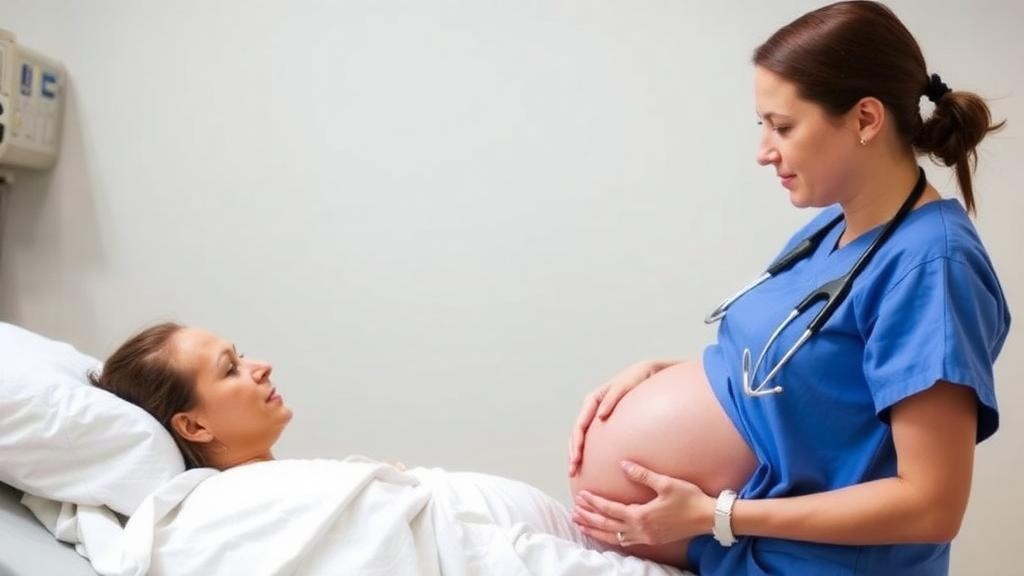
Crucially, both arms of the trial received the same foundation: an online theoretical training module covering the follow-up and care of pregnant women with preeclampsia. One week after completing this shared theoretical component, the intervention group took part in a simulation session built around a standardized patient—an actor trained to portray a consistent clinical scenario, allowing learners to practice history-taking, assessment, communication, and decision-making under realistic conditions. This design choice is methodologically important. Because both groups received identical theoretical content, any difference in outcomes at the four-week mark could be attributed to the simulation experience itself rather than to extra contact time or additional reading material.
The measurement battery was equally comprehensive. Knowledge was assessed with the Preeclampsia Information Assessment Form, a validated instrument probing disease-specific understanding, and with an Objective Structured Clinical Assessment Form designed to capture applied clinical performance. Self-efficacy—the psychological construct describing a person’s belief in their own capacity to execute the behaviors required for a task—was measured with the Self-Efficacy Scale in the Follow-up and Care of Pregnant Women with Preeclampsia, abbreviated as SESPWP. The learners’ experience of the education itself was evaluated with the Educational Practices Questionnaire and the Student Satisfaction and Self-Confidence in Learning Scale, two instruments widely used in simulation research to gauge whether the training environment supported engagement and confidence.
When the four-week posttest data were analyzed, the knowledge results favored simulation. Scores on the Preeclampsia Information Assessment Form were significantly higher in the intervention group than in the control group, with a p-value below 0.05, indicating that the difference was unlikely to be a statistical fluke. In practical terms, nurses and midwives who had rehearsed preeclampsia care with a standardized patient retained measurably more disease-specific knowledge a month later than peers who had received only the online lectures. For educators, this finding supports the long-standing hypothesis that active, experiential learning consolidates cognitive material more durably than passive delivery alone.
The self-efficacy story, however, is more complicated—and the authors were careful not to overstate it. Within the intervention group, SESPWP scores rose significantly from pretest to posttest, with a p-value of 0.015, suggesting that participants genuinely felt more capable of managing preeclampsia care after the simulation. Yet when the researchers adjusted for baseline differences between the groups, the between-group effect on self-efficacy was not statistically significant, and the difference in pre-to-post change between the two arms also failed to reach significance. In plain language: simulation participants gained confidence, but the control group’s confidence also shifted over the study period, and the simulation-specific increment could not be demonstrated with statistical confidence.
The authors themselves acknowledge this subtlety in their conclusions. Adding simulation-based training to shared online theoretical education was associated with higher baseline-adjusted knowledge at four weeks, they report, although the between-group difference in pre-post change was not statistically significant in sensitivity analysis, and no simulation-specific between-group effect on self-efficacy was demonstrated. This kind of transparent reporting is increasingly valued in clinical education research, where enthusiasm for simulation has sometimes outpaced the evidence. The trial’s sensitivity analyses—re-examining the primary findings under alternative statistical assumptions—reveal how fragile some between-group contrasts can be in a sample of 61 complete cases, a reminder that even well-designed trials have limits imposed by their size.
What the participants thought of the experience adds another layer to the findings. Scores on the Educational Practices Questionnaire and the Student Satisfaction and Self-Confidence in Learning Scale indicated high levels of satisfaction and positive evaluations of the simulation experience across the board. High satisfaction matters for a practical reason: educational interventions only work if clinicians are willing to complete them, and simulation formats that learners find engaging are more likely to be adopted and sustained in busy hospital environments. The consistency between the objective knowledge gains and the subjective learning experience strengthens the case that the standardized-patient session created a genuinely effective educational environment, even if its effects on confidence could not be isolated statistically.
The broader implications reach well beyond a single Istanbul hospital. Preeclampsia affects a meaningful share of pregnancies worldwide and demands rapid, coordinated recognition and management, typically initiated by bedside nurses and midwives before physicians become involved. Educational bodies have increasingly recommended simulation as a core component of obstetric emergency training, yet high-quality randomized evidence in nursing and midwifery populations has been comparatively scarce. This trial, conducted as part of a doctoral thesis in gynecologic nursing and presented orally at the 3rd International and 4th National Women’s Health Nursing Congress in May 2025, contributes precisely the kind of controlled, instrument-based evidence that such recommendations require. Its message is measured but useful: simulation appears to help clinicians retain what they learn about preeclampsia care, learners value the experience highly, and claims about self-efficacy benefits should await larger trials with the statistical power to detect them. For hospitals weighing the cost of standardized-patient programs against the return in clinical preparedness, the study offers a data point worth serious attention—and a clear template for the replication studies the field now needs.
Subject of Research: Effects of simulation-based education on nurses' and midwives' knowledge and self-efficacy in preeclampsia care
Article Title: Effects of simulation-based education on nurses’ and midwives’ knowledge and self-efficacy in preeclampsia care: a randomized controlled trial
Article References: Kugcumen, G., & Satilmis, I. G. (2026). Effects of simulation-based education on nurses’ and midwives’ knowledge and self-efficacy in preeclampsia care: a randomized controlled trial. BMC Nursing. https://doi.org/10.1186/s12912-026-05428-8
Image Credits: AI Generated
DOI: 10.1186/s12912-026-05428-8
Keywords: preeclampsia, simulation-based education, randomized controlled trial, nursing education, midwifery, self-efficacy, standardized patient, clinical training, obstetric care, BMC Nursing, Istanbul, knowledge retention
Cite Scienmag News
Harold Sullivan. (October 2, 2026). Simulation Training Boosts Nurses’ Preeclampsia Knowledge in Randomized Trial. Scienmag. https://scienmag.com/simulation-training-boosts-nurses-preeclampsia-knowledge-in-randomized-trial/
Harold Sullivan. "Simulation Training Boosts Nurses’ Preeclampsia Knowledge in Randomized Trial." Scienmag, 2 October 2026, https://scienmag.com/simulation-training-boosts-nurses-preeclampsia-knowledge-in-randomized-trial/. Accessed 2 October 2026.
Harold Sullivan. "Simulation Training Boosts Nurses’ Preeclampsia Knowledge in Randomized Trial." Scienmag. October 2, 2026. https://scienmag.com/simulation-training-boosts-nurses-preeclampsia-knowledge-in-randomized-trial/


