


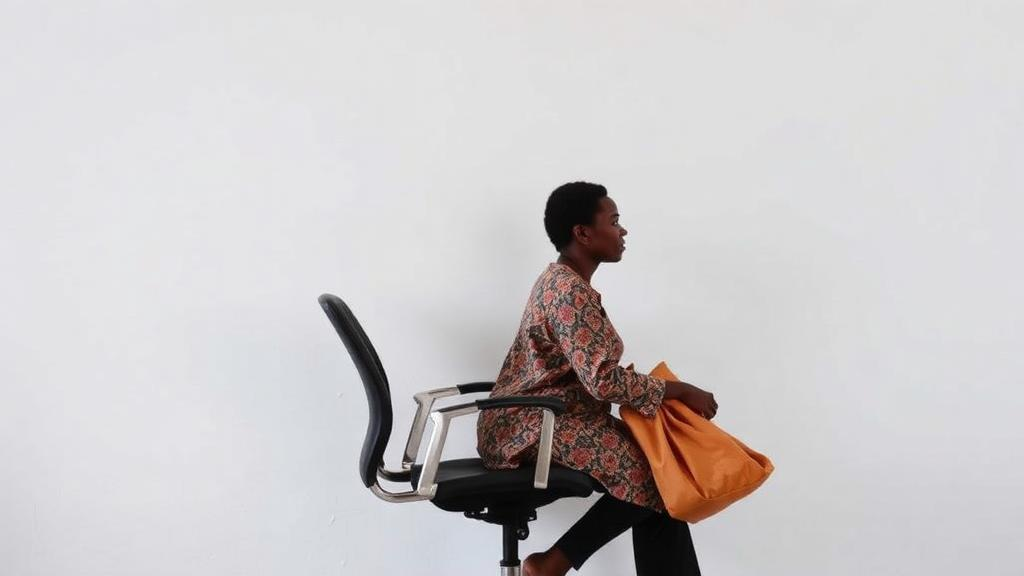
In the offices of Hawassa, a fast-growing city in southern Ethiopia, a quiet health crisis is unfolding one desk at a time. Public-sector employees spend their working hours seated for six hours or more each day, rarely interrupting their sitting, and most fail to meet the global recommendation of at least 150 minutes of moderate-to-vigorous physical activity per week. A new qualitative study, published in the Journal of Activity, Sedentary and Sleep Behaviors, has now mapped out in unprecedented detail why these workers move so little and sit so much, and what it would take to change that. The findings arrive at a critical moment, because non-communicable diseases such as cardiovascular disease, type 2 diabetes, and cancer now account for an estimated 43 percent of all deaths in Ethiopia, and behavioral risk factors are implicated in more than half of that mortality.
The research team, led by Abel Negussie of Yirgalem Hospital Medical College with collaborators from Addis Ababa University, the University of Queensland, and the African Population and Health Research Center, conducted in-depth interviews with 26 office workers and 7 key informants, including non-communicable disease program coordinators and physical exercise coaches, between April and June 2023. Crucially, the sample included both physically inactive workers, defined as those sitting at least six hours per workday and doing less than three sessions or 60 minutes of weekly moderate-to-vigorous activity, and a comparison group of seven physically active employees who maintained regular leisure-time exercise. This design allowed the researchers to contrast the motivational landscapes of the two groups, revealing that six of the seven active workers had exercised or played sports in their youth, a formative experience that appeared to anchor their adult habits.
What makes the study methodologically distinctive is its use of the social-ecological model, a framework that treats health behavior as the product of nested layers of influence, from the individual psyche outward through social networks, organizations, communities, and policy. Rather than asking simply why a person does not exercise, the researchers interrogated each layer. The analysis, performed through iterative line-by-line coding with the open-source tool Taguette and organized by thematic analysis, yielded thirteen distinct themes distributed across the model’s five levels. The result is less a list of excuses than a systems map of how poverty, gender roles, workplace culture, urban design, and national policy conspire to keep people in their chairs.
At the innermost, intrapersonal level, the barriers were strikingly concrete. Women consistently reported that family and household commitments, particularly childcare, crowded out any possibility of morning exercise, and even active male participants described spouses who abandoned exercise after childbirth and never resumed. Income mattered too: while outdoor exercise is free, most participants preferred well-equipped gyms with professional coaching, but could not afford rising membership fees amid the current cost of living. Perhaps most revealing were the misperceptions. Many inactive women considered their household chores an adequate form of physical activity, and a widespread belief held that exercise matters only for people who are overweight. Meanwhile, awareness of the health hazards of prolonged sitting itself was almost entirely absent, with one even physically active participant stating that he did not believe long sitting had negative health effects.
The motivational findings may be the study’s most transferable contribution. Inactive workers described weak intentions, low self-efficacy, and a recurring pattern of starting exercise and then dropping out, often after a brief interruption derailed the routine. Exercise coaches observed that early-stage fatigue and unrealistic expectations about rapid weight loss frequently extinguished beginners’ enthusiasm, with some clients weighing themselves before and after every session. Maintaining exercise, participants agreed, is harder than starting it. The researchers argue that this reflects a well-documented intention-behavior gap, and they suggest that techniques such as habit formation, action and coping planning, and motivational interviewing could help bridge it, particularly approaches like the Disconnected Values Model that link long-term health risks to a person’s core life values such as family and work.
Sitting presented its own psychological puzzle. Unlike exercise, which requires deliberate planning, sitting tends to be spontaneous and habitual, unfolding below the threshold of conscious decision-making. Participants repeatedly described their sitting as unconscious and difficult to self-regulate, with one noting that remembering to stand periodically is primarily a psychological challenge until a new habit forms. This distinction matters for intervention design, the authors contend, because strategies that work for promoting exercise may fail against sedentary time, which demands behavior-specific tactics such as environmental prompts and scheduled activity breaks rather than appeals to motivation alone.
One level out, the social environment cut both ways. Women described a lack of partner and family support as a decisive barrier, with exercise coaches emphasizing that women persist far more reliably when husbands participate. More surprising were the negative reactions that active workers reported from colleagues and friends, who treated regular exercise as a luxury or a temporary project, asking one participant when he would finish his exercise as though it were a phase that would end. Yet the same neighborhoods offered a genuine asset: strong social ties and a widespread habit of group walking after work and on weekends, which most participants, even sedentary ones, already practiced, albeit at an intensity too low to count as moderate-to-vigorous activity.
The organizational layer exposed how office culture itself manufactures sedentary behavior. Desk-based work, work overload, and long government meetings all extended sitting, while motorcycle commuting eliminated a daily opportunity for active travel. A particularly corrosive norm emerged around productivity: many managers equate time at the desk with work ethic, so an employee who takes walking breaks risks appearing less committed, even though participants who were managers themselves acknowledged that short activity breaks would not harm, and might even boost, productivity. Volunteer sport-for-health teams, generally soccer clubs, existed in some organizations but were unevenly distributed and under-supported. The researchers note that evidence from high-income settings shows physically active workforces deliver better productivity, less sickness absence, and positive financial returns, and they recommend targeting senior management with education and communication training to shift these norms, alongside strategies like workplace champions and prompting messages.
At the community and policy levels, the picture was one of missed opportunities. Hawassa has green spaces and walkable neighborhoods, but exercise coaches reported that open areas are used for other social purposes rather than structured activity, and the city lacks any comprehensive public physical activity center. Campaigns such as mass sport events, the Great Ethiopian Run, and vehicle-free cycling days raised awareness but lacked consistency and clear target audiences, and sedentary behavior was almost entirely absent from public health messaging. A subtle social norm even discouraged walking, since pedestrians risked being judged as too poor to pay for transport. Above all, participants identified the absence of workplace health promotion policies and incentives, such as support for sports teams, as a structural failure, noting that Ethiopia’s national non-communicable disease strategic plan exists but lacks detailed operational guidelines and multi-sectoral collaboration spanning health, sport, urban planning, and municipal authorities.
The study’s authors are careful about its limits: physical activity status rested on general self-report rather than validated questionnaires, and the policy domain received comparatively shallow treatment because participants had limited policy expertise. Still, as formative research, the study does exactly what it set out to do, providing the evidence base for a locally tailored, multi-component behavior change intervention that targets several levels simultaneously. The core message resonates far beyond Hawassa. In low- and middle-income countries undergoing rapid urbanization and epidemiological transition, office workers represent a high-risk population whose inactivity is not a matter of individual willpower but the predictable output of an entire social system. Changing that output, the research suggests, will require changing the system, one desk, one norm, and one policy at a time.
Subject of Research: Barriers and facilitators to physical activity and sedentary behavior among Ethiopian office workers
Article Title: Barriers and facilitators to increase physical activity and reduce sedentary behavior in Ethiopian office-based employees: a qualitative formative research using the social-ecological model
Article References: Negussie, A., Clark, B., Addissie, A., Worku, A., & Girma, E. (2025). Barriers and facilitators to increase physical activity and reduce sedentary behavior in Ethiopian office-based employees: a qualitative formative research using the social-ecological model. Journal of Activity, Sedentary and Sleep Behaviors, 4(1), Article 13. https://doi.org/10.1186/s44167-025-00083-x
Image Credits: AI Generated
DOI: 10.1186/s44167-025-00083-x
Keywords: physical activity, sedentary behavior, office workers, Ethiopia, social-ecological model, non-communicable diseases, qualitative research, workplace health, public health, Hawassa, behavior change, low- and middle-income countries
Cite Scienmag News
Glenn Wilkins. (October 2, 2026). Why Ethiopian Office Workers Sit Too Much: A Multi-Level Look at the Barriers to Moving More. Scienmag. https://scienmag.com/why-ethiopian-office-workers-sit-too-much-a-multi-level-look-at-the-barriers-to-moving-more/
Glenn Wilkins. "Why Ethiopian Office Workers Sit Too Much: A Multi-Level Look at the Barriers to Moving More." Scienmag, 2 October 2026, https://scienmag.com/why-ethiopian-office-workers-sit-too-much-a-multi-level-look-at-the-barriers-to-moving-more/. Accessed 2 October 2026.
Glenn Wilkins. "Why Ethiopian Office Workers Sit Too Much: A Multi-Level Look at the Barriers to Moving More." Scienmag. October 2, 2026. https://scienmag.com/why-ethiopian-office-workers-sit-too-much-a-multi-level-look-at-the-barriers-to-moving-more/


