


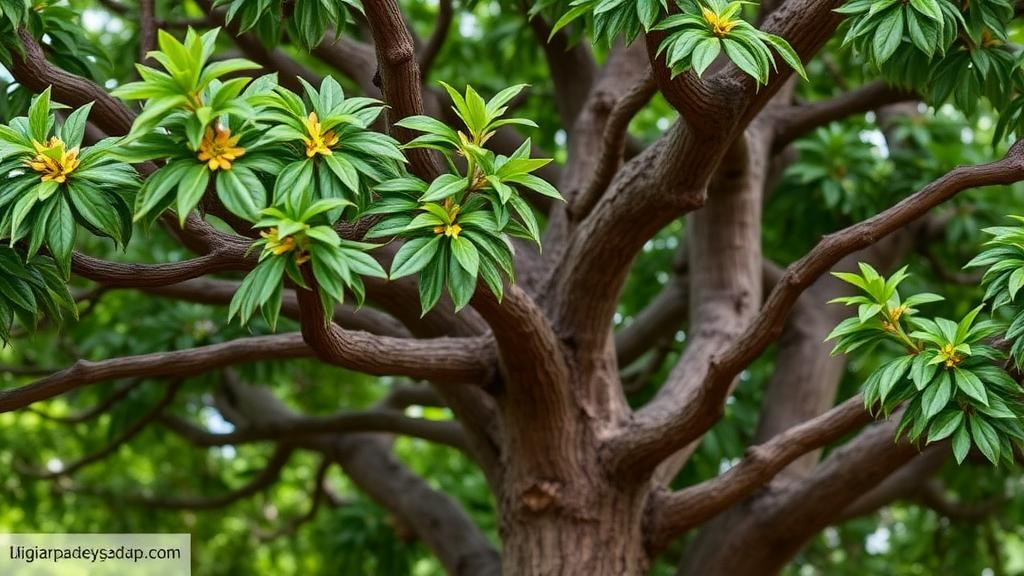
In the humid plantations of northeastern India grows one of the world’s most valuable trees, a species whose wounded heartwood yields agarwood, the dark, fragrant resin prized by the perfume and incense industries and often worth more than gold by weight. Now, a team of Indian researchers has produced the most comprehensive genetic portrait to date of this species across its cultivated range in the country, and the results carry important implications for how a heavily traded, internationally protected crop should be managed in the decades ahead. The study, published in the Indian Journal of Genetics and Plant Breeding, analyzed 195 accessions of Aquilaria malaccensis collected from every major agarwood-growing state in India, using a panel of microsatellite markers to probe the hidden genetic architecture of this CITES-listed industrial crop.
Aquilaria malaccensis, a member of the family Thymelaeaceae, occupies a peculiar position at the intersection of commerce and conservation. The tree itself is unremarkable until it is wounded or infected by certain fungi, at which point it produces a defensive resin that saturates the wood and transforms it into agarwood, known in the trade as oudh. Demand for this resin across the Middle East and East Asia has driven centuries of harvest from wild populations, pushing the species into decline across its native Southeast Asian range and earning it a place on Appendix II of the Convention on International Trade in Endangered Species of Wild Fauna and Flora. India, where the tree is cultivated most intensively in states such as Assam and Tripura, has become a focal point for both the industry and for scientific efforts to ensure that cultivation does not erode the genetic foundations of the resource it depends on.
The research, led by Ranjith Layola M. R. and Avishek Bhattacharjee of the Botanical Survey of India’s Central National Herbarium in Howrah, together with colleagues from the Botanical Survey of India headquarters in Kolkata, was conducted as part of two government-funded initiatives: a project on non-detriment findings for Aquilaria malaccensis in India financed by the Ministry of Environment, Forest and Climate Change, and an in-house action plan on the molecular and phytochemical identification of thirty CITES-listed plants in high international trade. The team’s fieldwork spanned the major agarwood-cultivating states, gathering leaf material from plantations and forest department holdings to build a sampling frame that captures the breadth of India’s cultivated agarwood population.
At the technical heart of the study lies a class of genetic markers known as Simple Sequence Repeats, or SSRs, sometimes called microsatellites. These are short stretches of DNA in which a motif of one to six base pairs is repeated many times in tandem, such as CACACACA. Because the number of repeats at a given locus mutates rapidly and is inherited in a codominant Mendelian fashion, SSRs act as highly polymorphic signposts scattered across the genome, allowing researchers to distinguish individuals, estimate heterozygosity, and infer patterns of relatedness and population structure. The authors screened sixty SSR primer pairs drawn from previously published literature on Aquilaria malaccensis, including markers developed through genome-wide mining and next-generation sequencing efforts, and identified fifteen polymorphic markers suitable for genotyping the full set of 195 accessions.
Once the genotyping was complete, the team applied a battery of frequency-based and genetic distance-based statistics, complemented by formal population structure analysis. The results were striking in several respects. The average values of observed heterozygosity and the Shannon diversity index were high, indicating that most individuals in the sampled collection carry substantial genetic variability. This is encouraging news for a species whose wild relatives have been depleted: high heterozygosity generally signals a healthy capacity for adaptation and a reduced risk of inbreeding depression in cultivated stands. For breeders, it also means that the raw material for selection and improvement remains rich within India’s existing plantation base.
Equally informative was what the analysis revealed about how that diversity is distributed across the landscape. The researchers observed overall low genetic differentiation among populations combined with high gene flow, a pattern suggesting that planting material has been moved extensively among regions, most likely through the trade in seedlings and seeds that accompanies the expansion of agarwood cultivation. The analysis of molecular variance, or AMOVA, reinforced this picture: the largest share of genetic variance was partitioned within populations rather than among them. In practical terms, a farmer’s plantation in one state is likely to contain nearly as much genetic variation as the pooled collection from all states, a signature of a crop whose genetic stock has been thoroughly mixed by human hands rather than shaped by local isolation.
The population structure analysis added a further layer of nuance. Using the Bayesian clustering software STRUCTURE, which assigns individuals to genetic clusters based on multilocus genotype data, the team found that all 195 accessions resolved into two genetic clusters. Crucially, these clusters did not correspond to geography. Trees from the same state frequently belonged to different clusters, and individuals showed high levels of admixture, meaning their genomes carry ancestry from both clusters in varying proportions. This decoupling of genetic structure from geographic origin is consistent with a crop that has been founded from mixed sources and repeatedly exchanged among growers, and it suggests that conservation and breeding decisions cannot rely on state boundaries as proxies for genetic distinctiveness.
Why does this matter beyond the laboratory? For a CITES-listed species, the answer lies in the machinery of international regulation. Non-detriment findings, the scientific assessments that determine whether trade in a listed species can proceed without harming wild populations, depend on credible data about the status and genetic health of the resource. By documenting high within-population diversity and quantifying gene flow across India’s cultivated agarwood estate, the study provides exactly the kind of evidence base that regulators and forest departments need to design sustainable harvest and trade policies. It also feeds directly into crop improvement: knowing which individuals and clusters harbor the greatest diversity allows breeders to design crosses that preserve variability while selecting for traits such as resin yield and quality, the economic lifeblood of the industry.
The findings also carry a cautionary dimension. High gene flow and admixture, while beneficial for genetic health, can homogenize locally adapted variation if unchecked, and the absence of clear geographic structure means that unique genetic lineages could be silently lost if planting programs favor a narrow set of commercially popular stock. The authors’ dataset, with allele fragment length matrices and primer details provided in the supplementary materials, offers a practical toolkit for future monitoring, enabling plantation managers and researchers to track whether diversity is being maintained as the industry expands. The work was supported by the Botanical Survey of India’s research facilities, and the authors acknowledge the cooperation of forest departments and plantation owners across the sampling regions.
Agarwood occupies a rare position among industrial crops: it is simultaneously a global luxury commodity, a livelihood for thousands of smallholder farmers, and a species whose trade is scrutinized under one of the world’s most stringent conservation treaties. The new study demonstrates that India’s cultivated agarwood trees still hold a deep reservoir of genetic diversity, but that this diversity is woven into a thoroughly mixed, human-mediated landscape rather than organized into neat geographic populations. As demand for oudh continues to rise and cultivation spreads, the genetic map drawn by this research will serve as a baseline against which the future health of the crop, and the sustainability of the trade built upon it, can be measured.
Subject of Research: Genetic diversity and population structure of the CITES-listed agarwood tree Aquilaria malaccensis in India assessed with microsatellite markers
Article Title: Genetic diversity analysis in Aquilaria malaccensis (Agarwood) in India, a CITES-listed industrial crop using microsatellite markers
Article References: Layola M. R., R., Kushwaha, P. S., Mallick, B., Chakraborty, S., Banu, F., Shaw, R., Chakraborty, O., Sengupta, S., Chakraborty, S., Bandyopadhyay, S., Sardar, S., Shil, T., Mao, A. A., & Bhattacharjee, A. (2026). Genetic diversity analysis in Aquilaria malaccensis (Agarwood) in India, a CITES-listed industrial crop using microsatellite markers. Indian Journal of Genetics and Plant Breeding, 86(2), 252-255. https://doi.org/10.1007/s44489-026-00019-y
Image Credits: AI Generated
DOI: 10.1007/s44489-026-00019-y
Keywords: Aquilaria malaccensis, agarwood, genetic diversity, microsatellite markers, SSR, CITES, population structure, heterozygosity, gene flow, India, crop improvement, conservation
Cite Scienmag News
Juliet Wilcox. (September 30, 2026). Microsatellite Study Reveals Hidden Genetic Wealth of India’s Agarwood Tree. Scienmag. https://scienmag.com/microsatellite-study-reveals-hidden-genetic-wealth-of-indias-agarwood-tree/
Juliet Wilcox. "Microsatellite Study Reveals Hidden Genetic Wealth of India’s Agarwood Tree." Scienmag, 30 September 2026, https://scienmag.com/microsatellite-study-reveals-hidden-genetic-wealth-of-indias-agarwood-tree/. Accessed 30 September 2026.
Juliet Wilcox. "Microsatellite Study Reveals Hidden Genetic Wealth of India’s Agarwood Tree." Scienmag. September 30, 2026. https://scienmag.com/microsatellite-study-reveals-hidden-genetic-wealth-of-indias-agarwood-tree/


