


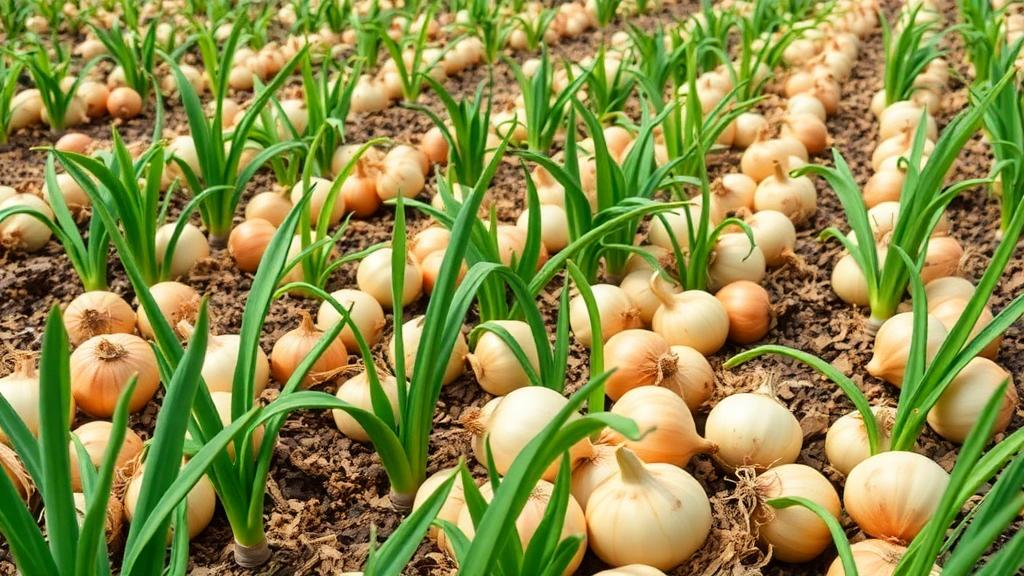
A two-year field study conducted in Georgia’s sweet onion country has found that the type of soil amendment farmers apply and the weather conditions that follow can significantly influence how long Escherichia coli survives in agricultural soils. The research, published in the peer-reviewed journal Risk Analysis by the Society for Risk Analysis, suggests that heat-treated poultry pellets and composted poultry litter both supported longer survival of the bacterium compared with untreated soils, and that extreme weather events rather than average seasonal conditions may be the decisive factor in bacterial persistence. The findings arrive at a moment when regulators and produce growers alike are searching for practical, locally grounded ways to manage food safety risk in fresh produce production.
Organic and sustainable farming operations increasingly depend on biological soil amendments of animal origin to build soil health, improve nutrient availability, and sustain crop productivity without relying on synthetic fertilizers. Poultry litter, a mixture of manure, bedding material, feathers, and feed residues, is one of the most abundant and widely used of these amendments. In Georgia, one of the nation’s leading poultry-producing states, approximately two million tons of poultry litter are generated annually, making it an economically and agronomically important resource for vegetable growers across the state. Sweet onions, a signature Georgia crop, are frequently grown in soils amended with these materials.
The research team, which included Harsimran Kaur Kapoor of the University of Georgia and Abhinav Mishra of the university’s Department of Food Science & Technology, set out to answer a deceptively simple question: how long does E. coli remain viable in field soils treated with different poultry litter-based amendments, and how do environmental conditions modulate that survival? The answer matters because pathogenic strains of E. coli and related foodborne pathogens can persist on produce surfaces and within soil ecosystems long after the amendment is applied, creating a window of potential contamination that growers must manage.
Across two growing seasons, the researchers observed a consistent pattern. Soils amended with heat-treated poultry pellets and soils amended with composted poultry litter both supported longer survival of E. coli than untreated control soils. Heat treatment and composting are both intended to reduce pathogen loads in manure-based products, yet the study indicates that the amended soil environment itself, even when the amendment has been processed, can create conditions more favorable to bacterial persistence than unamended soil. Nutrient availability, moisture retention, and organic matter content are among the factors that researchers generally associate with improved microbial survival in amended soils, and the study’s results align with that broader understanding.
The weather findings add a layer of complexity that the authors argue is essential for risk management. The influence of weather differed between the two growing seasons analyzed, pointing to the importance of year-to-year variability. Higher humidity was associated with greater bacterial survival, while stronger winds generally reduced survival. Rain and warmer soil temperatures could promote bacterial persistence, whereas higher air temperature and wind speeds tended to reduce it. Taken together, the results suggest that extreme weather events, rather than average seasonal conditions alone, may play an important role in determining how long bacteria can survive in agricultural soils.
This distinction between averages and extremes carries real consequences for how food safety risk is modeled and managed. A season with a modest average temperature but several intense rainfall events may pose a different contamination profile than a season with a higher average temperature and steady winds. Risk-based approaches that rely solely on seasonal or monthly climate summaries could therefore underestimate the survival window of pathogens following specific extreme events. The authors note that understanding how amendment practices interact with extreme weather may help inform risk-based management approaches under real field conditions, where growers cannot control the weather but can adjust amendment type, timing, and application practices.
The crop at the center of the study is not an arbitrary choice. Onions have been linked to several major foodborne illness outbreaks in North America in recent years. In 2024, the U.S. Food and Drug Administration investigated an outbreak of E. coli O157:H7 associated with slivered onions served on McDonald’s Quarter Pounder burgers. Earlier incidents include a 2020 outbreak of Salmonella Newport linked to red onions across the United States and Canada, and a 2021 outbreak of Salmonella Oranienburg tied to whole fresh onions imported from Mexico. These outbreaks resulted in thousands of reported illnesses and hundreds of hospitalizations, underscoring that allium crops, long considered lower risk than leafy greens, can serve as vectors for serious foodborne disease.
Sweet onions present particular production considerations. They are typically grown in sandy soils with careful irrigation management, harvested after months in direct contact with the soil environment, and often consumed raw or with minimal processing, which means no kill step intervenes between field and consumer. Any pathogen that persists in the soil or on the bulb surface at harvest therefore represents a direct route into the food supply. Understanding whether and how poultry litter amendments extend the survival window of E. coli in these soils gives growers and regulators a concrete variable to work with when designing pre-harvest intervals, amendment application schedules, and water and soil testing regimes.
The regulatory context is also evolving. The authors note that regulators continue to seek data on the food safety implications of biological soil amendments of animal origin, a category that includes raw and processed manures, composts, and pelleted products. Field-scale studies like this one provide the kind of empirical evidence needed to calibrate standards that are both protective of public health and workable for growers who depend on these amendments for soil fertility. The interaction between amendment type and local environmental conditions that the study documents suggests that a one-size-fits-all national standard may be less effective than frameworks that account for regional climate, weather variability, and dominant amendment practices.
For Georgia’s sweet onion industry, and for produce growers in poultry-heavy regions more broadly, the study offers a practical takeaway: the combination of amendment choice and weather exposure deserves active attention in food safety planning. Growers who apply heat-treated poultry pellets or composted poultry litter may want to consider how upcoming rainfall, humidity, and wind patterns could extend or shorten pathogen survival in their fields. As extreme weather events become more frequent and more intense, the researchers’ central finding, that it is the extremes rather than the averages that shape bacterial persistence, is likely to grow in importance for anyone working at the intersection of soil health, agricultural productivity, and the safety of the fresh produce that reaches consumers’ tables.
Subject of Research: Survival of E. coli in poultry litter-amended soils under varying weather conditions in sweet onion production
Article Title: Study finds poultry litter-based soil amendments and weather influence E. coli survival in Georgia sweet onion production systems
Article References: Study finds poultry litter-based soil amendments and weather influence E. coli survival in Georgia sweet onion production systems. (n.d.). Original publication
Image Credits: AI Generated
DOI: Not provided
Keywords: E. coli, poultry litter, soil amendments, sweet onions, food safety, extreme weather, Georgia agriculture, Risk Analysis, compost, foodborne illness, pathogen survival, produce safety
Cite Scienmag News
Lucy Donovan. (September 30, 2026). Poultry Litter Fertilizers and Extreme Weather Shape E. coli Survival in Onion Fields. Scienmag. https://scienmag.com/poultry-litter-fertilizers-and-extreme-weather-shape-e-coli-survival-in-onion-fields/
Lucy Donovan. "Poultry Litter Fertilizers and Extreme Weather Shape E. coli Survival in Onion Fields." Scienmag, 30 September 2026, https://scienmag.com/poultry-litter-fertilizers-and-extreme-weather-shape-e-coli-survival-in-onion-fields/. Accessed 30 September 2026.
Lucy Donovan. "Poultry Litter Fertilizers and Extreme Weather Shape E. coli Survival in Onion Fields." Scienmag. September 30, 2026. https://scienmag.com/poultry-litter-fertilizers-and-extreme-weather-shape-e-coli-survival-in-onion-fields/


