


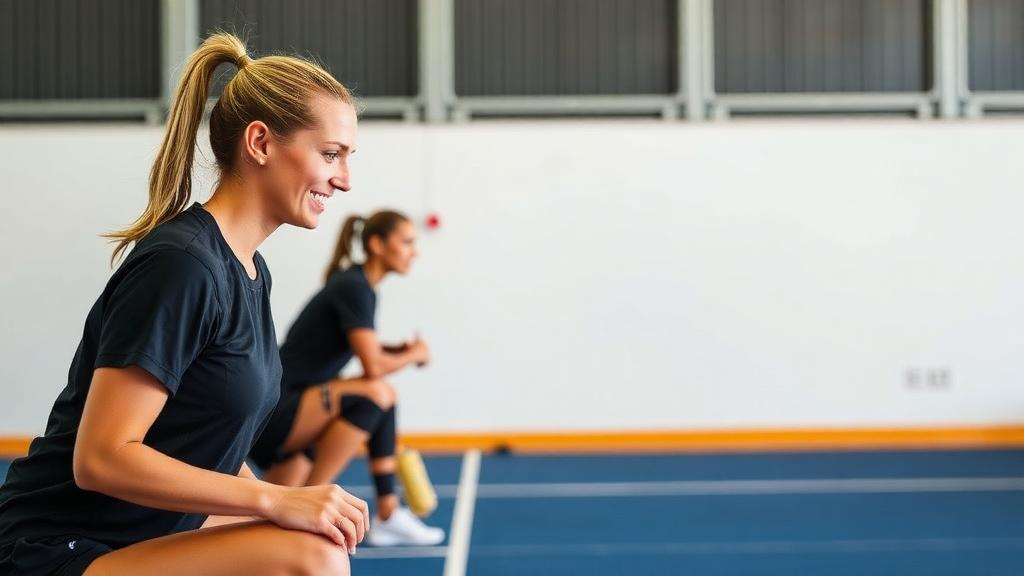
For decades, the unwritten rule of elite sport was simple: become a mother, and your career is effectively over. A new Australian study flips that assumption on its head, documenting how dozens of high-performance athletes returned to serious training within weeks of giving birth, only to run headlong into injuries, performance setbacks, and a startling absence of institutional support. The research, published in Sports Medicine – Open, offers one of the most detailed portraits yet of what it actually takes for a new mother to reclaim her place at the top of her sport.
The study, known as the Mum-Alete survey, was led by Victoria K. Norbury of Olympic Park Sports Medicine Centre in Melbourne, together with colleagues including Aaron T. Scanlan of CQUniversity, Rachel Harris and Richard Saw of the Australian Institute of Sport, and Jorunn Sundgot-Borgen of the Norwegian School of Sports Sciences. The team recruited Australian athletes who had been training or competing at a high-performance level in the six months before conception and who gave birth between July 2016 and February 2022. From 168 people who started the online survey, 64 postpartum athletes met the strict inclusion criteria and contributed data to the analysis.
The calibre of the respondents is striking. Half of the athletes had competed at world championship, Olympic, Paralympic, or Commonwealth Games level, and a further 45 percent had competed at national championship, domestic professional, or international level. In other words, 95 percent of the sample had competed beyond state or territory level, spanning both individual and team sports. The athletes were, on average, 32.5 years old when pregnant and 33.6 when they completed the survey, and most gave birth in 2020 or 2021, meaning their postpartum journeys unfolded against the backdrop of COVID-19 restrictions in Australia.
The headline finding concerns speed. Sixty percent of the athletes resumed some form of physical activity or exercise within six weeks of delivery, and 95 percent had returned to some form of training within 12 weeks. But the timeline was not uniform across training modalities. Pelvic floor exercises came first, with 74 percent of athletes starting them before the six-week mark, a pattern the authors interpret as a deliberate priority on rebuilding the muscular foundation that must withstand the substantial forces transmitted between the lower and upper body during running and other high-impact tasks. Half of the athletes had begun strength training within 12 weeks, while endurance training and sport-specific skills work generally followed later, with 87 percent and 84 percent respectively resuming those components within 12 months.
That early return came at a cost. Fifty-nine percent of respondents reported that pregnancy had negatively affected their performance since returning to high-performance sport, with only a small minority describing improvements. Meanwhile, 43 percent of the 63 athletes who answered the injury question reported sustaining a sport-related injury during their postpartum return, and 19 percent reported more than one. The specific problems athletes described read like a catalogue of musculoskeletal misfortune: a coccyx fracture, a hamstring strain, a hip labral tear, a pelvic stress fracture, quadriceps pain, and recurrent knee pain. Among those injured, 73 percent said the injury affected their ability to continue high-performance training, and one athlete was forced to take two full years away from elite training and competition.
The authors connect these outcomes to a plausible physiological chain. Nearly half of the respondents, 47 percent, stopped high-performance training entirely during pregnancy, and among those who kept training, all but five reduced their load. Reduced training volume during pregnancy has been linked to diminished fitness and a reduced capacity to tolerate the high training volumes needed after delivery. The researchers point to related evidence suggesting that pre-pregnancy training levels were associated with a 24 percent reduction in reported musculoskeletal injury postpartum, whereas cutting training volume by more than half during pregnancy nearly doubled the likelihood of reporting such an injury. Postpartum hormonal shifts, altered body mass, bone remodelling, and changes in muscle activation and tendinous and ligamentous structures may further lower the tolerance of body tissues to injury-inducing stress.
Beyond the physical, the survey catalogued a dense web of social and logistical challenges. Time management topped the list, cited by 76 percent of athletes, followed closely by loss of fitness and skills at 74 percent and breastfeeding at the same figure. Sleep was a challenge for 67 percent, stress for 59 percent, travel and childcare for 55 percent each, and pelvic floor issues or urinary incontinence for 51 percent. Notably, most athletes did not identify any single factor as an absolute barrier, suggesting that with the right support these obstacles are surmountable rather than career-ending. Family support, cited by 54 percent, and medical staff, cited by 51 percent, emerged as the most common facilitators, and athletes overwhelmingly felt supported by partners, family, coaches, teammates, and medical staff.
The glaring exception was the sporting organisation itself. Only 42 percent of athletes felt supported by their organisation, with most of the rest neutral, and 27 percent explicitly identified their organisation as a challenge or barrier. The numbers on policy awareness are perhaps the most damning: 45 percent of athletes said their organisation had no pregnancy or postpartum policy, and another 36 percent were unsure whether one existed. Similarly, 38 percent did not know whether their organisation had a well-being officer or programme. Many athletes also reported a lack of practical provisions such as maternity leave, status protections including stipends, caregiver allowances to attend training, and dedicated spaces for childcare and breastfeeding at training facilities.
The qualitative arm of the study, drawing on 880 open-ended comments that were coded into 1,225 excerpts, distilled eight major themes: critical support, training new bodies after delivery, navigating motherhood and sport, time and time management, education and expertise, injuries and safe return, breastfeeding while competing, and discrimination. That last theme, discrimination, was unique to this Australian sample and was directed specifically at the organisational level, reinforcing the authors’ call for governing bodies to develop effective policies for postpartum athletes. The findings echo earlier international work, including interviews with elite athletes in Spain, New Zealand, North America, and the United Kingdom, which identified similar struggles with guilt, identity, and balancing mother and athlete roles, alongside unexpected benefits such as enhanced motivation and adaptability.
The study’s practical implications are clear even if its limitations, including retrospective self-reported data, a single-country sample, and no standardised definition of the postpartum period, temper causal claims. The authors argue for structured screening when athletes return to sport, targeted education for coaches and medical staff in areas such as pelvic floor rehabilitation, breastfeeding, and nutrition, sleep hygiene and mental health support potentially coordinated by a dedicated well-being officer, and organisational investment in childcare, facilities, and flexible training arrangements. The Australian Institute of Sport has since developed Best Practice Recommendations to Support Elite Athletes from Preconception to Parenthood, advocating inclusive policies, personalised care plans, and protections for athlete funding and employment. This study, conducted before those recommendations took effect, now stands as a benchmark against which future progress can be measured, and a reminder that the mothers rewriting the rules of elite sport are doing so largely without a rulebook.
Subject of Research: Experiences of Australian female athletes returning to high-performance sport after pregnancy
Article Title: The Mum-Alete: An Observational Survey-Based Study of Australian Athletes Returning to High-Performance Sport After Pregnancy
Article References: Norbury, V. K., Scanlan, A. T., Harris, R., Saw, R., Sundgot-Borgen, J., Hughes, D., & Hayman, M. (2026). The Mum-Alete: An Observational Survey-Based Study of Australian Athletes Returning to High-Performance Sport After Pregnancy. Sports Medicine – Open, 12(1), Article 143. https://doi.org/10.1186/s40798-026-01114-w
Image Credits: AI Generated
DOI: 10.1186/s40798-026-01114-w
Keywords: female athletes, postpartum, return to sport, pregnancy, pelvic floor, sports injuries, elite sport, organisational policy, breastfeeding, childcare, sports medicine, Australia
Cite Scienmag News
Harold Sullivan. (September 30, 2026). Most Elite Mothers Return to Training Within Weeks, But Injuries and Policy Gaps Persist. Scienmag. https://scienmag.com/most-elite-mothers-return-to-training-within-weeks-but-injuries-and-policy-gaps-persist/
Harold Sullivan. "Most Elite Mothers Return to Training Within Weeks, But Injuries and Policy Gaps Persist." Scienmag, 30 September 2026, https://scienmag.com/most-elite-mothers-return-to-training-within-weeks-but-injuries-and-policy-gaps-persist/. Accessed 30 September 2026.
Harold Sullivan. "Most Elite Mothers Return to Training Within Weeks, But Injuries and Policy Gaps Persist." Scienmag. September 30, 2026. https://scienmag.com/most-elite-mothers-return-to-training-within-weeks-but-injuries-and-policy-gaps-persist/


