


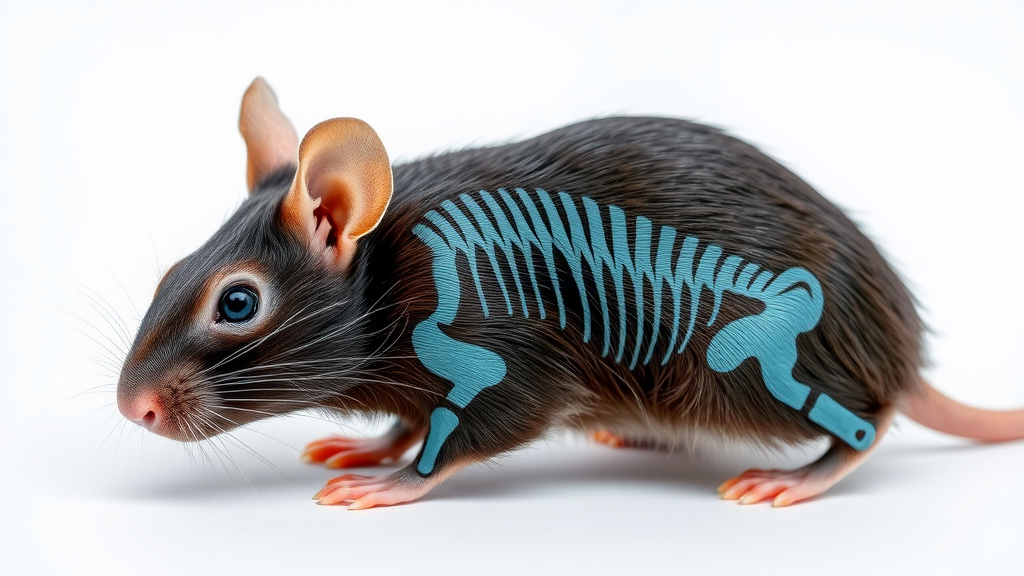
Diabetes has long been recognized as a disease that reaches far beyond blood sugar, quietly eroding the skeleton from within. Now, a team of pharmacologists at Jamia Hamdard in New Delhi has reported that a three-way combination of canagliflozin, metformin, and fenugreek seed extract can substantially blunt the skeletal damage caused by chronic hyperglycaemia in an experimental model of diabetic osteopathy. The study, published in the journal 3 Biotech, offers one of the most detailed head-to-head comparisons to date of how different antidiabetic regimens affect bone microarchitecture, and its findings may reshape how clinicians think about the skeletal side effects and benefits of the drugs they prescribe every day.
The research, led by Faiz Qamar under the supervision of Manju Sharma, focused on a well-established animal model of type 2 diabetes. Female Wistar rats were first fed a high-fat diet and then given a single intraperitoneal dose of streptozotocin at 35 milligrams per kilogram, a protocol that reproduces the insulin resistance and pancreatic beta-cell dysfunction characteristic of human type 2 diabetes. Once diabetes was established, the animals were divided into treatment groups receiving oral therapy for twelve weeks: canagliflozin alone at either 10 or 20 milligrams per kilogram, fenugreek seed extract at 400 milligrams per kilogram, canagliflozin at 10 milligrams per kilogram combined with metformin at 200 milligrams per kilogram, or the full triple combination of canagliflozin, metformin, and fenugreek seed extract at the same doses.
What makes this study technically significant is the breadth of skeletal endpoints the investigators measured. At the end of the treatment period, they assessed serum insulin and glycated haemoglobin, or HbA1c, as markers of long-term glycaemic control. For bone health, they turned to tartrate-resistant acid phosphatase, or TRAP, a serum enzyme released by osteoclasts, the cells responsible for breaking down bone. Elevated TRAP activity signals accelerated bone resorption. They also measured urinary calcium excretion, an indicator of calcium loss from the skeleton, and used micro-computed tomography, or micro-CT, to visualize and quantify the three-dimensional trabecular architecture of the femur, the spongy internal scaffolding that gives bone its strength while remaining light.
The untreated diabetic animals showed exactly the pattern of deterioration that clinicians fear in patients with long-standing diabetes. Their femoral trabecular bone exhibited marked reductions in bone volume fraction, trabecular thickness, trabecular number, and connectivity density, the last being a measure of how well the internal struts of bone are connected to one another and therefore how effectively the structure distributes mechanical load. At the same time, trabecular separation, the average gap between bone struts, increased, as did the structural model index, or SMI, a parameter that shifts toward plate-like and rod-like geometry as bone becomes weaker and more fracture-prone. Histological examination of the bone tissue confirmed these micro-CT findings, painting a consistent picture of diabetes-driven skeletal fragility.
Against this backdrop, the treatment results were striking. By week twelve, the triple combination of canagliflozin, metformin, and fenugreek seed extract had reduced fasting blood glucose by approximately 57.8 percent compared with diabetic control animals, while HbA1c fell by roughly 47.4 percent. These are substantial metabolic improvements, but the skeletal data were equally compelling. Serum TRAP activity, the biochemical signature of osteoclast-driven bone breakdown, declined by about 26.1 percent in the combination group, and urinary calcium excretion dropped by approximately 31.4 percent, suggesting that less calcium was being leached from the skeleton and lost through the kidneys.
Canagliflozin itself deserves particular attention in this context. The drug belongs to the sodium-glucose co-transporter 2, or SGLT2, inhibitor class, which works by blocking glucose reabsorption in the proximal tubule of the kidney, forcing excess glucose to be excreted in the urine. While the class has proven cardiovascular and renal benefits, some clinical evidence, including analyses from the CANVAS trial program, has raised questions about fracture risk with canagliflozin, making its skeletal profile a subject of genuine scientific debate. The new findings suggest that, at least in this experimental model of diabetic osteopathy, canagliflozin-based regimens attenuated rather than worsened trabecular deterioration, a result the authors argue supports further investigation of the drug’s skeletal effects and the mechanisms underlying them.
Metformin, the second pharmaceutical component of the combination, brings a different mechanism to the table. It acts primarily through activation of AMP-activated protein kinase, or AMPK, a cellular energy sensor that influences glucose production in the liver and insulin sensitivity in peripheral tissues. Interestingly, metformin has also been implicated in bone biology, with studies suggesting it may modulate the balance between osteoblasts, the bone-forming cells, and osteoclasts, the bone-resorbing cells. By improving insulin signalling, metformin may indirectly support bone, since insulin itself has anabolic effects on the skeleton, stimulating osteoblast activity and bone formation. The interplay between glycaemic control and bone metabolism is therefore not merely coincidental but mechanistically intertwined.
The third ingredient, fenugreek seed extract, is derived from Trigonella foenum-graecum, an herb with a long history in traditional medicine systems across South Asia and the Middle East. Modern research has identified multiple bioactive compounds in fenugreek, including the steroidal saponin diosgenin, which has been shown in cell studies to influence the Wnt/beta-catenin signalling pathway, a key regulator of osteoblast proliferation and differentiation. Fenugreek has also demonstrated antidiabetic properties in numerous preclinical and some clinical studies, thought to arise from its fibre content, saponins, and 4-hydroxyisoleucine, an amino acid with insulin-sensitizing activity. Including a botanical extract alongside two established pharmaceuticals reflects a growing interest in adjunctive phytotherapy for metabolic disease, though the authors are careful to frame the results as preclinical evidence requiring further study rather than a prescription for human use.
The significance of the study lies partly in its systematic comparison of monotherapy and combination approaches. Canagliflozin alone, at both doses tested, along with fenugreek seed extract and the dual canagliflozin-metformin combination, all attenuated the diabetes-associated skeletal alterations to varying degrees, but the triple regimen produced the most pronounced improvements in both metabolic and microarchitectural parameters. This dose-response-like gradient across regimens hints at possible additive or synergistic effects among the three agents, whether through complementary mechanisms of glucose lowering, reduced glucotoxicity in bone cells, or direct effects on osteoblast and osteoclast activity. The consistency between the biochemical markers, the micro-CT quantification, and the histological observations strengthens the internal validity of the findings, since each independent line of evidence points in the same direction.
For the millions of people living with type 2 diabetes, the spectre of skeletal fragility is an underappreciated burden. Diabetic bone disease differs from ordinary osteoporosis in that bone mineral density may appear normal or even elevated on standard scans, yet fracture risk remains substantially increased, a paradox attributed to impaired bone quality, accumulation of advanced glycation end-products that stiffen the collagen matrix, and disrupted remodelling. The Jamia Hamdard team’s work adds an important piece to this puzzle by demonstrating that aggressive glycaemic management with a rational drug combination can preserve trabecular microarchitecture in a model that closely mimics the human disease. While the results must be replicated and extended, including studies of bone strength and fracture mechanics, and ultimately clinical trials in patients, the message is clear: the drugs we choose to control diabetes may also shape the skeleton, and the right combinations could turn that influence to the patient’s advantage. The study was approved by the Institutional Animal Ethics Committee at Jamia Hamdard and conducted in compliance with Indian regulatory guidelines, with the authors reporting no conflicts of interest.
Subject of Research: Effects of canagliflozin, metformin, and fenugreek seed extract combinations on bone health in experimental diabetes
Article Title: Assessment of monotherapy and combination therapy with canagliflozin, metformin, and fenugreek seed extract in experimental diabetic osteopathy
Article References: Qamar, F., Sultana, S., Vaseem, M., Ahmad, T., & Sharma, M. (2026). Assessment of monotherapy and combination therapy with canagliflozin, metformin, and fenugreek seed extract in experimental diabetic osteopathy. 3 Biotech, 16(10), Article 446. https://doi.org/10.1007/s13205-026-05079-1
Image Credits: AI Generated
DOI: 10.1007/s13205-026-05079-1
Keywords: diabetes, diabetic osteopathy, canagliflozin, metformin, fenugreek seed extract, SGLT2 inhibitors, bone microarchitecture, micro-CT, trabecular bone, streptozotocin, rat model, HbA1c
Cite Scienmag News
Gregory Coleman. (September 27, 2026). Diabetes Drug Trio Shows Bone-Protecting Power in Rat Study. Scienmag. https://scienmag.com/diabetes-drug-trio-shows-bone-protecting-power-in-rat-study/
Gregory Coleman. "Diabetes Drug Trio Shows Bone-Protecting Power in Rat Study." Scienmag, 27 September 2026, https://scienmag.com/diabetes-drug-trio-shows-bone-protecting-power-in-rat-study/. Accessed 27 September 2026.
Gregory Coleman. "Diabetes Drug Trio Shows Bone-Protecting Power in Rat Study." Scienmag. September 27, 2026. https://scienmag.com/diabetes-drug-trio-shows-bone-protecting-power-in-rat-study/


