


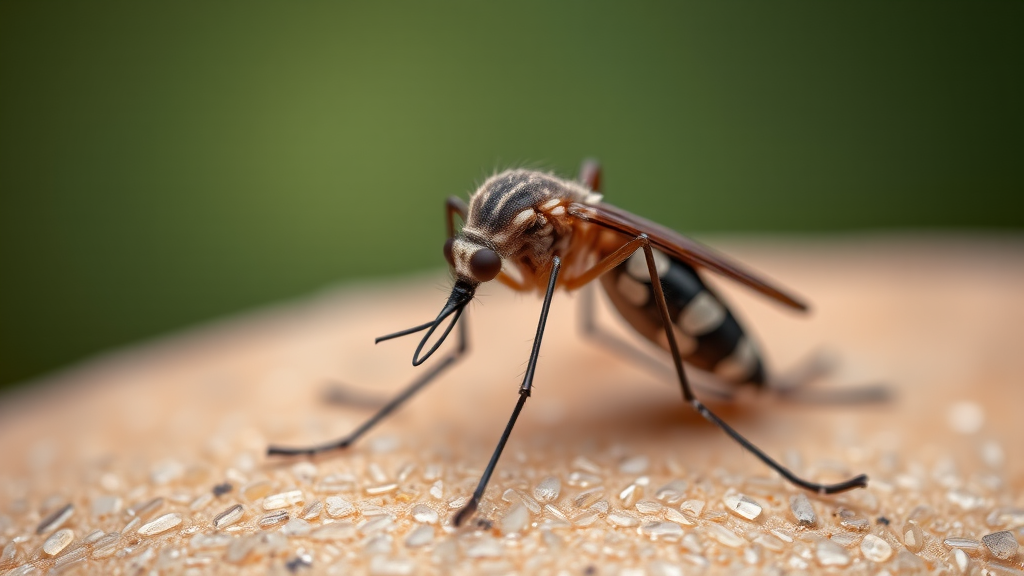
A sweeping metatranscriptomic survey of blood-feeding insects in Colombia has revealed an unexpectedly rich and variable landscape of viruses, bacteria, and antimicrobial resistance genes living inside mosquitoes and sand flies. The study, published in the journal Parasites & Vectors by researchers at Universidad Nacional de Colombia and collaborating institutions, analyzed insects belonging to six genera—Aedes, Culex, Psorophora, Coquillettidia, Lutzomyia, and Psychodopygus—collected from rural, peri-urban, and urban environments across seven locations in the Caribbean and Amazon regions. Rather than focusing on a single pathogen, the team sequenced the entire RNA content of pooled specimens, capturing in one pass the viral communities, the transcriptionally active bacterial microbiomes, and the resistance genes carried within them. The results offer one of the most integrated portraits to date of the microbial ecology of disease vectors in a region where dengue, Zika, chikungunya, and leishmaniasis remain persistent public health burdens.
The scale of the viral discovery is striking. Across 23 RNA-seq libraries, the researchers identified 416 viral sequences representing related members of 13 virus families, including Metaviridae, Chuviridae, Xinmoviridae, Flaviviridae, and Rhabdoviridae. Notably, the viromes were dominated not by known human pathogens but by insect-specific viruses, or ISVs, a diverse group of viruses that persist in insect populations without apparently infecting vertebrates. These viruses are increasingly recognized as important players in vector biology: some can modulate the ability of mosquitoes to transmit arboviruses by competing for cellular resources or priming the insect immune system. The Colombian data confirm that ISVs form the backbone of the virome in these hematophagous insects, while also revealing that virome structure is not dictated solely by host species identity—a finding that complicates simple assumptions about virus-vector relationships.
That variability is itself a key message of the study. Two insects of the same species collected from different sites, or even different pools from the same area, could carry markedly different viral assemblages. This extensive virome variability suggests that local ecological conditions—habitat type, available hosts, environmental microbes, and perhaps human land use—shape which viruses persist in vector populations. For surveillance programs, the implication is sobering: sampling a single location or season may give a misleading picture of the viral diversity circulating in a region. Continuous, spatially distributed metatranscriptomic monitoring may be required to track how these communities shift over time, particularly as climate change and urbanization alter the distributions of both vectors and their microbes.
Methodologically, the study relied on RNA sequencing of pooled insect specimens, followed by computational assembly and taxonomic classification of the resulting reads. The researchers confirmed host species identity by assembling partial cytochrome c oxidase subunit I (COI) barcode sequences from each metatranscriptome and comparing them against NCBI and BOLD databases, building maximum likelihood phylogenetic trees to verify assignments. Viral contigs were assigned to families by similarity to known relatives, with metrics such as percent identity, alignment coverage, and e-values documented for each assignment. Bacterial taxa were quantified using transcripts per million (TPM) normalization, allowing the team to distinguish transcriptionally active members of the microbiome from dormant or contaminating DNA. This activity-based view is important because it captures which microbes are actually metabolizing inside the insects, not merely which are present.
The bacterial side of the analysis revealed complex, active microbiomes with clear patterns of ecological structure. Wolbachia, the famous intracellular symbiont capable of blocking arbovirus transmission and manipulating host reproduction, was prominently represented in Culex, Coquillettidia, and Aedes albopictus specimens. Its presence in these genera is consistent with its known distribution, but its transcriptional activity in wild Colombian populations underscores its potential relevance for biocontrol strategies, including the deployment of Wolbachia-infected mosquitoes to suppress diseases such as dengue. The detection of the symbiont across multiple genera and habitat types suggests it is a stable feature of the local vector fauna, providing a natural baseline for future interventions.
Perhaps more surprising was the detection of bacterial genera typically associated with humans, including Cutibacterium, Faecalibacterium, Prevotella, Hallela, and Escherichia, at lower abundances in the insect microbiomes. Their presence, the authors suggest, may reflect exposure to human-impacted environments—urban and peri-urban settings where vectors breed in water contaminated with human waste or feed on human hosts. This finding blurs the boundary between the insect microbiome and the microbial ecology of the surrounding human landscape. It also raises practical questions: if vector microbiomes mirror environmental contamination, they could potentially serve as sentinels for monitoring microbial pollution, while simultaneously acting as vehicles through which human-associated bacteria, and the genes they carry, circulate between environments and arthropod hosts.
That last concern becomes concrete in the study’s resistome findings. The researchers identified transcriptionally active antimicrobial resistance genes (ARGs) conferring resistance to several major antibiotic classes, including fluoroquinolones, aminoglycosides, and tetracyclines, along with instances of multidrug resistance associated with efflux pump systems—cellular machinery that pumps diverse toxic compounds out of bacterial cells. Critically, statistical analysis showed that resistome composition differed significantly among insect species (pseudo-F = 1.91, p = 0.028) but not among habitat categories, indicating that the host’s own microbial community structure, rather than simply the collection site, drives which resistance genes are present and expressed. The genes were detected through TPM-normalized transcript counts, meaning they were not just present as DNA but actively being transcribed by living bacteria within the insects.
Even more consequential was the finding that some ARGs were associated with sequences linked to mobile genetic elements, such as plasmids and transposons, which can move between bacteria through horizontal gene transfer. This suggests that the microbiomes of hematophagous insects could function as arenas where resistance genes are exchanged, reshuffled, and potentially passed between environmental bacteria, human-associated pathogens, and symbionts. The authors are careful to frame this as a hypothesis requiring further work: they call for studies incorporating environmental matrices—soil, water, and other samples from the same sites—and functional validation to determine whether these insects genuinely amplify or disseminate antimicrobial resistance, or merely reflect the resistance burden of their surroundings. Still, the mere demonstration that active ARGs circulate in the microbiomes of mosquitoes and sand flies adds a new dimension to antimicrobial resistance surveillance, which has traditionally focused on clinical settings, livestock, and water systems.
The study also contributes to a growing appreciation of endogenous viral elements, sequences of viral origin integrated into host genomes, as part of the picture of vector viromes. By cataloging viral sequences across multiple families and host species, the dataset provides raw material for distinguishing true infectious viruses from genomic fossils and for understanding how insect viruses and their hosts have co-evolved. Combined with the bacterial and resistome data, the work exemplifies the power of metatranscriptomics as a single-lens approach to vector biology: one sequencing workflow yields simultaneous insight into pathogens, symbionts, environmental microbes, and resistance genes, all filtered through the constraint of transcriptional activity.
For Colombia, a country spanning Caribbean coastlines, Andean valleys, and Amazonian rainforest, the findings carry direct implications for public health planning. The confirmation that vector viromes are dominated by insect-specific viruses is reassuring in one sense, but the extensive variability among pools and sites means that pathogen emergence could be difficult to anticipate from limited sampling. The presence of Wolbachia in key vector species offers a foundation for biocontrol programs already proven elsewhere, while the detection of human-associated bacteria and active resistance genes ties vector surveillance to the broader agenda of antimicrobial resistance monitoring. The authors, led by Daniel F. Largo and Harold D. Gomez Rosero with corresponding authors Rafael J. Vivero-Gómez and Claudia Ximena Moreno-Herrera, emphasize that further studies with environmental sampling and functional validation are needed before the full significance of the resistome findings can be assessed. What is already clear, however, is that the microbes inhabiting these disease vectors form a dynamic, interconnected ecosystem—one that reflects the environments humans have built and may, in turn, shape the health risks those environments carry back to us.
Subject of Research: Virome, microbiome, and antimicrobial resistance gene profiles of mosquitoes and sand flies in Colombia
Article Title: Metatranscriptomic insights into mosquitoes and sand flies from Colombia reveal extensive virome variability and detection of bacterial and viral-related resistomes
Article References: Largo, D. F., Gomez Rosero, H. D., Gómez, G. F., Junca, H., Cadavid-Restrepo, G. E., Vivero-Gómez, R. J., & Moreno-Herrera, C. X. (2026). Metatranscriptomic insights into mosquitoes and sand flies from Colombia reveal extensive virome variability and detection of bacterial and viral-related resistomes. Parasites & Vectors. https://doi.org/10.1186/s13071-026-07710-9
Image Credits: AI Generated
DOI: 10.1186/s13071-026-07710-9
Keywords: mosquitoes, sand flies, virome, metatranscriptomics, insect-specific viruses, Wolbachia, antimicrobial resistance, resistome, microbiome, Colombia, RNA-seq, horizontal gene transfer
Cite Scienmag News
Juliet Wilcox. (September 26, 2026). Hidden Viral Worlds and Antibiotic Resistance Genes Found in Colombian Mosquitoes and Sand Flies. Scienmag. https://scienmag.com/hidden-viral-worlds-and-antibiotic-resistance-genes-found-in-colombian-mosquitoes-and-sand-flies/
Juliet Wilcox. "Hidden Viral Worlds and Antibiotic Resistance Genes Found in Colombian Mosquitoes and Sand Flies." Scienmag, 26 September 2026, https://scienmag.com/hidden-viral-worlds-and-antibiotic-resistance-genes-found-in-colombian-mosquitoes-and-sand-flies/. Accessed 26 September 2026.
Juliet Wilcox. "Hidden Viral Worlds and Antibiotic Resistance Genes Found in Colombian Mosquitoes and Sand Flies." Scienmag. September 26, 2026. https://scienmag.com/hidden-viral-worlds-and-antibiotic-resistance-genes-found-in-colombian-mosquitoes-and-sand-flies/


