


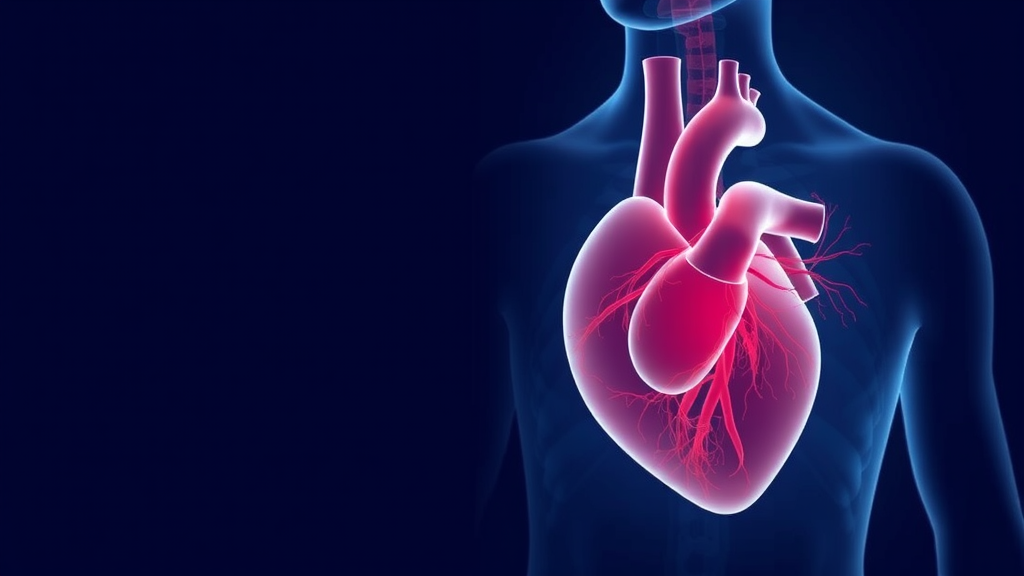
For decades, cardiologists have judged the severity of coarctation of the aorta—a congenital narrowing of the body’s main artery—largely by a single number: the pressure gradient across the narrowed segment. A new study published in the Annals of Biomedical Engineering argues that this familiar metric tells only part of the story. Led by MohammadAli Daeian and Zahra Keshavarz-Motamed of McMaster University, with collaborators including Arsha Karbassi, Javier Ganame, and Spencer Smith, the research shows that the geometry of the descending aorta downstream of the narrowing plays a decisive role in how much energy the blood loses after passing through the obstruction—and how much extra work that energy loss imposes on the left ventricle, the heart’s main pumping chamber.
Coarctation of the aorta, often abbreviated CoA, affects roughly one in several thousand live births and can remain clinically silent until hypertension or heart failure emerges in adulthood. Even after the narrowing is relieved by surgery or stenting, many patients continue to develop hypertension, diastolic dysfunction, and premature cardiovascular disease. Previous work by the same group and others has hinted that eliminating the trans-coarctation pressure gradient does not always normalize left ventricular function or aortic shear stress, suggesting that something beyond the pressure drop itself shapes long-term outcomes. The new study homes in on one candidate: post-stenotic energy dissipation, the irreversible loss of useful mechanical energy that occurs when high-velocity, disturbed flow exiting the narrowing collides with the complex three-dimensional anatomy of the descending aorta.
To dissect this phenomenon, the team analyzed a cohort of twenty patients with coarctation of the aorta. From computed tomography and magnetic resonance imaging, they extracted detailed anatomical features of the aorta, including the centerline topology—the curved path tracing the vessel’s midline—and the variation in cross-sectional area along the descending aorta. These geometric descriptors capture how sharply the aorta bends, how abruptly its caliber changes, and how the vessel’s axis deviates between the coarctation site and the segments immediately downstream. Rather than treating the aorta as a simple tube, the approach quantifies the actual anatomical landscape through which the jet of blood must travel after it exits the stenosis.
On top of the imaging analysis, the researchers built patient-specific multiscale computational simulations that couple three-dimensional aortic hemodynamics with models of cardiac function and systemic circulation. This framework allows the virtual blood flow to respond both to the local anatomy of each patient’s aorta and to the global behavior of the heart and arterial system. Using these simulations, the team quantified energy dissipation per unit volume in the descending aorta—a measure of how much of the blood’s mechanical energy is converted into heat and turbulence rather than forward motion. The multiscale design matters because energy loss in the aorta cannot be interpreted in isolation; it depends on the pressure and flow waveforms delivered by the left ventricle and on the resistance and compliance of the entire circulation.
The central finding is strikingly geometric. Energy dissipation per unit volume in the descending aorta correlates with the combined effect of two quantities: the kinetic energy available in the flow at the coarctation site, and the centerline tangent angle difference between the coarctation and the downstream descending aorta. In plain terms, it is not enough to know how fast the blood is moving as it leaves the narrowing; one must also know how much the vessel’s axis changes direction just downstream. A jet that exits the stenosis into a sharply angled or tortuous segment cannot follow the vessel wall smoothly, and the resulting flow separation, secondary motions, and turbulence dissipate far more energy than the same jet entering a well-aligned segment.
This angle-based insight reframes a familiar clinical observation. Post-stenotic dilatation—the widening of the aorta just beyond a narrowing—has long been recognized on imaging, and computational studies have linked it to the disturbed hemodynamics downstream of stenoses. The new results suggest that the same anatomical misalignment that promotes dilatation also acts as an energy sink, converting the kinetic energy generated by the ventricle into wasted, irreversible losses. Two patients with identical pressure gradients could therefore carry very different energetic burdens depending on the shape of their descending aortas, a distinction that the standard diagnostic metric is blind to.
Crucially, the study connects these downstream losses to the heart itself. The geometric and energetic parameters—the kinetic energy at the coarctation and the centerline angle difference—were found to significantly influence the left ventricular workload expended to compensate for post-stenotic energy loss. In other words, when the aorta’s geometry squanders the energy the heart delivers, the ventricle must do additional work to maintain adequate perfusion of the body. Over years, this chronic energetic penalty plausibly contributes to the left ventricular hypertrophy, diastolic dysfunction, and exercise intolerance documented in adults with repaired coarctation, outcomes that prior clinical studies have linked to abnormal arterial load indices even when resting blood pressure appears controlled.
The implications for clinical practice are substantial. Current guidelines from the American Heart Association and the European Society of Cardiology rely heavily on pressure gradients, imaging-derived indices of narrowing severity, and ventricular function to guide decisions about intervention. The new findings argue for incorporating anatomical and energetic metrics—centerline curvature, angle change, cross-sectional area variation, and computed energy dissipation—alongside pressure gradients when assessing disease severity and cardiac burden. Because the required inputs come from CT and MRI images that patients already undergo, the geometric analysis could in principle be folded into existing imaging workflows, and the computational framework builds on the group’s broader program of non-invasive, patient-specific diagnostic tools for valvular and vascular disease.
The work also resonates with a growing body of literature on cardiovascular energetics. Four-dimensional flow magnetic resonance imaging has been used to measure turbulent kinetic energy in aortic stenosis and coarctation, and studies of hypertrophic cardiomyopathy have shown that individualized computational modeling can reveal energetic inefficiencies invisible to conventional metrics. By identifying a simple, image-derived geometric predictor of energy loss, the McMaster team offers a bridge between high-fidelity simulation and practical clinical assessment. The method’s reliance on centerline morphology—something extractable from standard angiographic and tomographic data—makes it more translatable than approaches requiring specialized flow-sensitive sequences.
Limitations and next steps remain. The cohort comprised twenty patients, and the study, supported by NSERC Discovery and Alliance grants and computational resources from the Digital Research Alliance of Canada, will need validation in larger and more diverse populations, including patients before and after intervention. Longitudinal studies will be required to test whether geometrically driven energy dissipation predicts ventricular remodeling, hypertension, or clinical events over time. Still, the message is clear and potentially practice-changing: in coarctation of the aorta, the pressure drop across the narrowing is only the opening chapter of the story. The shape of the vessel that receives the jet—the bends, the angles, the tapering of the descending aorta—determines how much of the heart’s energy survives the journey, and how hard the ventricle must work to make up the difference. Reading the aorta’s centerline, the study suggests, may be as important as measuring its pressures.
Subject of Research: Geometric determinants of post-stenotic flow energy loss and left ventricular workload in coarctation of the aorta
Article Title: Geometric Determinants of Post-stenotic Energetics in Coarctation of Aorta: Linking Centerline Morphology to Downstream Energy Loss
Article References: Daeian, M., Karbassi, A., Ganame, J., Smith, S., & Keshavarz-Motamed, Z. (2026). Geometric Determinants of Post-stenotic Energetics in Coarctation of Aorta: Linking Centerline Morphology to Downstream Energy Loss. Annals of Biomedical Engineering. https://doi.org/10.1007/s10439-026-04351-y
Image Credits: AI Generated
DOI: 10.1007/s10439-026-04351-y
Keywords: aortic coarctation, hemodynamics, energy dissipation, centerline morphology, left ventricular workload, computational fluid dynamics, descending aorta, pressure gradient, patient-specific modeling, cardiac function, viscous dissipation, medical imaging
Cite Scienmag News
Ophelia Keating. (September 25, 2026). The Shape of the Aorta After a Narrowing May Drive Hidden Energy Loss and Heart Strain. Scienmag. https://scienmag.com/the-shape-of-the-aorta-after-a-narrowing-may-drive-hidden-energy-loss-and-heart-strain/
Ophelia Keating. "The Shape of the Aorta After a Narrowing May Drive Hidden Energy Loss and Heart Strain." Scienmag, 25 September 2026, https://scienmag.com/the-shape-of-the-aorta-after-a-narrowing-may-drive-hidden-energy-loss-and-heart-strain/. Accessed 25 September 2026.
Ophelia Keating. "The Shape of the Aorta After a Narrowing May Drive Hidden Energy Loss and Heart Strain." Scienmag. September 25, 2026. https://scienmag.com/the-shape-of-the-aorta-after-a-narrowing-may-drive-hidden-energy-loss-and-heart-strain/


