


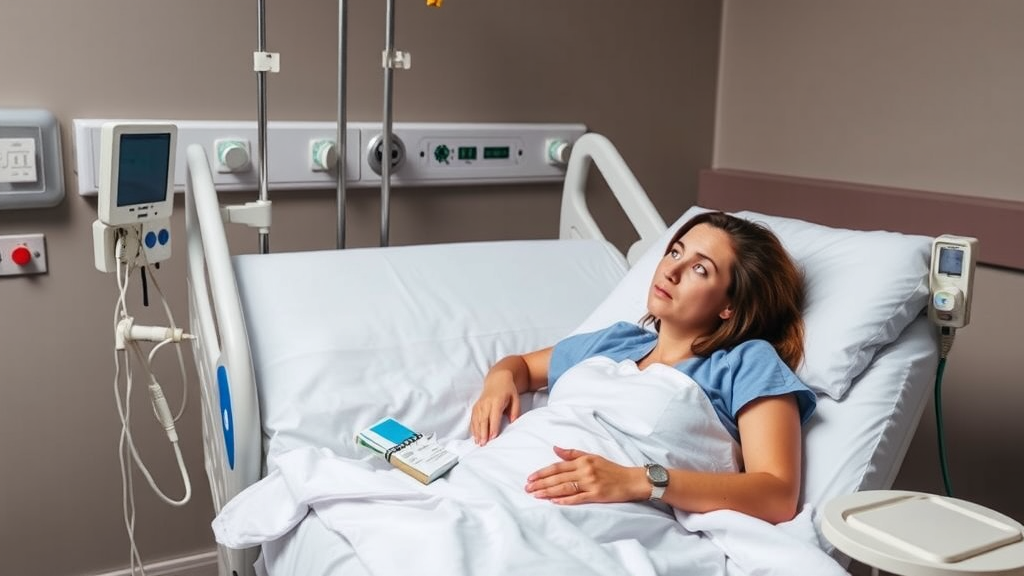
Every twelve hours, in a coronary intensive care unit in Rio de Janeiro, nurses gather at the bedsides of patients recovering from heart attacks and cardiac surgery to hand over responsibility for care to the incoming shift. The ritual is supposed to be one of the safest moments in modern medicine: a structured exchange of information designed to catch errors before they harm anyone. Yet a new qualitative study published in Nursing Open reveals a striking paradox. Even when handover happens right at the patient’s bedside, patients themselves often remain silent bystanders, unsure whether they are even allowed to speak. The research, conducted by a team of Brazilian nursing scientists, suggests that moving communication to the bedside is only the first step toward genuinely participatory care, and that the gap between physical presence and meaningful engagement may be far wider than the global patient safety community has assumed.
The stakes of this question are enormous. According to the World Health Organization, roughly ten percent of hospitalized patients in high-income countries experience adverse events during their care, a figure that climbs to twenty-five percent in low- and middle-income settings. The WHO estimates that unsafe care contributes to approximately 134 million incidents each year and around 2.6 million deaths worldwide. In response, the organization’s Global Patient Safety Action Plan 2021–2030 identified patient and family engagement as a central strategy for reducing avoidable harm. The theoretical foundation for this approach comes from a widely cited framework by Carman and colleagues, which describes engagement as a continuum ranging from simply receiving information to active partnership and shared decision-making. The new study set out to discover where critically ill cardiac patients and the nurses who care for them actually stand on that continuum.
The research team conducted an exploratory qualitative study in an eight-bed coronary intensive care unit at a public hospital in Rio de Janeiro, where nursing handover already takes place twice daily, at seven in the morning and seven in the evening, supported by a structured communication instrument. Between October 2023 and May 2024, a doctoral researcher conducted individual semi-structured interviews with 22 nursing professionals, comprising eight nurses and fourteen nursing technicians, and 16 hospitalized patients. Patients were eligible only if they had been in the unit for at least 48 hours and had experienced at least four handovers, and only if they were clinically stable, able to communicate, and free of cognitive impairment. Interviews were audio-recorded, transcribed verbatim in Portuguese, and analyzed using inductive thematic content analysis, producing 450 thematic recording units that were distilled into 15 meaning units and ultimately four themes. Data collection ended when empirical saturation was reached, meaning additional interviews no longer generated new concepts.
The first major finding was that the nursing professionals genuinely valued bedside handover. They described how seeing the patient directly allowed them to check devices, verify clinical information, and catch risks that might otherwise slip through the cracks. One nurse explained that the model had helped reduce safety incidents precisely because the patient could be visualized, citing the example of a patient exposed to the risk of falling from bed. The structured script functioned as a memory aid, ensuring that all important points were covered. Crucially, several professionals acknowledged that patients themselves could serve as an additional safeguard. One nurse noted that patients often know everything happening to them and had sometimes corrected or added information. A nursing technician described how simply asking patients about allergies could prevent adverse events, information that might never surface through documentation alone.
Yet the professionals were deeply ambivalent about inviting patients into the conversation. The second theme, drawing on 135 recording units, exposed a web of barriers that went well beyond logistics. Communication was the most prominent concern: acronyms, biomedical jargon, and unexplained clinical expressions could confuse patients or, worse, terrify them. One nurse recounted a patient who was shocked because he believed he was HIV positive after mishearing an abbreviation. Professionals also questioned whether all information should be shared at the bedside, worrying that details about bleeding, severe prognoses, or uncertain medical decisions could cause emotional distress. Organizational constraints compounded the problem: handover must remain dynamic and efficient, the unit’s open layout with beds separated only by screens offered little privacy, and some patients suffered from confusion or confinement syndrome that made participation difficult or impossible.
The third theme revealed what professionals believed would be needed to make participation work. Rather than rejecting the idea outright, they called for a structured model with clear criteria about what information should be communicated at the bedside and what should be discussed separately among professionals. Training emerged as a non-negotiable prerequisite: staff wanted to understand the purpose of patient participation, how to invite patients, how to use plain language, and how to avoid psychological repercussions. Some suggested informational videos to support adherence. Perhaps most tellingly, professionals recognized that patients would need explicit encouragement to participate, proposing that nurses end each handover by asking whether the patient had questions or wanted to add anything. Participation, they concluded, is not spontaneous; it depends on an opening deliberately created by the nursing team.
The fourth and most striking theme came from the patients themselves, who demonstrated only limited familiarity with the handover happening at their own bedsides. Most understood it as a conversation among professionals to update the incoming team, not as a moment in which they could take part. Their willingness to engage varied enormously. Some feared emotional distress or embarrassment, with one patient saying he would feel ashamed to listen, and another noting that hearing difficult news could be devastating for patients whose treatment had not gone well. Others were interested in listening, asking questions, or correcting overlooked details. But the most powerful finding was that several patients did not perceive themselves as legitimate participants at all. One declared that participation was simply not his role because he was just the patient, while another said the meeting belonged to the professionals, not to him. Many said they would participate only if explicitly invited.
The study’s central conceptual contribution lies in its sharp distinction between bedside handover and participatory handover. Bedside handover changes where communication occurs; participatory handover requires changes in how communication occurs, by intentionally incorporating patients as active contributors to the exchange of information. Because this study was conducted in a setting where bedside handover was already embedded in routine practice, the findings shift the debate from whether the practice should be adopted to how it can evolve. Physical presence, the authors argue, should never be interpreted as evidence of meaningful engagement. Interpreted through Carman’s engagement framework, patient participation in this unit remained largely at the initial stages of the continuum: patients were present and occasionally informed, but rarely encouraged to contribute or share responsibility for communication.
The findings also carry important implications for the Brazilian healthcare context, where patient engagement has only recently become an explicit priority in national safety policies and where hierarchical communication traditions and biomedical culture remain influential. The authors caution that professionals’ concerns should not be read as resistance to innovation but as an attempt to balance the benefits of participation with ethical and clinical responsibilities, including confidentiality and emotional protection. Trust emerged as a double-edged factor: confidence in professionals made patients feel safe, but sometimes reduced their sense that their own contributions could improve care. The authors argue that trust and participation should be understood as complementary rather than competing values.
Ultimately, the study concludes that participatory handover should not be imposed as a standardized requirement but offered as a flexible communication strategy tailored to each patient’s preferences, health literacy, communication abilities, and clinical condition, ensuring that every patient has the opportunity, but never the obligation, to take part. Implementing this vision, the researchers emphasize, is a system-level intervention requiring institutional guidance, staff training, leadership commitment, and organizational cultures that value dialogue and shared responsibility, rather than leaving the decision to individual discretion. The study’s limitations, including its single-unit setting and the absence of family perspectives, mean the findings are context-specific, but their message resonates globally: the patient lying at the center of the bedside handover will only find a voice when the healthcare system deliberately makes room for one.
Subject of Research: Patient participation in nursing handover in a coronary intensive care unit
Article Title: Patient Participation in Nursing Handover in a Coronary Intensive Care Unit: A Qualitative Study
Article References: Santos, G. R. D. S. D., Duarte, S. D. C. M., Campos, J. F., & da Silva, R. C. (2026). Patient Participation in Nursing Handover in a Coronary Intensive Care Unit: A Qualitative Study. Nursing Open, 13(9), Article e70802. https://doi.org/10.1002/nop2.70802
Image Credits: AI Generated
DOI: 10.1002/nop2.70802
Keywords: patient participation, nursing handover, bedside handover, intensive care, patient safety, patient-centred care, qualitative research, coronary care, communication, Brazil, nursing, patient engagement
Cite Scienmag News
Ophelia Keating. (September 24, 2026). Bedside Handover Alone Doesn’t Give ICU Patients a Real Voice, Study Finds. Scienmag. https://scienmag.com/bedside-handover-alone-doesnt-give-icu-patients-a-real-voice-study-finds/
Ophelia Keating. "Bedside Handover Alone Doesn’t Give ICU Patients a Real Voice, Study Finds." Scienmag, 24 September 2026, https://scienmag.com/bedside-handover-alone-doesnt-give-icu-patients-a-real-voice-study-finds/. Accessed 24 September 2026.
Ophelia Keating. "Bedside Handover Alone Doesn’t Give ICU Patients a Real Voice, Study Finds." Scienmag. September 24, 2026. https://scienmag.com/bedside-handover-alone-doesnt-give-icu-patients-a-real-voice-study-finds/


