


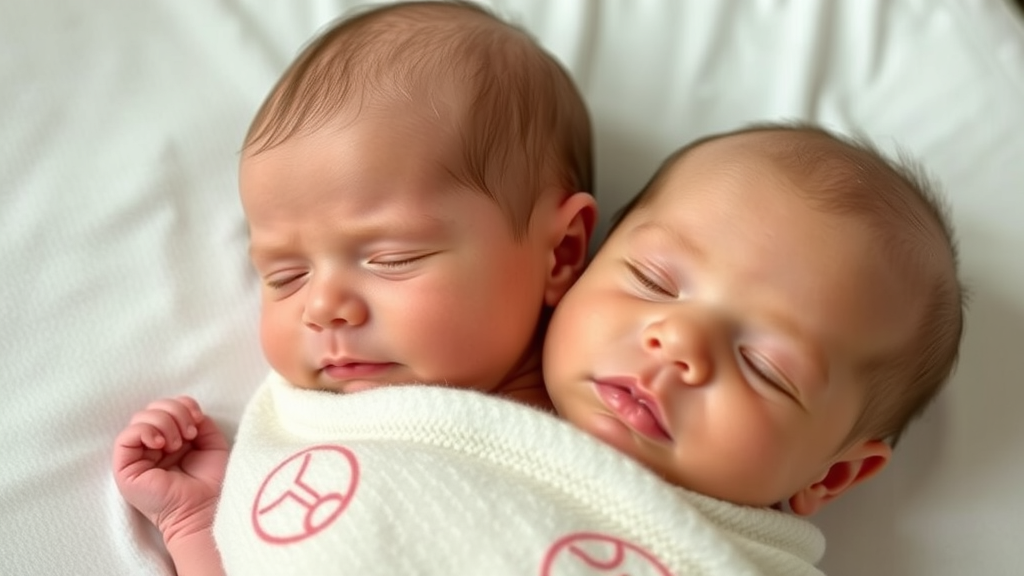
Every newborn footprint gets recorded, every hearing screen logged, and every heel-prick blood sample sent for testing. Yet one of the most consequential rare diseases a baby can be born with often slips through the first weeks of life unnoticed. Prader-Willi syndrome, a genetic disorder that eventually causes insatiable hunger, severe obesity, and profound developmental challenges, presents in newborns with signs so subtle that even experienced clinicians can miss them. Now, a research team at Children’s Hospital of Fudan University in Shanghai reports that a machine learning model trained to read the geometry of a child’s face can flag the condition in neonates with striking accuracy, potentially opening a window for intervention at the very start of life.
Prader-Willi syndrome arises from errors in the expression of paternally inherited genes on chromosome 15, affecting roughly one in ten thousand to one in thirty thousand births. Infants with the condition typically show weak muscle tone, a poor suck that makes feeding difficult, and mild facial differences such as a narrow forehead, almond-shaped eyes, and a downturned mouth. As childhood progresses, the picture changes dramatically: an unrelenting drive to eat emerges, leading to life-threatening obesity if not managed, alongside cognitive and behavioral difficulties. Early recognition matters enormously, because growth hormone therapy, feeding support, and structured developmental care initiated soon after birth can measurably improve outcomes. The catch is that the neonatal facial phenotype, the very signal clinicians might rely on, is faint and easily overlooked in a squirming, sleeping infant.
The Fudan team, led by Yunqian Zhu and Wenhao Zhou, set out to build a diagnostic aid that works precisely where existing tools falter. Their strategy rested on a pragmatic observation: photographs of older children with the syndrome are relatively abundant, while images of newborns are scarce and expensive to collect. Could a model trained on the faces of older children still detect the syndrome in newborns whose facial features are far less pronounced? To find out, the researchers assembled a training cohort of 113 children drawn from a public platform, of whom 21 carried confirmed diagnoses of Prader-Willi syndrome, and a separate validation cohort of newborns at their own hospital consisting of ten affected infants and thirteen controls.
The technical approach combined multiple feature sets and learning algorithms. The team extracted a detailed panel of facial measurements, including distances, angles, and shape descriptors capturing everything from eye spacing to lip contour, alongside age. They then trained six different classification algorithms, spanning from logistic regression to Random Forests and AdaBoost ensembles, on three versions of the feature set: the complete panel, a top-ten subset of the most informative features, and a clinically selected subset chosen for relevance to the syndrome. Performance was judged using the area under the precision-recall curve, a metric well suited to datasets where positive cases, like rare diseases, are outnumbered by controls. Across all feature sets, the Random Forest and AdaBoost models emerged as the strongest performers.
The headline result came from the Random Forest trained on the complete feature set. In cross-validated testing on the training cohort, it achieved a mean sensitivity of 0.97, with a 95 percent confidence interval stretching from 0.84 to 1.00, and a specificity of 0.95, correctly identifying nearly every child with the syndrome while rejecting nearly all children without it. The model was also well calibrated, meaning its predicted probabilities tracked actual likelihoods rather than being systematically overconfident or timid, a property the researchers emphasize as essential for any tool intended to support real clinical decisions rather than inflate benchmark scores.
Peering inside the model revealed a face in numbers. Age, face width, and features of the upper lip carried the greatest predictive weight, consistent with the well-described dysmorphic profile of the syndrome. More intriguingly, the analysis surfaced four facial features not previously reported in the context of Prader-Willi syndrome: jaw symmetry, chin shape, nose width, and jaw width. A sensitivity analysis showed that 26 facial features contributed more to classification than age alone, suggesting that the model was genuinely reading facial structure rather than simply learning that children with the condition tend to be photographed at certain ages. These newly identified dimensions of the syndrome’s facial signature could inform clinicians and researchers alike, expanding what is understood about how a single genetic lesion reshapes craniofacial development.
The decisive test, however, was neonatal. When the researchers applied their child-trained model to the newborn validation cohort, they first had to adjust the decision threshold, because the probability scores that fit older children needed recalibration for the subtler neonatal face. After this re-estimation, the Random Forest model detected 80 percent of affected newborns while correctly clearing 77 percent of controls. To benchmark this performance, the team compared it against Face2Gene, a widely used commercial facial analysis app for genetic syndromes. On the same newborn images, Face2Gene achieved only 70 percent sensitivity and a mere 15 percent specificity, meaning it flagged almost every baby as suspect. At a false positive rate of 0.25 or less, the Fudan model delivered comparable sensitivity but dramatically higher specificity, a distinction that matters in a screening context where alarmingly frequent false alarms would erode trust and swamp follow-up genetic testing capacity.
Beyond the immediate clinical promise, the study carries a broader methodological message for the field of computational phenotyping. Artificial intelligence tools for rare disease detection, including deep learning systems such as DeepGestalt and GestaltMatcher, have demonstrated impressive diagnostic power in clinics and genetic consultation settings, but their training data overwhelmingly feature older children and adults. Newborns, with their rounded faces, abundant subcutaneous fat, and physiologically underdeveloped craniofacial structures, represent a distribution shift that most models handle poorly. The Fudan results suggest a practical workaround: rather than waiting years to accrue a newborn dataset of sufficient size, researchers can train on pediatric data and transfer the learned phenotype knowledge to neonates through careful threshold adjustment. That could accelerate screening tools for a whole family of genetic conditions where the newborn window of intervention is narrow and the data pipeline begins nearly empty.
Caveats remain, and the authors are candid about them. The validation cohort numbered just 23 newborns, a pilot sample sufficient to demonstrate feasibility but far short of what a population-level screening program would demand. The control group’s size and composition limit how confidently the specificity estimates can be generalized, and the model must eventually prove itself across diverse ethnic populations, camera conditions, and gestational ages. The researchers also note that facial analysis is intended as a triage tool, not a replacement for the methylation testing that definitively diagnoses the syndrome. A positive screen would simply channel scarce genetic testing resources toward the babies most likely to benefit, shortening what can otherwise be a diagnostic odyssey measured in months or years.
Still, the trajectory of the work is hard to ignore. With a new drug recently approved to treat hyperphagia in older patients and advances such as hypothalamic organoids offering laboratory models of the underlying biology, the therapeutic landscape for Prader-Willi syndrome is shifting, and the value of catching the condition at birth rises in step. A camera and an algorithm cannot replace a pediatric geneticist, but they can stand watch over every delivery ward, quietly and cheaply, flagging the one baby in ten thousand whose face holds a message that human eyes, on their own, too often miss. If larger prospective studies replicate the Shanghai results, facial phenotype screening could become the first step of a standard newborn pathway, ensuring that children with Prader-Willi syndrome receive growth hormone, feeding support, and early intervention before the syndrome’s most damaging consequences take root.
Subject of Research: Machine learning-based facial phenotype screening for early detection of Prader-Willi syndrome in newborns
Article Title: Early identification of Prader-Willi syndrome in newborns using facial phenotype-based machine learning
Article References: Zhu, Y., Chen, H., Chen, J., Yang, L., Dong, X., Ni, Q., & Zhou, W. (2026). Early identification of Prader-Willi syndrome in newborns using facial phenotype-based machine learning. Pediatric Research. https://doi.org/10.1038/s41390-026-05491-6
Image Credits: AI Generated
DOI: 10.1038/s41390-026-05491-6
Keywords: Prader-Willi syndrome, machine learning, facial phenotype, newborn screening, rare disease, random forest, Face2Gene, genetic diagnosis, dysmorphism, pediatric research, artificial intelligence, early diagnosis
Cite Scienmag News
Harold Sullivan. (September 24, 2026). AI Reads Newborn Faces to Spot Prader-Willi Syndrome Earlier Than Ever. Scienmag. https://scienmag.com/ai-reads-newborn-faces-to-spot-prader-willi-syndrome-earlier-than-ever/
Harold Sullivan. "AI Reads Newborn Faces to Spot Prader-Willi Syndrome Earlier Than Ever." Scienmag, 24 September 2026, https://scienmag.com/ai-reads-newborn-faces-to-spot-prader-willi-syndrome-earlier-than-ever/. Accessed 24 September 2026.
Harold Sullivan. "AI Reads Newborn Faces to Spot Prader-Willi Syndrome Earlier Than Ever." Scienmag. September 24, 2026. https://scienmag.com/ai-reads-newborn-faces-to-spot-prader-willi-syndrome-earlier-than-ever/


