


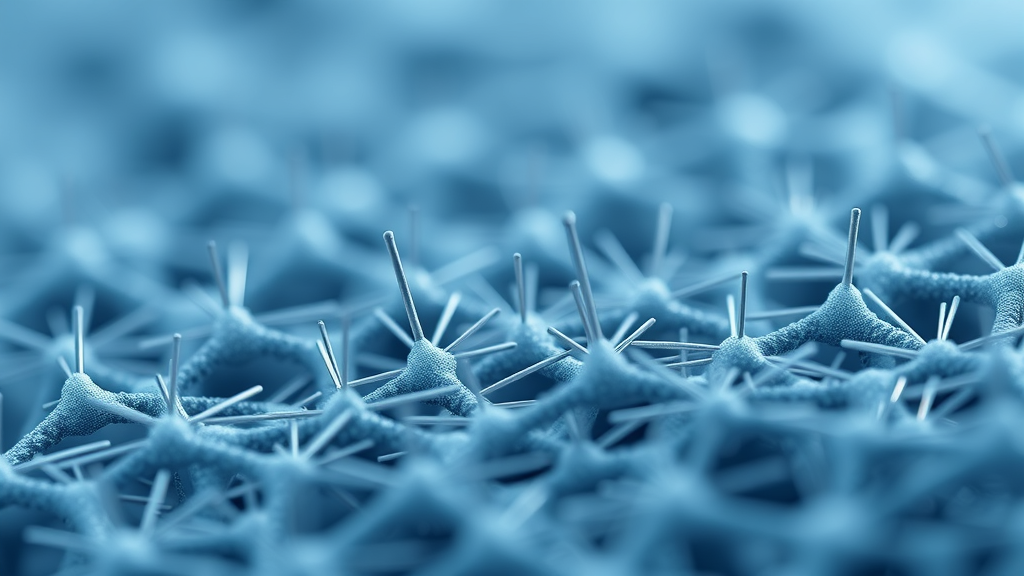
Acupuncture needles have been a fixture of East Asian medicine for millennia, crafted first from bamboo and bone and later from sterilized stainless steel. Now, a comprehensive review published in Advances in Industrial and Engineering Chemistry argues that these humble therapeutic tools are undergoing a transformation that few practitioners could have predicted. By applying electrochemical anodization and noble metal nanoparticle deposition to conventional stainless-steel needles, researchers have converted them into multifunctional platforms with dramatically enhanced physicochemical and electrochemical properties—opening avenues that stretch from chronic pain relief to neural signal recording and even hydrogen fuel production.
The core engineering insight is deceptively simple: increase the surface area of the needle and you amplify everything the needle does. Electrochemical anodic oxidation achieves this by placing the stainless-steel needle—typically SUS304, an alloy of iron, chromium, and nickel chosen for its biocompatibility and electrochemical stability—as the anode in an electrolyte cell. In the widely used protocol, an ethylene glycol-based solvent containing 0.5 weight percent ammonium fluoride and a small amount of deionized water serves as the electrolyte, with carbon paper acting as the cathode. As voltage is applied, metal ions released from the needle surface react with hydroxide ions to form oxides of iron, chromium, and nickel. In most anodizing conditions these oxide films are dense, but fluoride ions selectively dissolve 20 to 50 percent of the growing film, carving out a nanoporous architecture instead.
Getting the porosity right depends on a delicate balance of processing parameters. Fluoride concentrations that are too low fail to generate sufficient pores, while excessive concentrations trigger structural collapse through over-etching. Ethylene glycol, with its high viscosity, helps optimize oxide growth rates and improve structural alignment compared with aqueous electrolytes. Voltage proved equally decisive: experiments measuring surface area by both methylene blue dye adsorption and Brunauer–Emmett–Teller analysis found that 30 volts maximized the nanoporous surface area, achieving a BET value of 0.0328 square meters per gram. Above 40 volts, the needles simply broke. At the optimum, the effective surface area of a needle increased up to twentyfold compared with a conventional smooth needle, with pores ranging from 1.0 to 2.6 micrometers in diameter and oxide layer thickness growing from roughly 693 nanometers after five minutes of anodization to 4.25 micrometers after 25 minutes.
These porous surfaces serve as ideal substrates for a second modification strategy: electrodeposition of noble metal nanoparticles. By applying an external current or voltage to reduce metal ions in solution onto the porous framework, researchers can control particle size, density, and distribution with considerable precision. Silver, gold, and platinum nanoparticles deposited on anodized needles produced average particle diameters of 32.9, 57.7, and 49.3 nanometers respectively, each conferring distinct advantages. Silver’s dense, small particles deliver high conductivity and antibacterial properties; gold’s uniform distribution enhances biocompatibility and biomolecule binding, suiting drug delivery and biosensing applications; and platinum’s larger, sparser particles offer superior heat resistance and electrochemical stability for long-term stimulation environments. Together, the deposited nanoparticles can expand the effective reaction area of a needle by tens of times, transforming it from a passive stimulation tool into a functional bioelectrode.
The therapeutic consequences of this surface engineering are striking. In a rat model of inflammatory pain induced by complete Freund’s adjuvant, nanoporous needles inserted at the ST36 acupoint—located over the tibialis anterior muscle—generated significantly greater rotational torque and withdrawal resistance than conventional needles, a reflection of the enhanced needle grasp phenomenon in which tissue winds around the rotating shaft. Histological analysis confirmed the mechanical story: subcutaneous connective tissue thickness increased from 58.0 to 339.2 micrometers and muscle layer thickness from 524.7 to 942.7 micrometers after porous needle treatment. Functionally, the porous needles extended meaningful analgesia to roughly two hours, compared with only 30 to 60 minutes for conventional needles, and ten days of repeated treatment produced cumulative reductions in mechanical hypersensitivity. The authors suggest that amplified mechanical stimulation may boost local adenosine release, activate transient receptor potential channels such as TRPV1, and intensify crosstalk between subcutaneous fibroblasts and peripheral nerve endings, while observed collagen fiber realignment may further prolong antinociceptive signaling.
Perhaps most provocatively, the modified needles show promise against substance use disorders. In animal studies, porous needle acupuncture at HT7—a point on the inner wrist crease—significantly reduced cocaine-induced hyperlocomotion in rats, with the effect persisting far longer than that achieved by thicker conventional needles. Against ethanol withdrawal, nanoporous needle treatment reduced tremors more effectively than conventional acupuncture as measured by automated force-transducer monitoring, and elevated plus maze testing revealed anxiolytic effects during withdrawal. When different electrode types were compared—conventional, porous, and porous needles sensitized with silver, gold, or platinum—the silver-sensitized variant performed best, increasing open-arm exploration time by 20 percent relative to the unsensitized porous group. This hints that noble-metal-enhanced charge transfer may synergize with acupuncture-induced stimulation in brain regions governing anxiety and reward, offering a possible low-cost, surgery-free neuromodulation strategy for addiction.
The cancer data add another dimension. In a chemically induced rat model of colorectal cancer, porous needle acupuncture reduced aberrant crypt foci, an early warning sign of tumorigenesis, most markedly when treatment was delivered at HT7 rather than the SI5 acupoint on the wrist. Genetic analysis showed the porous needles reversed a greater number of cancer-related transcriptional changes than conventional needles. In late-stage disease, repeatedly treated animals bore fewer and smaller tumors and displayed lower circulating levels of carcinoembryonic antigen, a standard colorectal cancer biomarker. Immunohistochemical staining revealed reduced beta-catenin expression in treated tissues, suggesting suppression of the Wnt/beta-catenin signaling pathway, a major driver of colon cancer progression. Notably, acupoint selection mattered as much as needle type, underscoring that clinical optimization will require attention to both device engineering and anatomical targeting.
Beyond therapy, the engineered needles are emerging as serious candidates for neural interfacing. Conventional neural electrodes face an uncomfortable trade-off: larger surfaces yield better signal-to-noise ratios but inflict more tissue damage, while miniaturized electrodes are gentler but suffer high impedance. Porous needle electrodes dissolve this dilemma. Electrochemical impedance spectroscopy showed smaller semicircle diameters in Nyquist plots for porous needles, indicating lower charge transfer resistance, and local field potential signals in the 1 to 49 hertz range—associated with motor cortex activity—were captured more reliably than with conventional electrodes, while noise in the 59 to 61 hertz band was significantly reduced. Because the porous architecture interlocks with surrounding tissue, electrode stability improves over time, and the stainless-steel platform can be fabricated cheaply and reproducibly. Previous biocompatibility work in dermal and subcutaneous applications, along with evidence that nanoscale pores promote protein adsorption and cellular integration, strengthens the case for chronic implantation.
Remarkably, the same properties that make these needles good neural electrodes also make them viable electrocatalysts. In alkaline potassium hydroxide solutions, anodized porous needles exhibited lower charge transfer resistance and enhanced current density for the oxygen evolution reaction compared with conventional polished electrodes, with a Tafel slope of 67.6 millivolts per decade indicating favorable catalytic kinetics. The hydrogen evolution reaction proved more demanding, requiring noble metal coatings such as silver nanoparticles, though even then performance remains below standard catalysts, highlighting a clear optimization target in particle size and coating homogeneity. Cross-sectional electron microscopy revealed conical nanopores between 0.81 and 1.92 micrometers in diameter and 0.51 to 1.33 micrometers deep, topography that improves wettability and ion transport—the very parameters that govern water-splitting efficiency. The implication is that defective or waste acupuncture needles could be repurposed as low-cost electrochemical materials, improving economic efficiency across their lifecycle.
The review’s authors, led by Su-Il In of the Daegu Gyeongbuk Institute of Science and Technology, are candid about the field’s limitations. Most studies rest on rodent models with few human trials, and research has concentrated narrowly on pain, addiction, and cancer-related symptoms. Fabrication has likewise stagnated around a single ammonium fluoride–ethylene glycol–water electrolyte recipe, leaving the morphological consequences of alternative chemistries largely unexplored. Their prescription is systematic optimization of anodization conditions, functionalization with photothermal agents, semiconducting nanomaterials, or biosensitive coatings, and large-scale clinical validation. If those steps succeed, the two-thousand-year-old acupuncture needle may complete an extraordinary journey—from ritual instrument to precision medicine platform, bioelectronic interface, and component of sustainable energy technology.
Subject of Research: Surface engineering of acupuncture needles for biomedical and electrochemical applications
Article Title: Nanostructured acupuncture needles: recent progress in surface engineering and biomedical and electrochemical applications
Article References: Lee, J., Park, J., Park, S., Kim, H., & In, S.-I. (2025). Nanostructured acupuncture needles: recent progress in surface engineering and biomedical and electrochemical applications. Advances in Industrial and Engineering Chemistry, 1(1), Article 35. https://doi.org/10.1007/s44405-025-00037-6
Image Credits: AI Generated
DOI: 10.1007/s44405-025-00037-6
Keywords: acupuncture needles, electrochemical anodization, nanoporous surfaces, noble metal nanoparticles, neural electrodes, local field potential, pain management, addiction treatment, colorectal cancer, oxygen evolution reaction, hydrogen evolution reaction, surface engineering
Cite Scienmag News
Bethany Barker. (September 23, 2026). Nanostructured Acupuncture Needles Evolve Into Bioelectrodes and Electrocatalysts. Scienmag. https://scienmag.com/nanostructured-acupuncture-needles-evolve-into-bioelectrodes-and-electrocatalysts/
Bethany Barker. "Nanostructured Acupuncture Needles Evolve Into Bioelectrodes and Electrocatalysts." Scienmag, 23 September 2026, https://scienmag.com/nanostructured-acupuncture-needles-evolve-into-bioelectrodes-and-electrocatalysts/. Accessed 23 September 2026.
Bethany Barker. "Nanostructured Acupuncture Needles Evolve Into Bioelectrodes and Electrocatalysts." Scienmag. September 23, 2026. https://scienmag.com/nanostructured-acupuncture-needles-evolve-into-bioelectrodes-and-electrocatalysts/


