


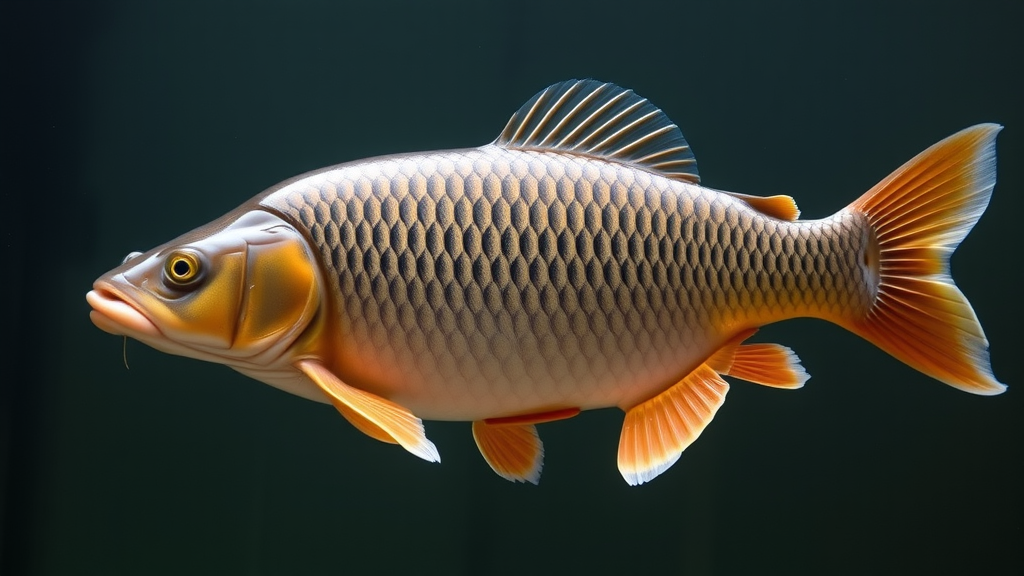
In a series of meticulous feeding trials that could reshape how an endangered Indian fish is farmed, researchers have pinned down, with remarkable precision, exactly what the pengba carp needs on its plate. The fish, Osteobrama belangeri, once made up roughly 40 percent of the natural fishery in Loktak Lake in Manipur, India, but has suffered a dramatic collapse over the past three decades as its habitat has been destroyed. Depending on which authority one consults, the species is now classified as extinct in the wild, threatened, near-threatened, or endangered. Yet its market value tells another story: pengba commands 600 to 700 rupees per kilogram in north-eastern India, several times the price fetched by the country’s major carps. That combination of rarity and value has made the species a priority for aquaculture-driven conservation, and a new study published in Blue Biotechnology now provides the nutritional blueprint that fish farmers have been missing.
The research, led by Kedar Nath Mohanta of the ICAR-Central Institute of Fisheries Education in Mumbai, together with colleagues at the ICAR-Central Institute of Freshwater Aquaculture and the ICAR-Central Inland Fisheries Research Institute, set out to answer a deceptively simple question: how much protein, lipid, and carbohydrate should go into the feed of pengba fingerlings? The stakes are high because feed is the single largest expense in fish farming, often accounting for more than half of variable costs in traditional systems and up to 60 percent in feed-intensive operations. Getting macronutrient levels wrong means wasting money and, worse, polluting water with excess nitrogen while producing slower-growing fish. Getting them right means faster growth, cleaner water, and better economics for a species whose captive propagation could ease pressure on wild populations.
The team ran three experiments in sequence, each building on the last. In the first, 90-day trial, fingerlings with an average body weight of 0.83 grams were stocked into flow-through fiberglass tanks at 15 fish per tank, with water flowing at 0.5 liters per minute. Nine semi-purified diets were tested in a 3-by-3 factorial design combining three protein levels, 30, 35, and 40 percent, with three lipid levels, 6, 8, and 10 percent. The fish were fed to apparent satiation twice daily, unconsumed feed and waste were siphoned off every morning, and biomass was measured every fortnight. Water quality stayed firmly within ideal rearing ranges throughout, with temperatures of roughly 28 to 30 degrees Celsius, dissolved oxygen between 7.87 and 8.65 milligrams per liter, and total ammonia below 0.07 milligrams per liter.
The result was a clear winner. Fingerlings fed the diet containing 35 percent protein and 8 percent lipid showed significantly higher weight gain and specific growth rate, along with a significantly lower feed conversion ratio, than any other combination. Survival was uniformly high, with no mortality recorded across treatments, which the researchers note confirms the diets themselves, not disease or handling stress, drove the differences in growth. Statistical analysis revealed a notable interaction between protein and lipid: raising lipid from 6 to 8 percent improved performance at every protein level, but pushing it to 10 percent offered no further benefit. Across the board, 35 percent protein emerged as the sweet spot, and second-order polynomial regression sharpened the estimate further, placing the optimal protein requirement between 35.49 and 35.83 percent and the optimal lipid requirement between 8.37 and 8.43 percent.
Why does more protein not simply mean more growth? The explanation lies in energy metabolism. Protein is the costliest macronutrient in aquafeed and should ideally be reserved for building tissue, repairing muscle, and synthesizing enzymes rather than being burned for fuel. When dietary protein exceeds what a fish needs for growth, it is catabolized as an energy source, an inefficient and polluting outcome that also increases nitrogenous waste. Lipids help solve this problem through the protein-sparing effect: fat provides roughly 9 kilocalories per gram, more than double the energy of protein or carbohydrate, so adequate dietary lipid allows the fish to oxidize fat for energy and preserve amino acids for growth. But the effect has a ceiling. Beyond 8 percent lipid in this species, excess fat begins to interfere with digestion, disrupt fatty acid synthesis, and suppress feed intake, ultimately slowing growth, a pattern previously documented in common carp, catla, and the Australian short-fin eel.
With protein and lipid optimized, the second experiment turned to carbohydrate, the cheapest energy source in any fish diet. Six semi-purified diets were formulated with carbohydrate levels ranging from 20 to 45 percent, while protein and lipid were held at the newly determined optima of 35 and 8 percent. Slightly larger fingerlings, averaging 1.60 grams, were reared in 70-liter flow-through tanks for 60 days. Once again the regression curves told a coherent story: fish receiving 40 percent carbohydrate achieved significantly superior weight gain, specific growth rate, and feed conversion, with polynomial analysis bracketing the optimum between 39.61 and 40.23 percent. This finding positions pengba among the carbohydrate-efficient omnivorous carps, a group that includes common carp, tilapia, and mullet, species known to convert starch into energy at levels their carnivorous counterparts cannot tolerate. Every carbohydrate calorie that displaces dietary protein improves both the economics of the feed and the quality of the water, since less protein catabolized means less nitrogen excreted into culture systems.
The third experiment moved from purified ingredients to the practical question that matters most to farmers: which plant protein sources should go into a real-world feed? Five iso-nitrogenous, iso-lipidic, and iso-caloric diets, each containing 35 percent protein, 8 percent lipid, and 4.0 kilocalories per gram of gross energy, were built around different oil cakes as primary protein sources. Diet D-1 used soybean meal, D-2 groundnut oil cake, D-3 mustard oil cake, D-4 sesame oil cake, and D-5 mahua oil cake, a non-conventional ingredient pressed from the seeds of Bassia latifolia, a tree abundant across rural India. Vegetable oil adjusted lipid levels where needed, and de-oiled rice bran supplied the carbohydrate backbone. The 90-day trial used 0.42-gram fingerlings stocked in cement tanks and fed twice daily at 5 percent of body weight.
Mahua oil cake emerged as the unexpected champion. Fish fed the D-5 diet, which combined mahua oil cake with soybean and groundnut oil cakes, recorded significantly higher weight gain and protein efficiency ratio and a lower feed conversion ratio than any alternative. The result aligns with earlier work showing that mahua oil cake, especially in fermented form, enhances growth and immune function in rohu fingerlings, boosting phagocytic activity and digestive enzyme performance. Its favorable showing here is commercially significant because mahua is cheaper and more locally available than imported fish meal, which typically contains 60 to 72 percent protein and dominates high-quality aquafeeds. Soybean meal, with 44 to 48 percent protein and a reasonably balanced amino acid profile, remains a workhorse ingredient but requires processing to neutralize anti-nutritional factors. Blending several oil cakes appears to balance amino acid profiles while keeping costs down.
The authors are careful to frame these numbers as a foundation rather than a finish line. Future studies, they write, should probe the physiological and metabolic responses of pengba by measuring digestive enzyme activities, metabolic profiles, and stress biomarkers, and should extend into molecular territory, examining the expression of genes governing nutrient metabolism, growth regulation, and stress adaptation. Such mechanistic work would explain why the fish performs best on a diet that is, by terrestrial livestock standards, carbohydrate-heavy. It would also help nutritionists fine-tune feeds across life stages, since fingerling requirements rarely match those of broodstock or market-size fish.
For now, the practical implications are immediate and encouraging. A feed containing roughly 35 percent protein, 8 percent lipid, and 40 percent carbohydrate, built on a mahua-soybean-groundnut oil cake blend, gives hatcheries and grow-out farmers a validated, cost-effective starting formulation for pengba. Because the species is endangered, expanding its culture does double duty: it supplies a premium product to a hungry market while reducing fishing pressure on the wild population in Loktak Lake and beyond. Captive breeding of pengba has been feasible for years thanks to induced spawning with hormones; what has been missing is a scientific basis for feeding the fish efficiently at scale. With this study, that gap has been closed, and one of India’s most culturally cherished carps now has a dietary prescription backed by rigorous, replicated data.
Subject of Research: Optimization of dietary macronutrient requirements and plant-based protein ingredients for rearing endangered pengba carp (Osteobrama belangeri) fingerlings
Article Title: Optimization of macro-nutrient requirements and different protein-based ingredients for pengba, Osteobrama belangeri (Valenciennes, 1844) fingerlings
Article References: Mohanta, K. N., Khalasi, Y., Prakash, P., Kumari, R., Chandan, N. K., & Meena, D. K. (2025). Optimization of macro-nutrient requirements and different protein-based ingredients for pengba, Osteobrama belangeri (Valenciennes, 1844) fingerlings. Blue Biotechnology, 2(1), Article 27. https://doi.org/10.1186/s44315-025-00042-w
Image Credits: AI Generated
DOI: 10.1186/s44315-025-00042-w
Keywords: pengba, Osteobrama belangeri, aquaculture, fish nutrition, macronutrient requirements, feed formulation, protein requirement, lipid, carbohydrate, mahua oil cake, endangered species, carp farming
Cite Scienmag News
Daisy Hatcher. (September 23, 2026). Scientists Decode the Perfect Diet for an Endangered Indian Carp. Scienmag. https://scienmag.com/scientists-decode-the-perfect-diet-for-an-endangered-indian-carp/
Daisy Hatcher. "Scientists Decode the Perfect Diet for an Endangered Indian Carp." Scienmag, 23 September 2026, https://scienmag.com/scientists-decode-the-perfect-diet-for-an-endangered-indian-carp/. Accessed 23 September 2026.
Daisy Hatcher. "Scientists Decode the Perfect Diet for an Endangered Indian Carp." Scienmag. September 23, 2026. https://scienmag.com/scientists-decode-the-perfect-diet-for-an-endangered-indian-carp/


