


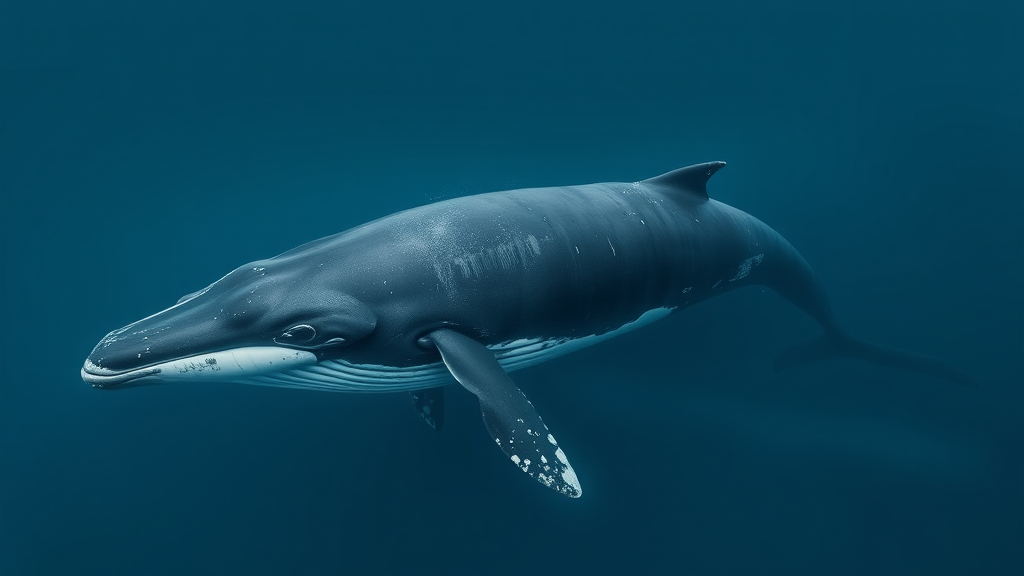
In the calm, shallow waters off Australia’s Gold Coast, scientists have witnessed something that has never before been scientifically documented: a mother humpback whale lingering beside the body of her stillborn calf, touching it gently and refusing to leave. The observation, published in the journal Discover Animals, represents the first detailed record of post-mortem attentive behaviour in humpback whales (Megaptera novaeangliae) and offers a rare window into the emotional lives of the ocean’s most iconic baleen whales.
The encounter unfolded on the morning of 17 July 2025 at Palm Beach reef, roughly one kilometre from shore. Researchers aboard a small private vessel spotted two adult humpback whales, each approximately 12 to 13 metres long, milling slowly at the surface. The larger individual, presumed to be the mother, rested in a characteristic posture, arching her back before short dives of less than two minutes, each time resurfacing almost exactly where she had submerged. There were no signs of aggression, chasing or directed travel, only an unusual, deliberate stillness.
Underwater footage recorded with a handheld camera added a remarkable layer of detail. At about 08:30, the amniotic membrane was released and drifted at the surface, indicating that the birth had occurred only minutes earlier. By 08:45, the camera revealed a small calf, estimated at under four metres and possibly undersized, lying motionless on the sandy seafloor with no visible signs of movement or respiration. The mother approached alongside her stillborn, nudging it with her head and pectoral fin, and at times rested motionless, eye to eye with the tiny body, for at least a minute at a stretch. These behaviours continued until the observers left the site at 10:00.
What happened next deepened the mystery. On the following two days, land-based surveys from Burleigh Heads and reports from members of the public placed two adult humpback whales in the same area, suggesting that attendance may have continued for days. A fluke photograph of the female uploaded to the Happy Whale photo-identification platform produced no matches, hinting that she may have been a young adult on her first recorded appearance in these waters. Vocalisations were detected during the observation, although it could not be determined whether the mother, her escort, or both were calling.
Post-mortem attentive behaviour, sometimes framed as grieving, is well documented in toothed whales such as dolphins and killer whales. Dolphins have been seen supporting dead calves at the surface for hours, and in one of the most famous cases in marine biology, the southern resident killer whale known as Tahlequah carried her dead calf for 17 days over more than 1,500 kilometres in 2018. A systematic review of 106 cases of death-related behaviour in aquatic mammals concluded that odontocetes with long maternal investment exhibit such responses far more frequently than baleen whales, and dolphins alone account for more than 90 percent of reported incidents.
The near absence of comparable records in baleen whales has long puzzled scientists, and the new study argues that this gap may owe as much to physics and observation bias as to genuine behavioural differences. Unlike odontocete neonates, which typically float, newborn mysticetes have little blubber and tend to sink soon after death, removing the very opportunity for mothers to lift or carry the body. Births are also rarely witnessed, and placental material is seldom detected. When a dead calf drops quickly to the seafloor, prolonged attendance simply becomes invisible to science.
Strikingly, the Gold Coast mother made no attempt to raise the stillborn to the surface, a behaviour that would have been instinctive for a living newborn. The researchers suggest she may have recognised quickly that the calf was dead, or that the calf’s position on the seafloor made lifting impractical. The behaviours she did display, including circling, repeated approach, tactile contact and prolonged attendance, closely match the epimeletic, or caregiving, responses described across socially complex mammals from elephants to primates, and align with attentive behaviour humpback whales have shown toward entangled or injured conspecifics.
Interpreting such actions as grief remains scientifically delicate. Without physiological or neurological measurements from wild animals, researchers cannot distinguish emotional distress from maternal attachment, confusion or instinctive caregiving. Yet humpback whales possess spindle neurons, specialised brain cells also found in elephants and great apes that are associated with social awareness and emotional processing, and they show fierce maternal investment, including defending calves against killer whale attacks. The authors note that so-called fight species of baleen whales, including humpbacks, right whales and gray whales, may be particularly reluctant to abandon dead offspring.
The event also carries ecological significance. It occurred more than 500 kilometres south of this population’s main breeding grounds in the southern Great Barrier Reef, in water of about 20.5 degrees Celsius, near the lower temperature range documented for humpback births. In July 2025 alone, researchers compiled reports of seven deceased humpback neonates and one floating young whale between K’gari Island and Ballina, echoing a cluster of at least six calf deaths near K’gari in June 2023. The drivers remain unknown but may be linked to fluctuations in Antarctic krill availability, which influence the reproductive condition of migrating females.
Whether the southward shift in birthing reflects a growing population, adaptation to changing food supplies, or both is still debated. What the case makes unmistakably clear, the researchers argue, is that post-mortem attentive behaviour in baleen whales is likely far more common than the scientific record suggests, and that only sustained, systematic documentation of these fleeting and heartbreaking moments will reveal the cognitive, emotional and evolutionary depth of how the ocean’s giants respond to death.
Subject of Research: First documentation of post-mortem attendance behaviour by a female humpback whale toward her stillborn calf
Article Title: First documentation of humpback whale (Megaptera novaeangliae) post-mortem attendance of a stillborn
Article References: Meynecke, J.-O., & Mulville, A. (2026). First documentation of humpback whale (Megaptera novaeangliae) post-mortem attendance of a stillborn. Discover Animals, 3(1), Article 88. https://doi.org/10.1007/s44338-026-00232-9
Image Credits: AI Generated
DOI: 10.1007/s44338-026-00232-9
Keywords: humpback whale, post-mortem attentive behaviour, epimeletic behaviour, animal grief, baleen whales, calf mortality, Megaptera novaeangliae, Gold Coast Australia, marine mammal behaviour, animal cognition, whale migration, maternal investment
Cite Scienmag News
Drew Townsend. (September 22, 2026). Humpback Whale Mother Keeps Vigil Beside Her Stillborn Calf. Scienmag. https://scienmag.com/humpback-whale-mother-keeps-vigil-beside-her-stillborn-calf/
Drew Townsend. "Humpback Whale Mother Keeps Vigil Beside Her Stillborn Calf." Scienmag, 22 September 2026, https://scienmag.com/humpback-whale-mother-keeps-vigil-beside-her-stillborn-calf/. Accessed 22 September 2026.
Drew Townsend. "Humpback Whale Mother Keeps Vigil Beside Her Stillborn Calf." Scienmag. September 22, 2026. https://scienmag.com/humpback-whale-mother-keeps-vigil-beside-her-stillborn-calf/


