


For decades, conservation biologists have relied on species distribution models to answer a deceptively simple question: where does a species live, and where could it live? These models, built by correlating known occurrence records with environmental variables such as temperature, precipitation, and land cover, have become standard tools for mapping habitat suitability and forecasting range shifts under climate change. Yet a persistent criticism has shadowed the field. A map that predicts where a species can survive does not necessarily predict how well its populations are actually doing, and critics have argued that habitat suitability is a poor proxy for the demographic and genetic health of real populations. A new study, published in the journal Heredity, puts that debate to a rigorous empirical test in an endangered amphibian and finds that, when carefully constructed and interpreted at the right spatial scales, species distribution models can indeed forecast key genetic properties of populations across an entire landscape.
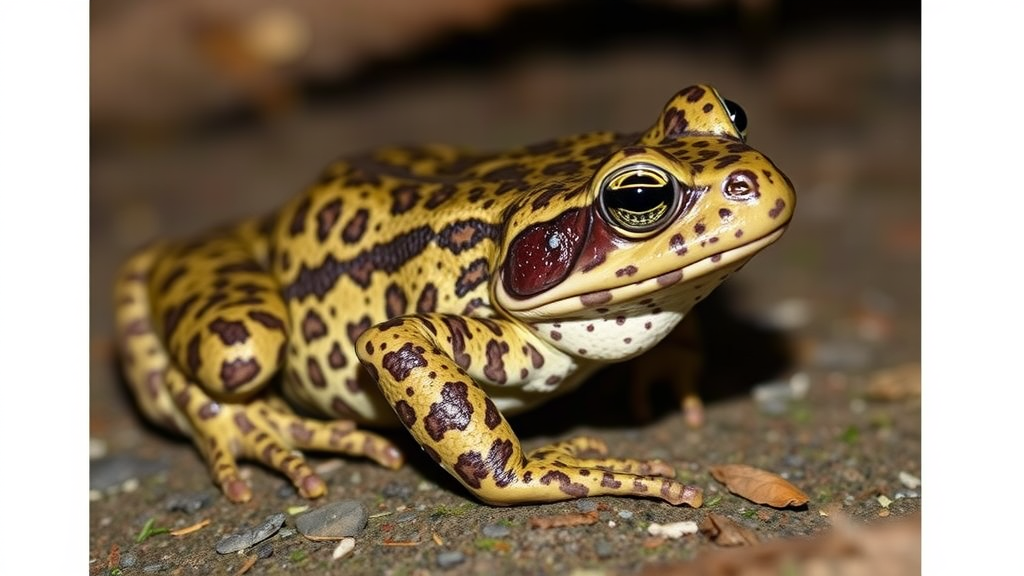
The research, led by Benjamin Monod-Broca of Université Claude Bernard Lyon 1 together with colleagues including Hugo Cayuela, Jérôme G. Prunier, and Quentin Rougemont, focused on the yellow-bellied toad, Bombina variegata, a small warty amphibian whose bright yellow-and-black underside serves as a warning display. The species is classified as endangered and has suffered marked declines in parts of its European range, including France, where a national action plan has been established for its conservation. Yellow-bellied toads are poor dispersers, moving only short distances across the landscape, which makes them particularly vulnerable to habitat fragmentation and makes their populations especially sensitive to the arrangement of suitable habitat patches. That combination of conservation concern and limited mobility made the species an ideal test case for asking whether habitat suitability maps carry genuine information about genetic diversity and gene flow.
The team assembled an unusually rich dataset. They sampled 404 individual toads at 92 sites across southeastern France, a region encompassing much of the species’ remaining French stronghold. Using a reduced-representation sequencing approach known as double digest RADseq, the researchers generated genome-wide single nucleotide polymorphism data, providing tens of thousands of genetic markers spread across the toad genome. From these data they computed two central genetic metrics at each sampling site: observed heterozygosity, a standard measure of genetic diversity within populations, and pairwise genetic differentiation between sites, which reflects the combined effects of genetic drift and gene flow. Genetic diversity matters because low heterozygosity is associated with inbreeding depression and reduced adaptive potential, while strong differentiation signals isolated populations that exchange too few migrants to remain genetically cohesive.
On the environmental side, the researchers built hierarchical species distribution models that operated at two nested spatial levels. At the continental scale, they used bioclimatic variables, such as temperature and precipitation patterns drawn from high-resolution climatologies, to characterize the broad climatic envelope within which yellow-bellied toads can persist across Europe. At the regional scale, they incorporated landscape variables describing land cover and habitat structure within the French study area, capturing the fine-grained mosaic of ponds, forests, grasslands, and human-modified environments that toads actually encounter. Each model produced a continuous surface of relative habitat suitability, abbreviated RHS, yielding two distinct layers: a bioclimatic suitability score, BRHS, and a landscape suitability score, LRHS. This hierarchical design was deliberate, because the climatic factors that limit a species across its entire range are not necessarily the same factors that determine local population performance within a single region.
The central analytical question was whether these suitability surfaces predict the genetic metrics measured from the sequenced toads. To answer it, the team employed a multi-scale modelling framework. For genetic diversity, they tested the effect of BRHS and LRHS on observed heterozygosity across a range of spatial buffer sizes around each sampling site, allowing the data themselves to reveal at which spatial scale habitat suitability matters most. For connectivity, they confronted a well-known complication in landscape genetics: pairwise genetic differentiation is shaped not only by the resistance of the intervening landscape to dispersal but also by the size of the populations at each end, because large populations experience weaker genetic drift and send out more migrants. To disentangle these effects, the researchers used gravity models, a framework borrowed from spatial economics that treats the expected flow of genes between two sites as the product of source and sink strengths divided by a resistance term, thereby accounting for heterogeneous genetic drift across the landscape.
The results were striking in their clarity. Both bioclimatic and landscape habitat suitability emerged as significant predictors of observed heterozygosity, but each operated at its own characteristic spatial scale. The bioclimatic signal, BRHS, was expressed at a broader radius of roughly 11 kilometres around each site, consistent with the idea that regional climate shapes the long-term demographic performance of populations and, through it, the accumulation of genetic variation. The landscape signal, LRHS, acted at a much finer radius of about 3 kilometres, matching the short dispersal distances of yellow-bellied toads and the immediate habitat context in which local populations live and breed. This scale separation is more than a statistical curiosity; it demonstrates that different environmental drivers imprint themselves on the genome at different spatial resolutions, and that any single-scale analysis would have missed part of the picture.
Connectivity patterns proved more complex and more scale-dependent. No single suitability layer explained genetic differentiation on its own. Instead, the best-supported models were gravity models that integrated landscape suitability, bioclimatic suitability, and local heterozygosity simultaneously. In other words, gene flow between toad populations was best predicted by combining the resistance of the landscape separating two sites with the demographic strength of the populations themselves, as proxied by their habitat suitability and genetic diversity. This finding underscores a point that landscape geneticists have increasingly emphasized: patterns of genetic differentiation reflect both the friction of the terrain and the demographic engines at either end of each dispersal pathway. A highly suitable habitat patch surrounded by hostile terrain may contribute less to regional gene flow than a modest patch embedded in a permeable matrix, and models that ignore population size can badly misjudge connectivity.
The study carries important implications for conservation practice, particularly for species like the yellow-bellied toad that exist as metapopulations in dynamic, human-shaped landscapes. If habitat suitability maps, properly calibrated, can serve as proxies for genetic diversity and landscape resistance, then conservation planners can use widely available occurrence data and environmental layers to identify which populations are genetically at risk and which landscape corridors are most likely to sustain gene flow, without first sequencing hundreds of individuals. The authors are careful to frame this as a conditional result rather than a blanket endorsement. The predictive power of the models emerged only because they were hierarchically structured, scale-explicit, and validated against independent genomic data. Poorly calibrated models, or models applied at inappropriate scales, could still mislead, and previous work has shown that habitat suitability can be a poor proxy for connectivity in some systems, particularly for highly mobile species.
There is also a broader scientific lesson in the scale dependence of the results. Ecology has long recognized that processes operate differently at different scales, but the new study shows that this principle extends deep into the genome: the climatic context of an 11-kilometre neighbourhood and the habitat texture of a 3-kilometre neighbourhood leave distinguishable signatures in heterozygosity measured from thousands of SNPs. For endangered amphibians facing accelerating habitat loss and climate change, that insight offers a practical path forward. By combining continental climate models with regional landscape models, and by validating their predictions against genomic ground truth, conservationists can build a more faithful picture of where genetic diversity is concentrated, where gene flow is constricted, and where restoration efforts, from pond creation to corridor management, will do the most good. For the yellow-bellied toad in southeastern France, and for the many other limited-dispersal species that share its predicament, the humble habitat suitability map has just earned a far more consequential role in conservation planning.
Subject of Research: Using hierarchical species distribution models to predict genome-wide genetic diversity and gene flow in the endangered yellow-bellied toad (Bombina variegata).
Article Title: Species distribution models predict genome-wide polymorphism and gene flow in an endangered amphibian
Article References: Monod-Broca, B., Cayuela, H., Prunier, J. G., Belloir, L., Boyer, I., Isselin-Nondedeu, F., Yannic, G., Pröhl, H., Rougemont, Q., & Léna, J.-P. (2026). Species distribution models predict genome-wide polymorphism and gene flow in an endangered amphibian. Heredity. https://doi.org/10.1038/s41437-026-00885-y
Image Credits: AI Generated
DOI: 10.1038/s41437-026-00885-y
Keywords: species distribution models, landscape genetics, yellow-bellied toad, Bombina variegata, genetic diversity, gene flow, habitat suitability, conservation genomics, heterozygosity, landscape connectivity, amphibian conservation, SNP genotyping
Cite Scienmag News
Juliet Wilcox. (September 20, 2026). Habitat Maps Predict Genetic Health of an Endangered Toad. Scienmag. https://scienmag.com/habitat-maps-predict-genetic-health-of-an-endangered-toad/
Juliet Wilcox. "Habitat Maps Predict Genetic Health of an Endangered Toad." Scienmag, 20 September 2026, https://scienmag.com/habitat-maps-predict-genetic-health-of-an-endangered-toad/. Accessed 20 September 2026.
Juliet Wilcox. "Habitat Maps Predict Genetic Health of an Endangered Toad." Scienmag. September 20, 2026. https://scienmag.com/habitat-maps-predict-genetic-health-of-an-endangered-toad/


