


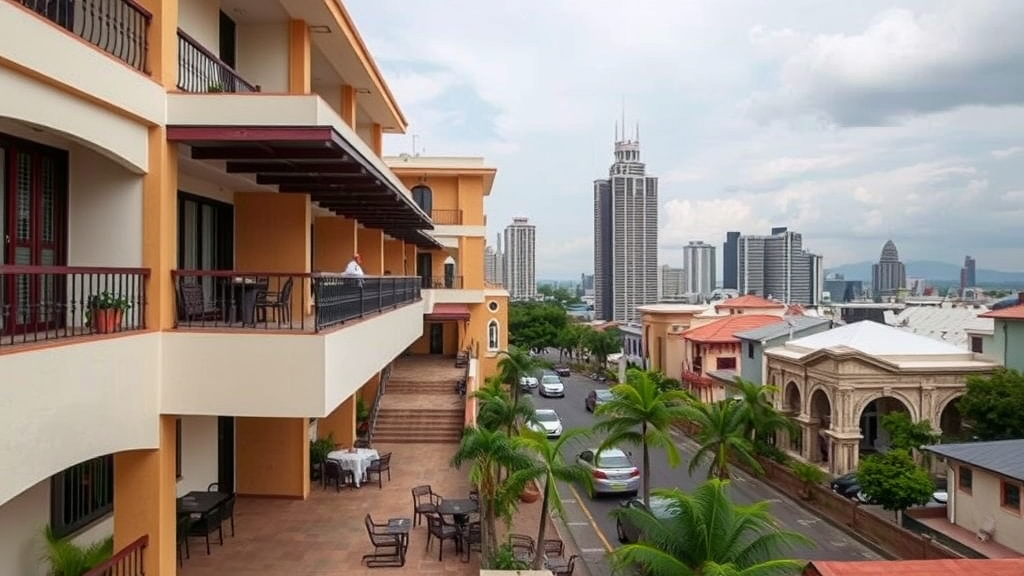
When COVID-19 swept across the world in 2020, few industries were hit as hard as hospitality. Borders closed, flights were grounded, conferences were cancelled and dining rooms emptied almost overnight. While wealthy nations deployed enormous stimulus packages to cushion the blow, businesses in developing economies faced the crisis with far thinner institutional buffers. A new study from Ghana now offers one of the most detailed firm-level pictures yet of how hospitality businesses in a Sub-Saharan African city absorbed that shock and which strategies managers believe made the difference between collapse and recovery.
The research, conducted by Elizabeth Kafui Senya of Accra Technical University and Anthony Bordoh of the University of Education, Winneba, focuses on the Accra Metropolitan Area, the commercial heart of Ghana and the hub of its tourism economy. Published in SN Social Sciences, the study surveyed 90 senior managers drawn from hotels, restaurants, shopping malls, car rental services and allied venues across the Greater Accra Region. Using a multi-stage sampling procedure, the researchers first selected nine Municipal and Metropolitan District Assemblies and then reached the managers who had lived through the pandemic’s worst disruptions at first hand.
The findings document a cascade of operational failures that unfolded in a predictable but devastating sequence. Mobility restrictions imposed by the government, including the Executive Instrument E.I. 63 that limited movement and gatherings, triggered an acute contraction in demand. With travellers staying home and international visitors absent, revenues collapsed. Firms responded by retrenching workers, deepening the economic pain in a sector that is one of Ghana’s most important employers. Supply chains fractured at the same time, as suppliers of food, beverages and hospitality consumables faced their own lockdown constraints. The cancellation of international conferences removed another critical revenue stream, one that fills hotel rooms and restaurant tables in Accra throughout the year, particularly during the peak season.
These results align with a broader international literature on the pandemic’s impact on hospitality. Studies from India, Spain and global assessments of tourism during COVID-19 all recorded demand shocks, workforce losses and supply disruption. But the Ghanaian study adds an important dimension: the perspective of firms operating in an emerging economy where government support was limited and where many businesses had no financial reserves to fall back on. The authors argue that structural vulnerabilities in developing economies made the pandemic disproportionately damaging, and that understanding how firms in such contexts coped is essential for building crisis-ready industries worldwide.
Methodologically, the study is notable for the rigour of its measurement. The researchers employed a quantitative cross-sectional survey design consistent with the positivist research paradigm, distributing structured questionnaires to the participating managers. To test whether their survey instruments reliably captured the concepts they intended to measure, they turned to Confirmatory Factor Analysis embedded within Partial Least Squares Structural Equation Modelling, a statistical framework widely used in business research for handling complex relationships between latent constructs. The psychometric results were exceptionally strong. Cronbach’s alpha, a measure of internal consistency, ranged from 0.979 to 0.987 across the study’s three constructs, far above the conventional threshold of 0.70. Composite reliability values ranged from 0.981 to 0.990, and the average variance extracted, which indicates how much of the variance in the indicators is captured by the underlying construct, fell between 0.795 and 0.898, well above the 0.50 benchmark typically required for convergent validity. All factor loadings exceeded 0.70, meaning every survey item contributed meaningfully to its construct.
For readers unfamiliar with these statistics, the numbers matter because they tell us the findings rest on solid measurement rather than noisy data. When Cronbach’s alpha approaches 0.99, respondents answered related questions in a highly consistent way, suggesting the survey tapped a coherent underlying reality. High average variance extracted means the constructs are distinct and well defined. In practical terms, the study’s conclusions about disruption and resilience are not artefacts of a poorly designed questionnaire; they reflect carefully validated evidence from the field.
So what actually helped firms survive? The managers surveyed identified a clear hierarchy of resilience levers. At the top of the list were prophylactic health programmes, preventive measures designed to protect staff and customers from infection and to keep operations running safely. Closely linked to this was a call for equitable health infrastructure, reflecting the recognition that business resilience in a pandemic is inseparable from public health capacity. Firms that could trust the surrounding health system, and that invested in their own protective protocols, were better positioned to reassure customers and maintain operations under restrictions.
Insurance uptake emerged as another critical strategy. In an economy where many small and medium-sized hospitality businesses operate without formal risk coverage, the pandemic exposed the cost of that gap. Managers who had insurance, or who recognised its value during the crisis, identified it as a key buffer against revenue collapse. The study suggests that expanding insurance penetration in the sector should be a policy priority, not only for individual firms but for the industry’s collective resilience.
Diversification of delivery services and digitalisation rounded out the resilience agenda. With dine-in traffic restricted, restaurants and hotels that could pivot to delivery, takeaway and online ordering maintained at least a trickle of revenue. Digital tools, from online booking platforms to mobile payment systems and social media marketing, allowed firms to reach customers without physical contact and to adapt their offerings as conditions changed. The pandemic, in effect, accelerated a digital transition that many Ghanaian hospitality firms had postponed, and the managers surveyed now regard digital capability as a core survival asset rather than an optional extra.
The study’s contribution goes beyond documenting damage. By providing empirical, firm-level evidence from an understudied Sub-Saharan emerging economy, it fills a gap in the crisis management and organisational resilience literature, which has historically been dominated by research from Europe, North America and Asia. The authors argue that resilience in hospitality is not a one-size-fits-all formula: strategies that work in well-resourced markets may be unavailable or insufficient in contexts with weaker institutions and thinner financial safety nets. Their findings point toward a resilience agenda tailored to developing economies, one that combines firm-level actions such as digitalisation, diversification and insurance with system-level investments in health infrastructure and public health preparedness. As the world braces for future pandemics and climate-related disruptions, the experience of Accra’s hotels, restaurants and malls offers a sobering lesson: the businesses most vulnerable to global shocks are often those with the fewest buffers, and strengthening their resilience requires action at every level, from the individual firm to the national health system.
Subject of Research: Firm-level operational disruptions and resilience strategies in Ghana's hospitality industry during the COVID-19 pandemic
Article Title: Operational disruptions and resilience strategies in Ghana’s hospitality industry during the COVID-19 pandemic: firm-level evidence from the Accra Metropolitan Area
Article References: Senya, E. K., & Bordoh, A. (2026). Operational disruptions and resilience strategies in Ghana’s hospitality industry during the COVID-19 pandemic: firm-level evidence from the Accra Metropolitan Area. SN Social Sciences, 6(10), Article 452. https://doi.org/10.1007/s43545-026-01744-7
Image Credits: AI Generated
DOI: 10.1007/s43545-026-01744-7
Keywords: COVID-19, hospitality industry, organisational resilience, Ghana, Accra, PLS-SEM, confirmatory factor analysis, pandemic recovery, Sub-Saharan Africa, supply chain disruption, digitalisation, insurance uptake
Cite Scienmag News
Courtney Benton. (September 20, 2026). How Ghana’s Hotels and Restaurants Fought Back Against COVID-19: New Evidence from Accra. Scienmag. https://scienmag.com/how-ghanas-hotels-and-restaurants-fought-back-against-covid-19-new-evidence-from-accra/
Courtney Benton. "How Ghana’s Hotels and Restaurants Fought Back Against COVID-19: New Evidence from Accra." Scienmag, 20 September 2026, https://scienmag.com/how-ghanas-hotels-and-restaurants-fought-back-against-covid-19-new-evidence-from-accra/. Accessed 20 September 2026.
Courtney Benton. "How Ghana’s Hotels and Restaurants Fought Back Against COVID-19: New Evidence from Accra." Scienmag. September 20, 2026. https://scienmag.com/how-ghanas-hotels-and-restaurants-fought-back-against-covid-19-new-evidence-from-accra/


