


A groundbreaking study conducted by an interdisciplinary team led by the Universitat Autònoma de Barcelona (UAB) unveils remarkable insights into the sophistication of Neolithic archery in the Iberian Peninsula, dating back approximately 7,000 years. Published in the esteemed journal Scientific Reports, this research not only reveals the intricacies of ancient archery techniques but also showcases the fundamental knowledge these early societies had regarding materials available to them in their environment. The findings were drawn from archaeological remains unearthed at the Cave of Los Murciélagos, located in Albuñol, Granada, which has provided exceptional organic preservation conditions for the artifacts.
The discovery of the oldest known bowstrings in Europe, created from the tendons of three separate animal species, represents a significant milestone in the archaeological understanding of weaponry during the early Neolithic period. With remains so well preserved due to the cave’s unique drying environment, researchers were able to analyze and identify these bowstrings, elucidating the remarkable ingenuity possessed by the artisans of that age. Notably, the identification of animal sources, including Capra sp. (goats and ibex), Sus sp. (wild boar), and roe deer, highlights the apex of craftsmanship, showcasing a level of technical mastery not previously appreciated in the context of ancient weaponry.
The researchers, led by first author Ingrid Bertin, delved into the methods utilized by these ancient people, demonstrating the deliberate choices made in the materials used for constructing their archery equipment. With bowstrings crafted from twisted tendons, the strength and flexibility achievable would have met the demanding needs of skilled Neolithic archers. This level of attention to detail suggests that these societies were not only hunters but also possessed a complex understanding of their surroundings, optimizing local resources in innovative ways.
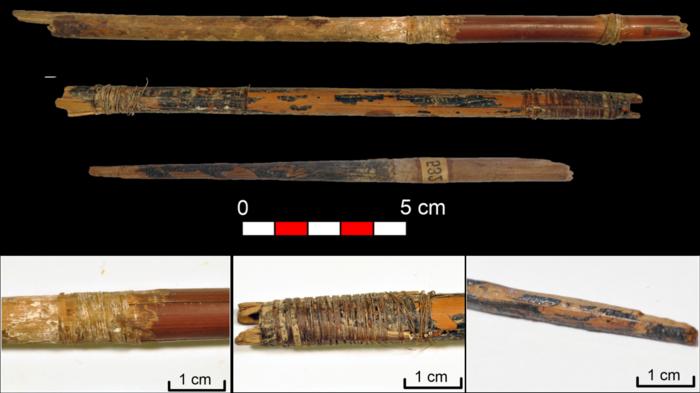
One of the more fascinating aspects of the study is the investigative focus on the arrow shafts discovered within the cave. The archaeologists unearthed evidence confirming the use of olive wood and reed wood, revealing a synergy of natural materials to enhance the arrows’ ballistic properties. The integration of these materials offered a unique design approach: a denser and sturdier front section complemented by a lightweight rear section, likely improving the arrows’ aerodynamics and overall performance in both hunting and conflict scenarios.
Significantly, this research marks the first time reeds have been conclusively identified as being used in arrow production within prehistoric Europe, contributing a valuable dimension to our understanding of resource utilization among Neolithic populations. These advances enable contemporary scholars to reevaluate previous assumptions about the technological capabilities of early societies across the region. The arrows were discovered to have emerged without the addition of stone or bone projectiles, indicating potential versatility in their application—whether for hunting or perhaps in less lethal contexts.
Another noteworthy finding lies in the application of birch bark pitch as a coating for the arrow shafts. This particular substance was produced through a controlled heat treatment process, showing the Neolithic inhabitants’ capability not only to protect their weapons but also possibly to express aesthetic preferences in their crafted tools. This dual-purpose approach—enhancing the function while incorporating an element of beauty—underscores the complexity of material culture among these ancient communities.
These discoveries serve as a powerful reminder of the advanced adaptation strategies that defined the Neolithic populations and their remarkable resource management capabilities. The technologies identified in this study provide clarity on the socio-economic dynamics at play in these communities, painting a picture of innovation that counters prior narratives of simpler forms of existence during this period. The research thus redefines our understanding of Neolithic engineering, illuminating the transformative interplay between environment, culture, and technological development.
Moreover, the research offers a fresh perspective on the symbiotic relationship between the cave dwellers and their environment. As the findings expand our appreciation of the daily lives of these individuals, they also suggest a deeper connotation of their symbolic practices, particularly concerning the arrows and bowstrings that were likely associated with both functional and ceremonial purposes during cultural events and rituals.
The methodologies applied in this research are equally significant. Utilizing advanced microscopy and biomolecular analysis techniques, scholars managed to uncover the chemical and structural components of the materials, providing an unprecedented detailed account of ancient technologies. The combined protein and lipid analysis allowed for a multi-faceted approach to understanding how these artifacts were created, thus enabling contemporaneous archaeologists to apply similar techniques to other archaeological sites across Europe.
As the findings continue to circulate in the academic community, their implications stretch far beyond the Iberian Peninsula. By expanding on the knowledge of Neolithic weaponry and the technical understanding of manufacturing methods, this research opens up avenues for comparative studies with other European archaeological sites. Future research may offer insights into regional interactions, societal organization, and the exchange of ideas between Neolithic communities.
In conclusion, the discoveries unearthed at the Cave of Los Murciélagos not only advance the discourse surrounding Neolithic technological development but also reframe our comprehension of the cultural and symbolic dimensions of archery practice. The archaeologists involved assert that their work provides a unique glimpse into the life of ancient societies that relied on skill, innovation, and a deep understanding of their environment for survival and prosperity.
This research was made possible by the CHEMARCH project from the European Union Horizon 2020 programme, which underscores the collaborative efforts between multiple esteemed institutions, including the UAB, University of Alcalá, and research entities in France. The holistic approach taken in this study exemplifies the potential benefits of interdisciplinary research, elevating the understanding of our human past while also providing crucial data for contemporary studies.
This comprehensive examination of ancient archery through the lens of the latest scientific techniques not only informs our knowledge of the Neolithic era but also reinforces the importance of preserving and studying archaeological sites for the benefit of future generations. As we uncover the layers of history woven into these artifacts, we begin to appreciate the ingenuity and resilience of the communities that came before us.
Cite Scienmag News
Courtney Benton. (December 23, 2024). Iberian Neolithic Societies Mastered Advanced Archery Techniques and Materials. Scienmag. https://scienmag.com/iberian-neolithic-societies-mastered-advanced-archery-techniques-and-materials/
Courtney Benton. "Iberian Neolithic Societies Mastered Advanced Archery Techniques and Materials." Scienmag, 23 December 2024, https://scienmag.com/iberian-neolithic-societies-mastered-advanced-archery-techniques-and-materials/. Accessed 4 September 2026.
Courtney Benton. "Iberian Neolithic Societies Mastered Advanced Archery Techniques and Materials." Scienmag. December 23, 2024. https://scienmag.com/iberian-neolithic-societies-mastered-advanced-archery-techniques-and-materials/


