


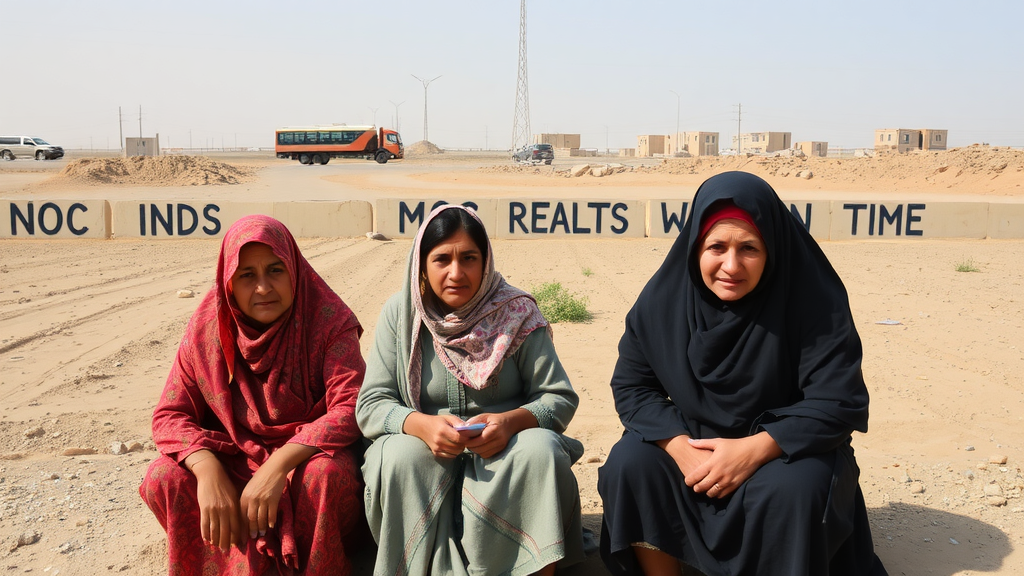
Homeless women living in the border regions of eastern Iran, near the frontier with Afghanistan, are among the most medically vulnerable and socially invisible populations in the region, and a new qualitative study has now mapped in unprecedented detail the social forces that shape their health. The research, conducted by a team at Birjand University of Medical Sciences and published in the journal Discover Social Science and Health, identified twenty-four distinct social determinants of health affecting these women, organized under five overarching themes drawn from the internationally recognized Healthy People 2030 framework. The findings arrive at a moment when displacement, economic precarity, and cross-border migration continue to push women onto the streets and into government-operated shelters in one of Iran’s most resource-constrained provinces.
The study was carried out between September 2025 and January 2026 in government-run shelters located in a low-resource region of eastern Iran. Researchers recruited thirteen homeless women through a combination of convenience and purposive sampling, a strategy that allowed them to capture both readily accessible participants and women with particular experiences relevant to the research question. Each participant took part in a semi-structured, in-depth interview that was audio-recorded and later transcribed verbatim. The interviews explored how the women perceived the conditions, circumstances, and structural forces that influenced their day-to-day health, from the availability of food and shelter to their interactions with health services and the communities around them.
To analyze the transcripts, the team applied a manual thematic analysis following Boyatzis’s methodological approach, a well-established technique in qualitative health research that involves systematically coding data and clustering codes into themes. The researchers used the Healthy People 2030 framework, developed by the United States Department of Health and Human Services, as their conceptual guide. This framework organizes social determinants of health, sometimes called social drivers of health, into five domains: Economic Stability, Education Access and Quality, Health Care Access and Quality, Neighborhood and Built Environment, and Social and Community Context. Anchoring the analysis in this framework allowed the Iranian findings to be compared with a global body of research on how social conditions shape health outcomes.
The analysis revealed twenty-four social determinants of health distributed across the five framework themes. Two domains stood out for their weight in the women’s lives: Economic Stability and Social and Community Context. These two themes encompassed the highest number of determinants, underscoring, the authors argue, their influential role in the ultimate health outcomes of homeless women. In practical terms, this means that the women’s health was shaped less by individual clinical risk factors alone and more by the grinding arithmetic of poverty, income insecurity, and the presence or absence of supportive relationships and community ties. For a population with no stable housing, economic shocks translate directly into skipped meals, untreated illness, and exposure to unsafe environments.
The emphasis on Economic Stability reflects conditions specific to the border region studied. Eastern Iran’s provinces adjacent to Afghanistan are characterized by pronounced socioeconomic and healthcare disparities, and they host communities affected by migration flows, unemployment, and limited public infrastructure. Homeless women in this setting face a compounding set of disadvantages: they are women in a context of gendered economic exclusion, they are homeless in a region with thin social services, and many are affected by the broader instability associated with the Afghan border. The study’s findings suggest that any intervention aimed at improving these women’s health must begin with economic levers, including income support, employment pathways, and reliable access to basic material needs.
The second dominant domain, Social and Community Context, points to the relational side of health that is often overlooked in clinical settings. For homeless women, social isolation, stigma, family breakdown, and the absence of trusted support networks can be as damaging to health as any pathogen. The interviews captured how the women navigated relationships with shelter staff, other residents, family members, and the wider community, and how the quality of those relationships influenced their willingness to seek care, their mental wellbeing, and their sense of dignity. The researchers note that these findings hold particular value for low-resource settings, where formal health systems cannot alone compensate for the absence of social support structures.
The remaining three themes of the Healthy People 2030 framework also yielded concrete determinants. Education Access and Quality captured how limited literacy and schooling constrained the women’s ability to find work, understand health information, and advocate for themselves. Health Care Access and Quality encompassed barriers such as cost, distance, documentation status, and experiences of discrimination when seeking treatment. Neighborhood and Built Environment covered the physical conditions of shelters and streets, including safety, sanitation, and exposure to environmental hazards. Together, the twenty-four determinants form what the authors describe as a comprehensive list of social determinants of health for homeless women, one of the most granular portraits assembled for this population in the region.
Methodologically, the study demonstrates the value of qualitative inquiry in settings where quantitative data on homeless populations are scarce or unreliable. Homeless women are frequently missed by censuses, surveys, and routine health information systems, meaning their needs remain statistically invisible even as their suffering accumulates. By sitting down with thirteen women and systematically coding their accounts, the research team surfaced determinants that would never appear in administrative datasets. The use of a recognized international framework strengthens the study’s utility, allowing local findings to inform global conversations about housing, health equity, and the social drivers of disease, while remaining grounded in the specific realities of Iran’s eastern borderlands.
The authors conclude that the study highlights the pivotal role of governments in addressing the health of homeless women. Because the determinants identified span income, education, healthcare, housing, and community life, no single ministry or program can tackle them in isolation. Effective responses, the findings imply, require coordinated policy action: social protection schemes that reach women without fixed addresses, shelters that connect residents to healthcare and education, anti-discrimination measures in health facilities, and investment in the infrastructure of neglected border regions. The research was funded by Birjand University of Medical Sciences and approved by the university’s ethics committee, with informed consent obtained from all participants and their anonymity strictly protected throughout collection and analysis.
Beyond its immediate regional significance, the study offers a template for understanding homelessness as a public health issue rather than merely a social welfare problem. The twenty-four determinants mapped by the researchers illustrate how health is produced, or eroded, long before a patient reaches a clinic, in the labor market, the classroom, the neighborhood, and the family. For the homeless women of Iran’s Afghan border regions, the path to better health runs through economic security and human connection as much as through medicine. The study’s comprehensive inventory gives policymakers, clinicians, and advocates a concrete starting point, and it gives a long-invisible population something it has rarely been granted: a documented, systematic account of the forces shaping their lives.
Subject of Research: Social determinants of health among homeless women in Iran's border regions with Afghanistan
Article Title: Social determinants of health among homeless women in border regions of Iran with Afghanistan: a qualitative study
Article References: Khosravi, M., Khosravi, F., Mohammadi, F., Rezaei Qazravan, Z., & Hajiaghaye, Z. (2026). Social determinants of health among homeless women in border regions of Iran with Afghanistan: a qualitative study. Discover Social Science and Health. https://doi.org/10.1007/s44155-026-00470-y
Image Credits: AI Generated
DOI: 10.1007/s44155-026-00470-y
Keywords: social determinants of health, homeless women, Iran, Afghanistan border, qualitative study, Healthy People 2030, economic stability, healthcare access, shelters, health equity, Birjand University of Medical Sciences, public health
Cite Scienmag News
Phoebe Ingram. (September 13, 2026). Homeless Women in Iran’s Borderlands Face 24 Social Barriers to Health, Study Finds. Scienmag. https://scienmag.com/homeless-women-in-irans-borderlands-face-24-social-barriers-to-health-study-finds/
Phoebe Ingram. "Homeless Women in Iran’s Borderlands Face 24 Social Barriers to Health, Study Finds." Scienmag, 13 September 2026, https://scienmag.com/homeless-women-in-irans-borderlands-face-24-social-barriers-to-health-study-finds/. Accessed 13 September 2026.
Phoebe Ingram. "Homeless Women in Iran’s Borderlands Face 24 Social Barriers to Health, Study Finds." Scienmag. September 13, 2026. https://scienmag.com/homeless-women-in-irans-borderlands-face-24-social-barriers-to-health-study-finds/


