


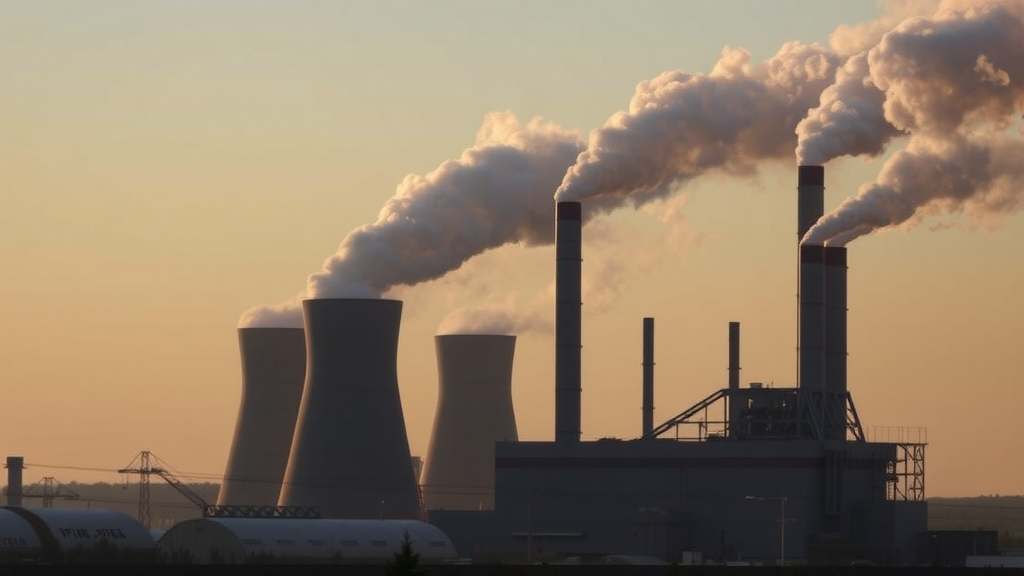
Every year, the world’s steel plants scrub, filter, and wash staggering quantities of pollutants out of their exhaust streams, protecting millions of people from sulfur dioxide, nitrogen oxides, and fine particulate matter. But a new study reveals an uncomfortable paradox at the heart of this environmental success story: the very equipment deployed to clean the air is itself a meaningful source of greenhouse gases. Researchers led by Pengyuan Wei and Yalei Zhang of Tongji University, publishing in Frontiers of Environmental Science & Engineering, have produced the first global accounting of the climate cost of air pollutant treatment in the iron and steel industry, and their numbers suggest that this hidden emission channel is large enough to demand a seat at the table in decarbonization planning.
The team applied an emission factor approach, a well-established technique in environmental accounting that multiplies activity data, such as the volume of flue gas treated or the mass of pollutant removed, by coefficients that describe the greenhouse gases released per unit of treatment activity. In 2019, the most recent baseline year in their analysis, the treatment of air pollutants in the global iron and steel industry generated approximately 5.37 billion kilograms of carbon dioxide equivalent. To put that figure in perspective, the researchers note that it is comparable in scale to the greenhouse gas emissions produced by wastewater treatment and waste treatment, two sectors whose secondary climate footprints have already attracted significant scientific and policy attention.
The chemistry behind these emissions is rooted in the end-of-pipe technologies that steelmakers rely on. Desulfurization systems, which remove sulfur dioxide from sintering plant exhaust, typically work by reacting the gas with limestone or lime, a process that releases carbon dioxide both through the chemical decomposition of carbonate and through the energy consumed in producing and processing the sorbent. Selective catalytic reduction systems, used to abate nitrogen oxides, consume energy and in some configurations release nitrous oxide, a greenhouse gas nearly 300 times more potent than carbon dioxide over a century. Fabric filters and electrostatic precipitators, which capture particulate matter, carry smaller but non-negligible energy penalties. When these burdens are aggregated, sulfur dioxide treatment emerges as the single largest contributor to the industry’s treatment-related greenhouse gas footprint, a finding the authors describe as decisive.
The spatial distribution of these emissions is strikingly lopsided. Asia accounted for fully 91 percent of global greenhouse gas emissions from air pollutant treatment in the steel sector, and within that, China alone contributed 76 percent of the worldwide total. This concentration is not an artifact of the accounting method but a direct reflection of where the world’s crude steel is actually made. China produces more than half of global crude steel, and its vast fleet of sintering machines and blast furnaces generates correspondingly enormous volumes of flue gas that must be treated before release. Where pollutant control is most intensive and production most massive, the secondary climate burden follows.
Temporally, the study traces how these emissions have evolved alongside tightening air quality standards. As countries, China foremost among them, imposed progressively stricter limits on sulfur dioxide, nitrogen oxides, and particulate matter, steelmakers responded by retrofitting desulfurization, denitrification, and dust removal systems across their plants. Each retrofit reduced the pollutant escaping the stack but increased the energy and material inputs consumed by the treatment train itself. The result is a structural dynamic in which air quality gains and climate costs rise together, unless the treatment technologies or the underlying production processes change.
Two factors, the researchers conclude, dominate the magnitude of these emissions: the industrial production structure and the choice of terminal treatment technology. Production structure matters because the pollutant load entering treatment equipment is determined upstream, by how the steel is made. Integrated blast furnace-basic oxygen furnace routes, which dominate in Asia, generate far larger volumes of sulfur-bearing sintering exhaust than electric arc furnace routes built on scrap recycling. Treatment technology matters because different desulfurization and denitrification systems carry different energy and sorbent intensities per unit of pollutant removed. The study’s scenario modeling exploits these two levers to explore what the future might hold.
Under a baseline scenario that extends current trends in production and pollution control deployment, the team projects that greenhouse gas emissions from air pollutant treatment in the global steel industry would climb to roughly 11 billion kilograms of carbon dioxide equivalent by 2050, a doubling relative to the 2019 level. That trajectory would mean that every ton of pollutant abated increasingly comes bundled with a growing carbon bill, quietly eroding some of the net climate benefit of pollution control and complicating national carbon budgets that have traditionally ignored this emission category.
The more encouraging news lies in the mitigation scenarios. The analysis finds that significant reductions in treatment-related greenhouse gases can be achieved by adjusting the production structure itself, principally by shifting from ore-based integrated steelmaking toward higher scrap utilization and electric arc furnace production. Because scrap-based routes generate far less sulfur dioxide at the source, they require less limestone-based desulfurization, and the carbon savings cascade through the entire treatment chain. In other words, the most effective way to decarbonize the cleanup is to produce less pollution in the first place, a conclusion that aligns the air quality agenda with the climate agenda rather than placing them in tension.
The study’s authors argue that their quantification fills a genuine blind spot. Global steel decarbonization roadmaps, including prominent plant-by-plant analyses published in recent years, have concentrated on process emissions from iron reduction and energy use, while the emissions embedded in environmental control equipment have gone largely uncounted. By demonstrating that these secondary emissions are comparable in scale to those of the wastewater and waste treatment sectors, the research gives policymakers a concrete reason to incorporate them into carbon accounting frameworks and to weigh the full life-cycle footprint of pollution control retrofits, particularly in regions planning massive new ultra-low emission programs. As the world pushes simultaneously toward cleaner air and a stable climate, the steel industry’s smokestack scrubbers are a reminder that in environmental systems, nothing is ever truly free, and that the smartest strategies are those that shrink problems at their source rather than paying repeatedly to manage their symptoms.
Subject of Research: Greenhouse gas emissions generated by air pollutant treatment in the global iron and steel industry
Article Title: Spatiotemporal patterns and scenario prediction of greenhouse gas emissions from air pollutants treatment in global iron and steel industry
Article References: Spatiotemporal patterns and scenario prediction of greenhouse gas emissions from air pollutants treatment in global iron and steel industry. (n.d.). https://doi.org/10.1007/s11783-026-2283-9
Image Credits: AI Generated
DOI: 10.1007/s11783-026-2283-9
Keywords: greenhouse gas emissions, iron and steel industry, air pollutant treatment, sulfur dioxide, flue gas desulfurization, emission factors, spatiotemporal analysis, scenario prediction, steel decarbonization, China steel production, ultra-low emission standards, scrap-based steelmaking
Cite Scienmag News
Russell Cooper. (September 12, 2026). Cleaning Smokestacks Is Quietly Warming the Planet, Global Steel Emissions Study Warns. Scienmag. https://scienmag.com/cleaning-smokestacks-is-quietly-warming-the-planet-global-steel-emissions-study-warns/
Russell Cooper. "Cleaning Smokestacks Is Quietly Warming the Planet, Global Steel Emissions Study Warns." Scienmag, 12 September 2026, https://scienmag.com/cleaning-smokestacks-is-quietly-warming-the-planet-global-steel-emissions-study-warns/. Accessed 12 September 2026.
Russell Cooper. "Cleaning Smokestacks Is Quietly Warming the Planet, Global Steel Emissions Study Warns." Scienmag. September 12, 2026. https://scienmag.com/cleaning-smokestacks-is-quietly-warming-the-planet-global-steel-emissions-study-warns/


