


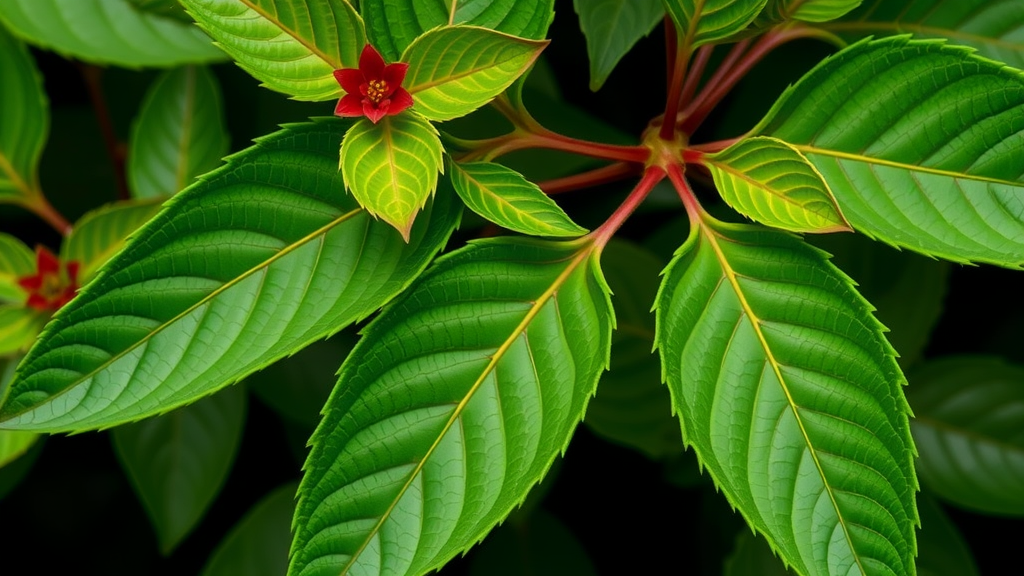
Scientists in Indonesia have combined cutting-edge analytical chemistry with an urgent global problem in a study of a humble tropical shrub that villagers have relied on for generations. The plant, Rhodomyrtus tomentosa, known widely as rose myrtle, is a pink-flowered member of the Myrtaceae family whose natural range stretches from India through southern China, the Philippines, Malaysia and Sulawesi. Traditional medicine systems across Southeast Asia have long used its leaves to treat infections and inflammation, and modern researchers have repeatedly confirmed antioxidant, antibacterial, antifungal, antimalarial and anti-inflammatory properties in its extracts. What makes the new work notable is not simply that it adds another entry to that long list of bioactivities, but that it maps the plant’s chemical arsenal in unprecedented detail and then points that arsenal in two directions at once: against dangerous bacteria, and against the methane that ruminant livestock burp into the atmosphere.
The research team, led by Setiasih Setiasih and colleagues at Indonesia’s National Research and Innovation Agency (BRIN) and partner institutions, published their findings in Results in Chemistry. Their strategy centered on a single deceptively simple question: what exactly is inside rose myrtle leaves, and how does the answer change depending on how you extract it? To find out, they harvested leaves from an experimental garden in Riau Province, dried them at 40 degrees Celsius for three days, and ground them into a flour. That flour was then subjected to maceration with three solvents spanning the polarity spectrum: 96 percent ethanol as a polar solvent, ethyl acetate as a semipolar solvent, and n-hexane as a nonpolar solvent. Each extract was subsequently analyzed by liquid chromatography coupled to high-resolution mass spectrometry, or LC-HRMS, at BRIN’s Advanced Characterization Laboratories.
The choice of solvent turned out to matter enormously. LC-HRMS profiling tentatively identified 191 distinct compounds in the ethanol extract, 226 in the ethyl acetate extract, and 206 in the n-hexane extract. Ethanol preferentially pulled out polar molecules, yielding a profile dominated by flavonoid glycosides, phenolic acids and related derivatives, including myricitrin, myricetin, quinic acid derivatives and multiple dihydroxybenzoic acids. These hydroxyl-rich compounds dissolve readily in polar solvents through hydrogen bonding and are classic free-radical scavengers, which helps explain the high antioxidant activity long associated with the plant. The ethyl acetate extract displayed the greatest metabolite diversity of all, dominated by pentacyclic triterpenoids such as ursolic acid, asiatic acid, oleanolic acid, arjungenin and glycyrrhetinic acid derivatives, alongside phenolics including ellagic acid, gallic acid, myricetin and taxifolin. The n-hexane extract, by contrast, was rich in lipophilic sesquiterpenes such as caryophyllene oxide, alpha-farnesene and curcumene, together with assorted triterpenoid derivatives.
The analytical power of the method lies in its ability to go beyond a simple mass readout. Using higher-energy collisional dissociation fragmentation, the researchers could watch molecules break apart in characteristic ways, dramatically raising confidence in their identifications. Myricitrin, for example, produced a precursor ion at mass-to-charge ratio 463.0881 that fragmented to give a product ion at 316.0224, corresponding to the loss of its rhamnose sugar and formation of the myricetin aglycone. Oleanolic acid showed a precursor at 455.3534 with a diagnostic fragment at 411.3472 reflecting loss of carbon dioxide, while caryophyllene oxide in the n-hexane extract yielded sequential ring-cleavage fragments at 161.0962 and 109.1014. The authors are careful to stress that this was qualitative screening rather than quantitative metabolomics, conducted without biological replicates, so peak areas reflect relative signal intensity within a run rather than absolute concentrations. Even so, the picture that emerges is of a plant whose chemistry shifts meaningfully with every solvent a chemist chooses.
With the chemical inventory in hand, the team turned to biological testing. Using the agar disc diffusion method, they challenged four bacterial strains with each extract at concentrations of 25, 50 and 80 percent: Escherichia coli ATCC 25922 and Salmonella typhimurium ATCC 14028 as Gram-negative representatives, and Staphylococcus aureus ATCC 25923 and Listeria monocytogenes ATCC 19115 as Gram-positive representatives. The result was a clean split. Every extract, regardless of solvent, inhibited both Gram-positive species and failed entirely to inhibit either Gram-negative one. Chloramphenicol, the reference antibiotic, produced a 14.82 millimeter zone against S. aureus, larger than the 7.11 to 7.70 millimeter zones produced by the extracts, but the n-hexane extract at 80 percent actually outperformed chloramphenicol against Listeria, generating a 7.17 millimeter zone compared with the antibiotic’s 5.23 millimeters.
The selectivity is rooted in bacterial architecture. Gram-negative bacteria wrap themselves in an outer membrane studded with lipopolysaccharides, an exceptionally effective permeability barrier that excludes hydrophobic molecules and is reinforced by selective porins and efflux pumps that expel antimicrobials before they reach lethal intracellular concentrations. Gram-positive bacteria, lacking that outer membrane, rely on a thick but porous peptidoglycan layer some 20 to 80 nanometers deep, through which small plant metabolites can diffuse relatively freely toward the cytoplasmic membrane. The researchers also observed that solvent type shaped potency: ethanol extracts, rich in phenolics and flavonoids, were most effective against S. aureus, while n-hexane extracts, loaded with membrane-disrupting terpenoids, were the champions against Listeria, a reminder that even within the Gram-positive category, membrane composition and defensive machinery differ enough to matter. The findings align with earlier reports that rose myrtle extracts and the pure compound rhodomyrtone, an antibiotic candidate with activity comparable to vancomycin, are most effective against Gram-positive organisms.
The second half of the study addresses climate. Ruminant livestock account for roughly a quarter of anthropogenic greenhouse gas emissions measured by methane’s contribution, with enteric fermentation in the digestive tract responsible for 80 to 89.5 percent of that methane and manure contributing the rest. Methanogenic archaea in the rumen generate the gas, and feed additives that suppress them are among the most actively pursued mitigation strategies. Because flavonoids, tannins and saponins have documented anti-methanogenic effects, the team tested the ethyl acetate extract, the richest in bioactive triterpenoids and phenolics, in an in vitro rumen fermentation system using Brachiaria ruziziensis grass as the basal feed, at inclusion levels of 1 to 4 percent, with methane measured by gas chromatography over 48 hours.
The outcome was striking in one particular way. Total gas production was unaffected across all treatment levels, meaning fermentation efficiency was preserved, but methane output fell steadily as the extract dose increased. The methane percentage of total gas dropped from 7.72 percent in the untreated control to 3.77 percent at the 4 percent inclusion level, a statistically significant reduction, and methane volume declined as well with a P value of 0.056, right at the threshold of significance. The chemical fingerprint offers a plausible mechanism in several complementary parts. Triterpenoids such as ursolic acid are membrane-active against rumen protozoa, which maintain physical symbioses with methanogenic archaea and supply them with hydrogen; suppressing protozoa often drags methane down with it. Phenolic compounds can selectively inhibit methanogens while redirecting metabolic hydrogen toward propionate synthesis, an energetically favorable route for the animal. Terpenoids such as caryophyllene oxide may interfere with membrane integrity and ion gradients in anaerobic microbes. The authors also cite prior molecular docking work showing that rose myrtle compounds bind strongly to methyl coenzyme M reductase, the enzyme at the heart of methanogenesis, with rhodomyrtial A achieving a predicted binding affinity of minus 10.4 kilocalories per mole.
The researchers are appropriately measured about what these results do and do not prove. The antibacterial assay was a preliminary screen, and they recommend follow-up with minimum inhibitory and bactericidal concentration determinations, plus in vivo testing, to establish therapeutic potential; earlier work suggests possible veterinary applications including mastitis treatment in dairy cows. Similarly, they emphasize that the methane findings provide a chemical rationale rather than a demonstrated field benefit, and that in vivo feeding trials will be required to confirm efficacy and safety. Nevertheless, the study is the first LC-HRMS-based phytochemical characterization of rose myrtle in the context of ruminant nutrition, and it reveals an intertwined network of triterpenoids, phenolics, flavonoids and lipophilic terpenoids whose combined effects may prove more stable than any single isolated compound. In an era when agriculture is under intense pressure to cut emissions without compromising animal productivity, a shrub that grows wild across tropical Asia, fights Gram-positive pathogens in the laboratory, and measurably dampens methane in simulated rumen fluid is exactly the kind of natural lead worth chasing.
Subject of Research: Phytochemical characterization of Rhodomyrtus tomentosa leaves and their antibacterial and methane-mitigating bioactivities
Article Title: LC–HRMS-based phytochemical characterization and biological activities of Rhodomyrtus tomentosa leaves extracts: Antibacterial and methane mitigation potentials
Article References: Setiasih, S., Anggraeny, Y. N., Puspito, S., Widodo, S., Wardi, W., Prihandini, P. W., Antonius, A., Shiddieqy, M. I., Sasongko, W. T., Istiqomah, N., Haryanto, B., Kurniawati, A., Prihartini, I., Wulansari, W. I., & Ernawati, A. (2026). LC–HRMS-based phytochemical characterization and biological activities of Rhodomyrtus tomentosa leaves extracts: Antibacterial and methane mitigation potentials. Results in Chemistry, 30, Article 103812. https://doi.org/10.1016/j.rechem.2026.103812
Image Credits: AI Generated
DOI: 10.1016/j.rechem.2026.103812
Keywords: Rhodomyrtus tomentosa, rose myrtle, LC-HRMS, phytochemical profiling, antibacterial activity, triterpenoids, flavonoids, enteric methane, ruminant nutrition, feed additives, methanogens, Results in Chemistry
Cite Scienmag News
Bethany Barker. (September 12, 2026). Tropical Shrub’s Leaf Extracts Show Power to Fight Superbugs and Curb Cow Methane. Scienmag. https://scienmag.com/tropical-shrubs-leaf-extracts-show-power-to-fight-superbugs-and-curb-cow-methane/
Bethany Barker. "Tropical Shrub’s Leaf Extracts Show Power to Fight Superbugs and Curb Cow Methane." Scienmag, 12 September 2026, https://scienmag.com/tropical-shrubs-leaf-extracts-show-power-to-fight-superbugs-and-curb-cow-methane/. Accessed 12 September 2026.
Bethany Barker. "Tropical Shrub’s Leaf Extracts Show Power to Fight Superbugs and Curb Cow Methane." Scienmag. September 12, 2026. https://scienmag.com/tropical-shrubs-leaf-extracts-show-power-to-fight-superbugs-and-curb-cow-methane/


