


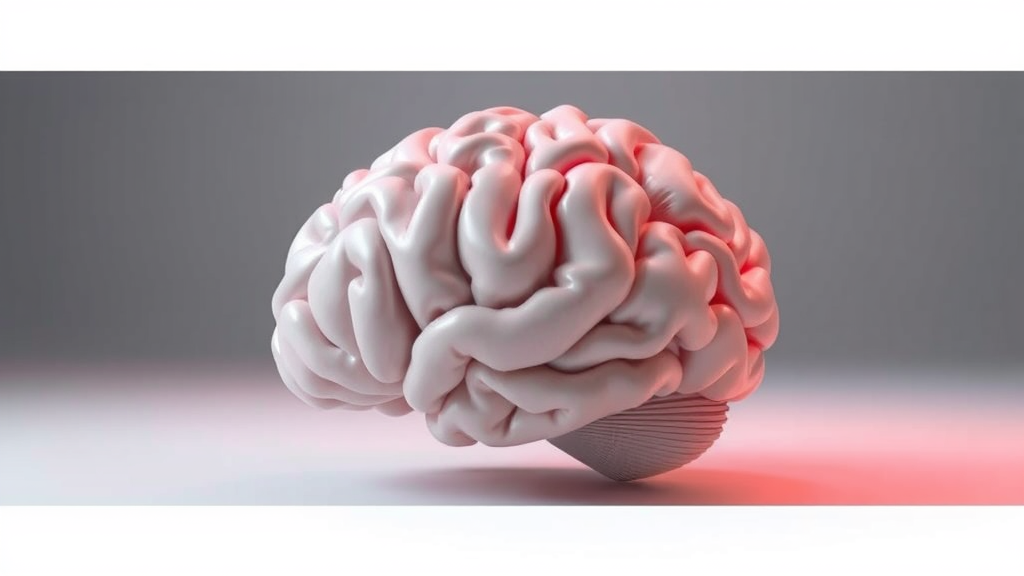
The human brain is one of nature’s most striking examples of form following physics. Over the course of fetal development, the smooth surface of the embryonic cortex crumples and buckles into the familiar labyrinth of ridges and furrows that defines the mature organ, a fractal-like landscape whose folds increase the brain’s surface area and underpin its extraordinary computational capacity. For decades, scientists have known that this process, called gyrification, emerges from the interplay between genetic programs and mechanical forces, with growing tissue compressing, buckling and folding as it expands inside the constrained space of the skull. Yet capturing that interplay quantitatively has remained elusive, largely because the folding patterns are geometrically complex and the labeled imaging data needed to train conventional artificial intelligence models are scarce. Now, a team of researchers in China has unveiled a new machine learning framework that embeds the laws of physics directly into the learning process, allowing a neural network to predict how a developing brain will fold with far less data than anyone thought possible.
The framework, described in Nature Computational Science by Yingjie Zhao and Zhiping Xu of Tsinghua University together with Yicheng Song and Fan Xu of Fudan University, is called physics-transfer learning, and its central insight is deceptively simple: the governing equations of nonlinear elasticity do not care whether they are describing a rubber sheet, an engineered shell or living brain tissue. If a neural network can first learn the mechanics of folding in simple, analytically tractable geometries where the mathematics is fully understood, it can then carry that knowledge across a carefully staged sequence of increasingly complex systems, ultimately arriving at the brain itself. Each step along this chain of physics-anchored domains reinforces the same underlying mechanical principles, so the network never drifts far from the physical laws that actually govern morphogenesis.
The starting point of this transfer chain is deliberately humble. The researchers began with elastic structures whose buckling behavior can be derived in closed form, embedding the classical theory of nonlinear elasticity into the network’s architecture and training objectives as explicit constraints rather than leaving the model to infer them from examples. From there, the team constructed what they call chains of physics-anchored domains, a progression of model systems that gradually increases in complexity and fidelity while preserving the shared mechanical substrate. This staging matters because transfer learning in the standard machine learning sense has long been criticized for moving knowledge between domains with no guarantee of success. By anchoring every step to consistent governing laws, the researchers could go further than intuition and actually prove something remarkable: a theoretical generalization bound that explains why and when the transferred knowledge remains reliable on the unfamiliar target domain.
That theoretical foundation sets the work apart from the crowded field of physics-informed machine learning. Since the introduction of physics-informed neural networks, researchers have sought to weave partial differential equations into deep learning, producing impressive results in fluid dynamics, materials discovery and beyond. But these approaches often face what practitioners describe as an accuracy-performance dilemma, and a 2024 analysis in Nature Machine Intelligence warned that weak baselines and reporting biases have inflated optimism in the field. The new study confronts that skepticism head-on by deriving its generalization bound from the physics-transfer theory itself, turning what is usually an empirical claim into a mathematical statement about how closely the source and target domains share their governing laws. In effect, the bound quantifies the value of physical consistency, providing a principled answer to the question every applied scientist asks: how well will my model work on data it has never seen?
To test the framework against reality, the researchers turned to clinical data, validating their models against magnetic resonance imaging atlases of the developing human brain, including the spatio-temporal surface atlas of the fetal brain generated by the Developing Human Connectome Project. The models were asked to perform two distinct tasks. The first was descriptive: characterizing geometric features of the brain surface, such as curvature, that encode the signature of the folding process. The second was predictive: forecasting the progression of morphological development, essentially predicting how the folding landscape will evolve over developmental time. Compared with purely supervised learning models trained on the same limited data, the physics-transfer approach demonstrated markedly stronger performance on both tasks, a result the generalization bound anticipated. The comparison makes clear that when labeled examples are scarce, physics is worth more than data.
Beyond raw predictive accuracy, the framework delivers something arguably more valuable for scientists: understanding. The trained networks yield reduced-dimensional evolutionary representations, compact mathematical descriptions that distill the essential physics of brain morphogenesis into a low-dimensional space. In this compressed representation, the bewildering complexity of a folding cortex collapses onto a small set of coordinates that trace the trajectory of development, in much the same way that principal component analysis reveals dominant patterns in high-dimensional data. The researchers’ analysis of the internal structure of the neural networks shows that these reduced representations are not statistical artifacts but carry genuine mechanical meaning, connecting the information bottleneck of deep learning with the physical instabilities, such as buckling and wrinkling, that mechanicians have long studied in shrinking and growing shells.
The implications reach well beyond developmental neurobiology. The same group had previously applied physics-transfer learning to discover high-strength alloys, demonstrating that the framework generalizes across materials science, and the new work extends the recipe to soft matter and biomechanics. For clinicians, the prospect of physics-aware digital twins of the developing brain is particularly compelling. A digital twin in this context is a patient-specific computational model that evolves in lockstep with its biological counterpart, offering a virtual laboratory in which development can be monitored, diagnosed and, in principle, intervened upon. Malformations of cortical development, a class of congenital conditions arising when the folding process goes awry, are currently classified largely by descriptive criteria; a predictive mechanical model could identify deviations from normal development earlier and connect them to their underlying biomechanical causes.
The team has been unusually generous with the products of the research, releasing digital libraries of brain models and simulation data through figshare, the fetal brain surface atlas data through G-Node, and all scripts for reproducing the results through GitHub, Zenodo and Code Ocean. This openness matters because reproducibility has been a persistent sore point in machine learning for the physical sciences, and it invites the broader community to stress-test the generalization bounds and probe the limits of the domain transfer. It also lowers the barrier for groups in resource-limited settings, where large labeled datasets of fetal imaging are precisely the kind of resource that is hardest to obtain. A method that achieves strong performance from scarce data, grounded in physics rather than brute-force annotation, democratizes access to high-fidelity developmental modeling.
The work also speaks to a deeper conversation about how machine intelligence should engage with the physical world. Data-driven approaches have achieved spectacular successes, but critics note that pure pattern recognition can fail catastrophically outside its training distribution, an unacceptable risk in medicine. Theory-grounded approaches, by contrast, trade some flexibility for reliability, encoding invariants that hold regardless of the examples on hand. Physics-transfer learning offers a bridge between these poles: it exploits data where data exist, leans on physical law where they do not, and, crucially, comes with a mathematical guarantee that quantifies the trade. As Zhao, Song, Xu and Xu suggest, that combination of accuracy, interpretability and theoretical assurance may be exactly what physics-aware digital-twin technologies need to move from promising demonstrations to clinical tools for understanding, diagnosing and ultimately intervening in the developing and diseased brain.
For a species whose intelligence is written in the folds of its cortex, there is a satisfying symmetry in the fact that it took a fusion of physics and machine learning to finally read that script. The folding of the brain is neither pure genetics nor pure mechanics but the inseparable entanglement of the two, and any model that captures only one side of the story was always destined to fall short. By teaching a neural network the elastic grammar that all folding matter obeys, and then letting it climb the ladder of complexity from simple shells to living tissue, the Tsinghua and Fudan team has shown that the shortest path to understanding nature’s most intricate forms may run through her simplest ones. If the framework continues to validate against clinical imaging, the folding patterns on a fetal scan could one day speak not just of anatomy, but of mechanics, prognosis and possibility.
Subject of Research: Physics-transfer learning for predicting brain morphogenesis and cortical folding from limited data
Article Title: Predicting brain morphogenesis via physics-transfer learning
Article References: Zhao, Y., Song, Y., Xu, F., & Xu, Z. (2026). Predicting brain morphogenesis via physics-transfer learning. Nature Computational Science. https://doi.org/10.1038/s43588-026-01040-7
Image Credits: AI Generated
DOI: 10.1038/s43588-026-01040-7
Keywords: physics-transfer learning, brain morphogenesis, cortical folding, gyrification, nonlinear elasticity, physics-informed machine learning, neural networks, generalization bound, digital twin, fetal brain imaging, Developing Human Connectome Project, computational mechanics
Cite Scienmag News
Cassandra Pierce. (September 12, 2026). AI Learns the Physics of Brain Folding to Predict How the Brain Takes Shape. Scienmag. https://scienmag.com/ai-learns-the-physics-of-brain-folding-to-predict-how-the-brain-takes-shape/
Cassandra Pierce. "AI Learns the Physics of Brain Folding to Predict How the Brain Takes Shape." Scienmag, 12 September 2026, https://scienmag.com/ai-learns-the-physics-of-brain-folding-to-predict-how-the-brain-takes-shape/. Accessed 12 September 2026.
Cassandra Pierce. "AI Learns the Physics of Brain Folding to Predict How the Brain Takes Shape." Scienmag. September 12, 2026. https://scienmag.com/ai-learns-the-physics-of-brain-folding-to-predict-how-the-brain-takes-shape/


