


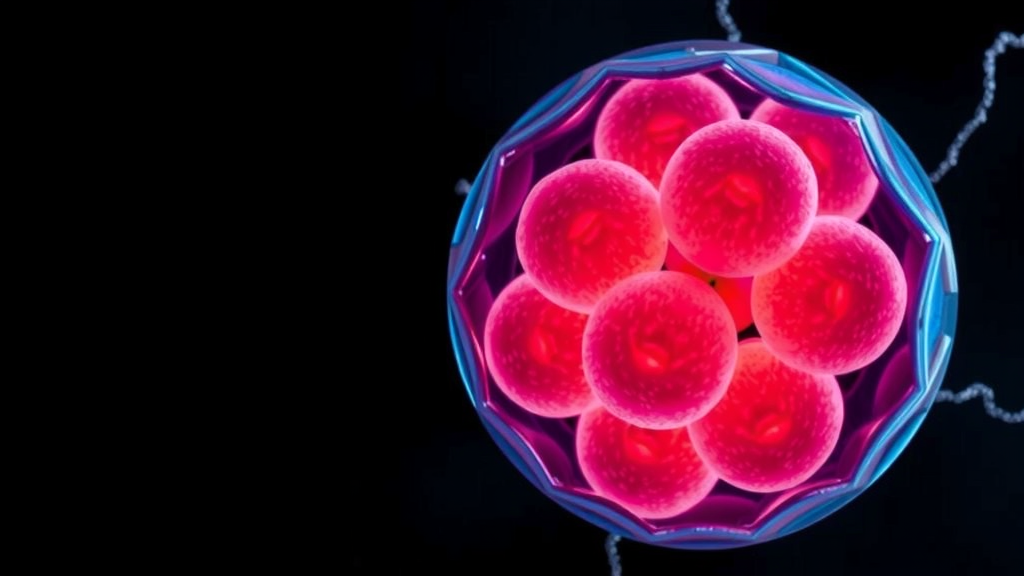
In a development that is sending ripples through the stem cell and developmental biology communities, researchers have published a detailed protocol for generating totipotent eight-cell embryo-like cells (8CLCs) from human pluripotent stem cells in the laboratory. The work, published in Nature Protocols, provides a step-by-step recipe for coaxing cultured stem cells backward along the developmental timeline to a state that closely resembles the cells of a human embryo at day three after fertilization, the moment when the earliest and most dramatic wave of gene activation ignites the genome of a new life.
The significance of the achievement lies in what these cells represent. In mammals, development begins when a sperm fertilizes an oocyte, creating a zygote. In humans, that single cell remains transcriptionally silent, meaning its genome is largely switched off, until the major wave of zygotic genome activation, or ZGA, occurs around the eight-cell stage. At that point, and in the morula cells that follow, the embryo’s cells are totipotent: they possess the extraordinary capacity to give rise to an entire individual, including both the embryo proper and the supporting tissues. Capturing that fleeting state in a dish has long been one of the most coveted goals in stem cell science.
The obstacle has always been access. Human embryos are ethically fraught as research material, and the supply of early cleavage-stage embryos available for study is vanishingly small. As a result, scientists’ understanding of human totipotency remains rudimentary compared with their deep knowledge of pluripotency, the more restricted capacity of embryonic stem cells to form any tissue of the body but not a whole organism. The new protocol addresses that bottleneck directly by offering a controllable, transgene-free method to produce cells that mimic the eight-cell stage without using embryos at all.
At the heart of the method is a novel culture medium formulated by the team, containing specific chemical compounds and cytokines that push pluripotent stem cells into the eight-cell embryo-like state. The researchers describe two routes to get there. The first is a stepwise approach that moves cells from a primed pluripotent state into a naive state and then onward to 8CLCs, a journey that takes only five days starting from naive pluripotent stem cells. The second is a direct conversion from primed pluripotent stem cells, which requires roughly seven days. Both routes yield cells that can be isolated and characterized using the techniques laid out in the protocol.
The technical details matter enormously for reproducibility, which is precisely why the team chose to publish in a protocols journal. The paper walks readers through the induction of the cells, their isolation from the surrounding culture, and their characterization at multiple levels. Characterization includes immunofluorescence imaging, the use of a TPRX1-EGFP reporter line that fluoresces when the cells enter the eight-cell-like state, and single-cell RNA sequencing to profile gene expression cell by cell. The published figures document the generation of naive pluripotent stem cells on feeder layers and on extracellular matrix, the stepwise and direct induction of 8CLCs, and transcriptomic analyses that compare the resulting cells with natural human embryo data.
Crucially, the resulting 8CLCs exhibit transcriptional and epigenetic features resembling those of genuine human eight-cell embryo cells. In plain terms, the cells have switched on many of the same genes that flicker to life during zygotic genome activation, and their epigenetic markings, the chemical modifications that control gene activity without altering DNA sequence, have shifted toward the embryonic configuration. The authors note that their 8CLCs share similarities with eight-cell-like cells generated by other methods, but there are differences in the expression levels of certain totipotency genes and transposable elements, ancient viral remnants in the genome that are famously reawakened during early development. Those differences give researchers an opportunity to compare approaches and refine the models further.
The broader scientific context helps explain why this protocol is generating such excitement. Work in mice had already shown that embryonic stem cell potency fluctuates with the activity of endogenous retroviruses, and that factors such as DUX and the Zscan4 family can activate cleavage-stage gene programs and drive cells into a totipotent two-cell-like state. Subsequent studies identified regulators including Dppa2 and Dppa4, NELFA, and retinoic acid signaling as players in the totipotency window, and chemical cocktails were eventually shown to induce totipotent-like stem cells in mouse systems. For humans, parallel efforts produced 8C-like cells that capture the zygotic genome activation program in vitro, and transient expression of DUX4 was shown to induce a blastomere-like expression program. The new protocol consolidates this knowledge into a practical, transgene-free workflow for human cells.
The team behind the work draws on a strong track record. The protocol builds on the group’s earlier primary research paper, published in Nature in 2022, in which they first reported rolling back human pluripotent stem cells to an eight-cell embryo-like stage. The data discussed in the protocol were generated as part of that study, and representative results are provided alongside the methods. The authors expect that an individual with roughly one year of experience working with human pluripotent stem cell culture would be able to carry out the procedure, a deliberately accessible bar that should allow laboratories around the world to adopt the technique without exotic equipment or rare expertise.
The implications stretch across several fields. For basic developmental biology, 8CLCs offer an ethically unburdened and materially abundant model for dissecting the molecular events surrounding zygotic genome activation, one of the most fundamental transitions in human life. For reproductive medicine, a deeper understanding of early embryogenesis could illuminate causes of infertility and early pregnancy loss, which often trace back to failures in these first few days of development. For regenerative medicine, totipotent-like cells represent the theoretical starting point for generating any cell type in the body, and possibly extraembryonic lineages as well, from a standardized laboratory source. The work also connects to a rapidly expanding ecosystem of embryo models, including blastoids and gastruloids derived from stem cells, which together are assembling a laboratory-based picture of human development from fertilization through implantation and early organogenesis.
As with any powerful technology, the advance arrives with responsibilities. The authors have filed patent applications covering the protocols for human 8CLC generation and characterization, reflecting both the scientific and commercial stakes of the method. Researchers and ethicists will continue to debate the appropriate boundaries for embryo models, even ones that cannot and are not intended to develop into organisms. What is clear is that the availability of a reproducible, transgene-free protocol lowers the barrier to entry for studying the earliest chapter of human development, and that the cells it produces, glowing green when they switch on the right genes and transcribing the ancient program of the eight-cell embryo, will become a standard tool in laboratories probing the origins of human life.
Subject of Research: A protocol for generating totipotent eight-cell embryo-like cells from human pluripotent stem cells to model zygotic genome activation
Article Title: Generation of eight-cell embryo-like cells from human pluripotent stem cells
Article References: Mazid, M. A., Li, Y., Zhao, M., Fu, L., Liu, H., Jiang, Y., Jia, W., Lai, J., Li, J., Li, H., Saeed, B. J., Manzoor, A., Luo, Z., Lai, Y., Wu, L., Zou, Y., Ariyachet, C., Ward, C., Liu, C., … Li, W. (2026). Generation of eight-cell embryo-like cells from human pluripotent stem cells. Nature Protocols. https://doi.org/10.1038/s41596-026-01414-1
Image Credits: AI Generated
DOI: 10.1038/s41596-026-01414-1
Keywords: eight-cell embryo-like cells, human pluripotent stem cells, totipotency, zygotic genome activation, stem cell reprogramming, Nature Protocols, early embryogenesis, naive pluripotency, single-cell RNA sequencing, transgene-free induction, embryo models, developmental biology
Cite Scienmag News
Juliet Wilcox. (September 12, 2026). Scientists Roll Human Stem Cells Back to an Eight-Cell Embryo-Like State. Scienmag. https://scienmag.com/scientists-roll-human-stem-cells-back-to-an-eight-cell-embryo-like-state/
Juliet Wilcox. "Scientists Roll Human Stem Cells Back to an Eight-Cell Embryo-Like State." Scienmag, 12 September 2026, https://scienmag.com/scientists-roll-human-stem-cells-back-to-an-eight-cell-embryo-like-state/. Accessed 12 September 2026.
Juliet Wilcox. "Scientists Roll Human Stem Cells Back to an Eight-Cell Embryo-Like State." Scienmag. September 12, 2026. https://scienmag.com/scientists-roll-human-stem-cells-back-to-an-eight-cell-embryo-like-state/


