


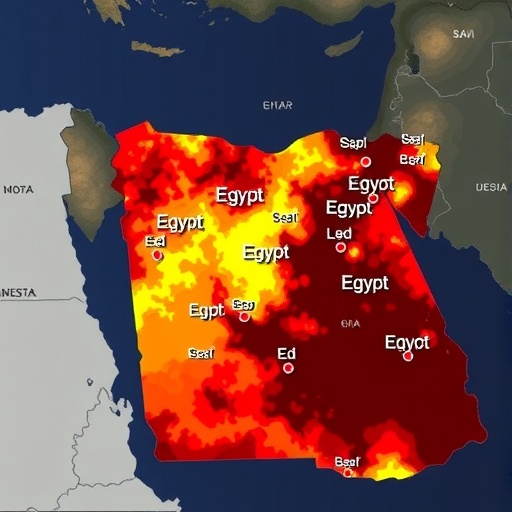
Chicken infectious anemia virus (CIAV), one of the most damaging immunosuppressive pathogens in global poultry production, is undergoing an aggressive evolutionary shift in Egypt, and the southern provinces are at the epicenter. A new study published in Virology Journal has delivered the most extensive surveillance of CIAV ever conducted in the country, combining full genome sequencing, evolutionary analysis, structural modeling and experimental pathogenicity testing. The results reveal that highly pathogenic genotype II strains—genetically distant from the vaccine strains currently used to protect flocks—are now dominant in Upper Egypt, including a recombinant mosaic variant whose altered surface architecture may help it slip past vaccine-induced immunity.
The research team, led by Eman Abd Elmenum Shosha of New Valley University together with collaborators at Assiut University, the Animal Health Research Institute, and partner institutions, surveyed 80 poultry flocks across ten Egyptian governorates between April 2024 and November 2025. Sampling spanned both commercial operations and backyard flocks from Assiut, Sohag, Aswan, New Valley, Qena, Minya, Fayoum, Cairo, Kafr El-Sheikh, and Matrouh, covering breeders, commercial layers, broilers and household birds aged between 2 and 27 weeks. The screening focused on a long-standing blind spot: while CIAV in Northern Egypt has been studied repeatedly, the viral landscape of the southern, high-density poultry sector had never been comprehensively characterized.
The scale of viral circulation proved striking. Of 400 tissue samples collected from the bursa of Fabricius, thymus, spleen and liver, 120 tested positive for CIAV DNA using a TaqMan-based real-time PCR assay targeting a conserved region of the viral genome—a prevalence of 30 percent. That figure is notably higher than the 23 percent reported for other Egyptian provinces during the same period, suggesting that CIAV may be circulating even more intensively in the south, potentially driven by differences in environmental stressors, flock management and localized vaccination pressures. Affected flocks showed the classic clinical profile of the disease: profound depression, pale combs, stunted growth, and mortality ranging from 4 to 15 percent in young birds, with post-mortem examination revealing thymic and bursal atrophy, pale watery bone marrow, and hemorrhages in skeletal muscle and the proventriculus.
CIAV itself is a deceptively simple pathogen. Classified within the family Anelloviridae and genus Gyrovirus, it carries a single-stranded, closed circular DNA genome of roughly 2.3 kilobases encoding three partially overlapping open reading frames. VP1 serves as the major structural capsid protein and the primary target of neutralizing antibodies; VP2 acts as a scaffolding protein that assists proper VP1 folding; and VP3, known as apoptin, triggers the apoptosis of lymphoid and hematopoietic cells. Because VP1 shows the greatest sequence diversity, it is the workhorse of molecular epidemiology, and phylogenetic analysis of this gene has traditionally divided CIAV isolates into distinct genotypes. For decades, Egyptian field strains belonged predominantly to genotype I and closely resembled the Cux-1 vaccine lineage.
That picture has now changed. Sixteen representative isolates were selected from the qPCR-positive samples for conventional PCR amplification—five for full circular genome sequencing and ten for partial VP2 gene analysis. Sequencing on an ABI PRISM 3730XL analyzer, followed by assembly in Lasergene and BioEdit and phylogenetic reconstruction in MEGA X using the neighbor-joining method with the Tamura-Nei substitution model and 1,000 bootstrap replicates, placed every sequenced isolate firmly within genotype II. The five full-genome isolates, deposited in GenBank under accession numbers PX596994 through PX596998, shared 97 to 98 percent nucleotide and amino acid identity with Egyptian genotype II strains from 2015 and 2016, and 96 to 98 percent identity with genotype II references from China, Australia, Japan, Malaysia, the United States and Brazil. Pairwise comparison among the five new isolates themselves revealed 99 percent similarity, pointing to a common ancestral source and synchronized local evolution.
The critical finding, however, lies in the comparison with vaccines. Against vaccine-related strains—including CAV 26P4/Netherland-2007, Del Ros, and Cuxhaven-1—the Egyptian isolates showed only 85 to 87 percent amino acid similarity in the regions that matter for immunity. In other words, the commercial vaccines deployed in breeder flocks, which rely on genotype I strains to confer maternal antibody protection to chicks, are genetically mismatched with the viruses now circulating in the field. The authors are careful to note that genetic similarity figures alone do not prove direct vaccine derivation or reversion, but the divergence in VP1’s hypervariable and functionally important regions is consistent with the recurrent vaccination failures and clinical breakthroughs being observed in vaccinated Egyptian flocks.
Mutation analysis sharpened that concern. The isolates carried a suite of amino acid substitutions across VP1, including changes in the hypervariable region at positions 116 to 126, a leucine substitution at position 126 in the Matrouh isolate, isoleucine replacements in the positively selected central region spanning residues 220 to 240, a characteristic P/S/L/HG motif pattern at positions 235 to 245, and lysine, glutamic acid and methionine substitutions at positions 296, 301 and 306. The Matrouh isolate PX596998 also carried a unique cysteine substitution in the VP2-associated region, a change that could alter protein-protein interactions and affect replication efficiency. Importantly, the classic virulence-associated residues of VP1 at positions 75, 89, 125, 139 and 144 remained conserved, and no substitutions appeared in the hypervariable region at positions 139 to 151.
Recombination analysis added an evolutionary twist. Using RDP4 software with BootScan and 3Seq algorithms, the team identified the Matrouh isolate as a genuine recombinant—a mosaic genome assembled from two parental lineages, with a genotype III Chinese strain as the major parent and a genotype II Egyptian isolate as the minor parent. Breakpoints mapped across the circular genome indicate that the central region derives from one lineage while the flanking regions come from the other, a configuration consistent with the frequent intra-genotypic recombination now being reported for CIAV in Asia and South America. The co-circulation of multiple lineages within the same poultry populations, the authors suggest, creates ideal conditions for such genetic exchange and the continual emergence of novel variants.
To connect genetics with structure, the researchers built a three-dimensional homology model of the VP1 capsid protein using SWISS-MODEL, achieving a Global Model Quality Estimation of 0.75 and a QMEANDisCo score of 0.76 ± 0.05, with 96.88 percent of residues falling in favored regions of the Ramachandran plot. The model depicted a densely globular, tightly packed alpha-helical capsid protein studded with flexible loop regions—the very loops that mediate host interactions and antibody binding. Mutations clustered in or near these loop regions could reshape the antigenic surface of the virion, potentially reducing the binding affinity of neutralizing antibodies and facilitating immune evasion, even as the rigid helical core preserves capsid integrity.
The most dramatic evidence, though, came from the animal experiment. One hundred one-day-old specific-pathogen-free chicks were divided into challenged and control groups, with the challenged birds receiving an intramuscular dose of the Assiut genotype II isolate—the first pathogenicity assessment ever performed on an Upper Egyptian strain. The results were severe. Infected chicks developed profound growth retardation, with body weight differences statistically significant from 14 days post-infection onward and reaching peak significance by day 35. Thymic atrophy was detectable as early as three days post-infection, with thymus weights falling to 0.13 grams compared with 0.32 grams in controls, and severe atrophy persisted across the entire 35-day trial. The bursa of Fabricius and spleen showed parallel, sustained reductions, painting a picture of relentless immunodepletion.
The hematological collapse was equally stark. Packed cell volume fell to 18 ± 0.58 percent, far below the clinical anemia threshold of 25 percent and dramatically lower than the control value of 32.33 percent, accompanied by severe reductions in red blood cell counts and hemoglobin, marked leukopenia and lymphopenia, and a compensatory rise in heterophils. Post-mortem examination revealed the pathognomonic signature of severe aplastic anemia: bone marrow transformed from deep red hematopoietic tissue into pale, fatty, yellowish material, along with blue-wing disease, systemic petechial hemorrhages, and urate deposition in pale, enlarged kidneys. Histopathology confirmed intranuclear inclusion bodies, severe lymphocytolysis, and progressive replacement of hematopoietic tissue by adipocytes and connective tissue in the marrow.
Quantitative viral load measurements explained the devastation. The thymus peaked at 9.50 ± 0.25 log10 DNA copies per milligram at seven days post-infection, while the bone marrow sustained the highest persistence, peaking at 9.00 ± 0.22 log10 copies at 14 days and remaining elevated through day 21. The spleen and liver also harbored substantial titers, confirming multi-organ tropism and massive systemic replication. Most striking of all was the immunological endpoint: anti-CIAV antibody titers rose transiently to a peak at two weeks post-infection, then collapsed to undetectable levels by week five—a complete humoral collapse that leaves birds defenseless not only against CIAV itself but against the secondary bacterial and viral infections that follow immunosuppression.
The implications for Egypt’s poultry industry are direct. The prolonged, high-titer shedding implied by persistent marrow loads, combined with the virus’s legendary environmental stability as a non-enveloped virion, creates continuous infectious pressure that can overwhelm maternally derived antibodies in successive flocks. The researchers argue that genotype I-based vaccination programs may even be exerting selective pressure favoring genotype II strains with superior fitness in the local environment. Their conclusion is unambiguous: Egypt needs genotype-matched immunogens built from local isolates, sustained regional surveillance in the south, and cross-neutralization and vaccine-challenge studies to quantify the true extent of the protection gap. Until then, a hypervirulent, recombining, antigenically drifting virus continues to evolve faster than the vaccines aimed at it.
Cite Scienmag News
Kristina Jarvis. (September 9, 2026). Chicken anemia virus in Upper Egypt shows genetic variability linked to vaccine strains. Scienmag. https://scienmag.com/chicken-anemia-virus-in-upper-egypt-shows-genetic-variability-linked-to-vaccine-strains/
Kristina Jarvis. "Chicken anemia virus in Upper Egypt shows genetic variability linked to vaccine strains." Scienmag, 9 September 2026, https://scienmag.com/chicken-anemia-virus-in-upper-egypt-shows-genetic-variability-linked-to-vaccine-strains/. Accessed 9 September 2026.
Kristina Jarvis. "Chicken anemia virus in Upper Egypt shows genetic variability linked to vaccine strains." Scienmag. September 9, 2026. https://scienmag.com/chicken-anemia-virus-in-upper-egypt-shows-genetic-variability-linked-to-vaccine-strains/


