


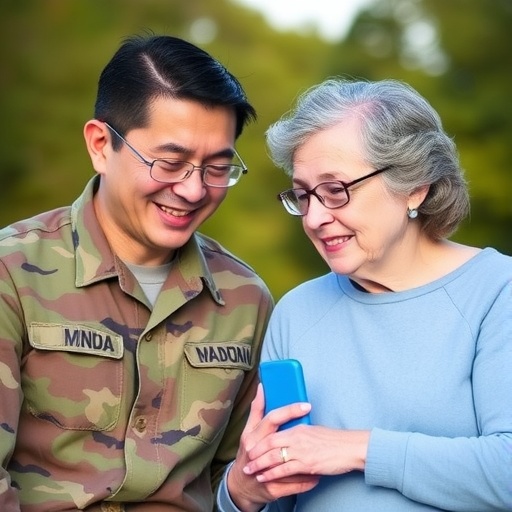
When Israel’s Swords of Iron war erupted in October 2023, it triggered one of the largest reserve mobilizations in the country’s history, pulling tens of thousands of citizens from their homes and jobs into prolonged combat service. But the soldiers were not the only ones on the front lines. Behind them stood an often-invisible population of parents and grandparents, many of them elderly, who spent months worrying about sons and grandsons in Gaza while simultaneously absorbing the domestic, economic, and emotional shocks of a society at war. A new study published in Current Psychology by Odelyah Saad of the Jerusalem College of Technology and Ilana Chertok of Ohio University offers one of the most detailed quantitative portraits to date of how these family members weathered the crisis, and its central finding is both nuanced and surprising: while mothers and grandmothers reported markedly lower resilience and higher distress than their male counterparts, the psychological machinery that builds resilience appears to work in essentially the same way for both sexes.
The research was anchored in conservation of resources theory, a foundational framework in stress psychology first articulated by Stevan Hobfoll in 1989. COR theory posits that psychological stress arises when valued resources are threatened, lost, or fail to yield expected returns after investment. Resources in this model span four categories: objects and conditions, personal characteristics such as self-efficacy and optimism, energies like time and money, and social assets including family networks and community ties. Applied to wartime, the theory predicts that individuals with abundant resource pools—financial stability, robust mental health, strong communal bonds, and confidence in national institutions—should be better buffered against the psychological toll of a loved one’s deployment. Conversely, those whose resources are depleted by caregiving burdens, economic precarity, or chronic stress should show greater vulnerability.
To test these predictions, the researchers employed a quantitative cross-sectional design, recruiting 367 participants who were either parents (77.9 percent) or grandparents (22.1 percent) of reservists serving during the war. Women comprised 69.5 percent of the sample and men 30.5 percent. Notably, more than 95 percent of participants reported that their family member had been exposed to combat, underscoring the severity of the stressor under investigation. Participants completed a battery of self-report questionnaires measuring three distinct but interrelated forms of resilience: individual resilience, typically captured by instruments in the tradition of the Connor-Davidson Resilience Scale, which assesses personal capacities such as adaptability, tolerance of negative affect, and sense of control; community resilience, assessed with tools derived from the Conjoint Community Resiliency Assessment Measure, which gauges trust, collective efficacy, and social cohesion at the local level; and national resilience, measured with instruments such as the short NR-13 scale, which taps citizens’ faith in governmental institutions, patriotic sentiment, and confidence in the country’s ability to withstand threats.
The questionnaire battery also assessed perceived stress using the global measure developed by Cohen and colleagues, mental health through the Mental Health Continuum Short Form, and subjective economic status. The analytical strategy combined independent-samples t-tests to compare men and women, bivariate correlations to map associations among variables, and multiple linear regression to identify which factors independently predicted individual resilience when all others were held constant.
The t-test results revealed a consistent gender pattern. Men reported significantly higher individual resilience and higher national resilience than women. They also reported better economic circumstances, stronger mental health, and lower perceived stress. In other words, on every measured resource dimension, men in this sample appeared better stocked with the psychological and material assets that COR theory identifies as protective. Women, by contrast, entered the crisis with lower reserves across the board—a disparity consistent with a substantial body of literature showing that women disproportionately shoulder caregiving and emotional labor during military crises, a pattern documented among spouses of reservists, mothers of combat soldiers, and military families more broadly in both Israeli and international research.
The regression analysis, however, complicated any simplistic reading of these differences. When the researchers modeled individual resilience as the outcome, gender itself was not a significant direct predictor. Instead, the same four factors predicted resilience across the entire sample: lower perceived stress, higher community resilience, higher national resilience, and a stable economic situation. The predictive pathways, in the authors’ terminology, operated equivalently across genders. This is a technically important distinction. The data do not suggest that women are somehow constitutionally less resilient, nor that men possess a unique psychological route to wartime coping. Rather, they suggest that women entered the war carrying heavier baseline loads—more stress, fewer economic resources, weaker mental health—and that these resource deficits, not gender per se, accounted for their lower resilience scores.
This interpretation aligns with prior work questioning whether observed gender gaps in resilience reflect intrinsic differences or differential exposure to background stressors. Research on health care workers during the COVID-19 pandemic, for example, found that apparent gender differences in stress-related psychological sequelae largely evaporated when underlying background stressors were accounted for. The Saad and Chertok findings extend this logic to an underexamined population: the older-generation relatives of combatants, a group that most military-family research has overlooked in favor of spouses and children.
The study’s focus on parents and grandparents fills a genuine gap. The existing literature on military deployment has concentrated heavily on the nuclear family—spouses coping with a partner’s absence, children adjusting to a parent’s deployment. Far less attention has been paid to the parents of adult service members, despite evidence that they experience profound distress, sometimes described as a fear unlike any other, along with ambiguous loss and boundary ambiguity when an adult child deploys to a combat zone. Israeli research has documented elevated stress, anxiety, and depression among parents of soldiers, and qualitative work has explored mothers’ coping with the recruitment of their children for combat service. Grandparents, meanwhile, have emerged as a distinct research subject only recently, with studies examining grandparenting during collective traumatic circumstances. Including both generations in a single quantitative design allows the new study to speak to resilience across the full vertical span of a military family.
The findings also contribute to a broader scholarly conversation about the architecture of resilience during prolonged conflict. Israeli researchers have repeatedly shown that individual, community, and national resilience are interlinked, forming what some have called nested levels of resilience that reinforce one another. Longitudinal studies conducted during and after October 7 have found that national resilience actually rose following the Hamas invasion, interpreted by some as a signature of collective post-traumatic growth, and that individual resilience mediates between demographic factors and psychological distress. The new study’s finding that both community and national resilience independently predicted individual resilience in parents and grandparents reinforces this multisystemic picture: personal fortitude in wartime is not forged in isolation but is scaffolded by trust in one’s community and confidence in the nation’s institutions.
The practical implications the authors draw from their results are correspondingly two-tiered. At the macro level, they argue, interventions should prioritize bolstering communal and national resilience, since these collective resources feed directly into individual coping even among those far from the battlefield. At the micro level, they call for targeted structural support for vulnerable family caregivers—principally women—whose resource deficits place them at heightened risk. Such support might include respite care, financial assistance, mental health services, and organized community networks that reduce rather than add to caregiving burdens. The logic is COR-theoretical to its core: because resource loss spirals, an early infusion of resources into depleted individuals can prevent downstream deterioration, whereas neglect risks compounding losses across domains.
Several methodological caveats temper the conclusions. The cross-sectional design cannot establish causal direction: it is plausible, for instance, that more resilient individuals simply perceive less stress, rather than low stress building resilience. Self-report measures are vulnerable to the usual biases, and the sample—predominantly women and parents, recruited during an ongoing national emergency—may not generalize to all families of reservists. The gender imbalance in the sample, while reflecting the population of interest, also means the male subsample was comparatively small, potentially limiting statistical power for detecting gender-specific effects. Finally, the equivalence of predictive pathways across genders was established within a single model; more granular analyses, such as moderated regression or network approaches of the kind recently applied to gendered symptom patterns among parents of service members, could reveal subtler differences.
Even with these limitations, the study offers a memorable synthesis: gender shapes wartime vulnerability primarily through unequal resource distribution rather than through fundamentally different psychological processes. For the mothers and grandmothers of reservists—who spent the Swords of Iron war managing households, supporting grandchildren, and living with the constant background hum of fear for a child in combat—the path to greater resilience, the research suggests, is not to become more like the men in their families, but for society to replenish the resources that a prolonged crisis has drained from them first.
Cite Scienmag News
Glenn Wilkins. (September 9, 2026). Gender Differences in Resilience Among Parents and Grandparents of Reserve Soldiers. Scienmag. https://scienmag.com/gender-differences-in-resilience-among-parents-and-grandparents-of-reserve-soldiers/
Glenn Wilkins. "Gender Differences in Resilience Among Parents and Grandparents of Reserve Soldiers." Scienmag, 9 September 2026, https://scienmag.com/gender-differences-in-resilience-among-parents-and-grandparents-of-reserve-soldiers/. Accessed 9 September 2026.
Glenn Wilkins. "Gender Differences in Resilience Among Parents and Grandparents of Reserve Soldiers." Scienmag. September 9, 2026. https://scienmag.com/gender-differences-in-resilience-among-parents-and-grandparents-of-reserve-soldiers/


