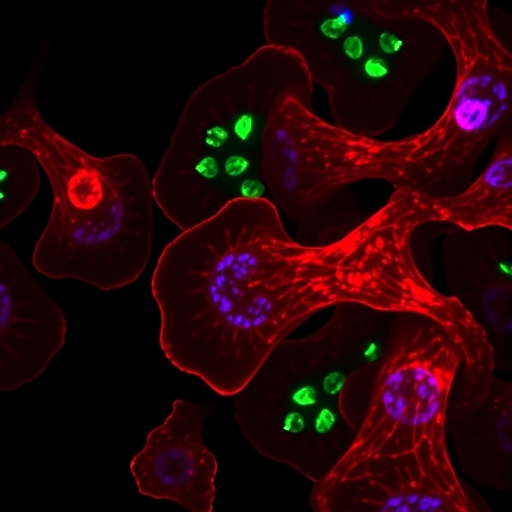
In a discovery that upends one of immunology’s most trusted assumptions, researchers in China have revealed how colorectal cancer cells hijack a molecule normally celebrated for fighting tumors, using it to slip into a dormant state that shields them from both chemotherapy and immunotherapy. The study, published in the Journal of Experimental & Clinical Cancer Research, identifies this hidden survival mechanism and demonstrates that an existing drug combination can dismantle it, offering a potential new strategy against one of the most stubborn problems in oncology: cancer recurrence.
The paradox at the heart of the research centers on interferon-beta, or IFN-β, a signaling molecule long classified as an anti-cancer ally. Type I interferons like IFN-β are known to slow cell division, alert immune cells to danger, and help the body destroy malignant tissue. But the new findings show that colorectal cancer cells, rather than succumbing to IFN-β’s anti-proliferative effects, exploit the signal to enter a deep quiescent state, a form of biological hibernation in which they stop dividing, resist multiple drugs, and wait out the storm of treatment. Once therapy ends, these dormant cells can reactivate and seed new tumors, driving the high recurrence rates that continue to plague colorectal cancer patients.
The research team, led by scientists at Shanghai Jiao Tong University School of Medicine and collaborating institutions across China, approached the problem with a combination of large-scale computational analysis and precise experimental validation. To detect dormancy at the level of individual cells, they developed a novel metric called the COAD-specific Dormancy Score, or CADS, derived from non-negative matrix factorization of roughly 69,000 single cells. This computational tool allowed the researchers to quantify and isolate a dormant subpopulation within colorectal tumors that conventional bulk analysis would have missed entirely.
What the CADS revealed was striking. The dormant cells it identified showed profound arrest in the G0/G1 phase of the cell cycle, the resting state that precedes DNA replication. Beyond merely pausing division, these cells displayed enhanced stemness, meaning they exhibited molecular traits associated with cancer stem cells, which are notoriously difficult to eradicate. They also carried markers of multi-drug resistance, confirming that dormancy is not simply a passive slowing of cellular activity but an active, defensively optimized phenotype. This quiescent reservoir acts as a biological seed bank, fueling intratumoral heterogeneity and preserving the raw material from which relapsed tumors regenerate.
Perhaps the most unexpected finding concerned the role of interferon signaling in maintaining this reservoir. Using a GFP-p27K- dormancy reporter system, a genetic tool that fluoresces when cells enter a dormant state, along with spatial transcriptomics that maps gene expression within intact tissue, the researchers traced the source of the dormancy signal. They found that effective anti-PD-1 immunotherapy, one of the most successful modern cancer treatments, paradoxically enriches the dormant population. The mechanism runs through what the team calls the IFN-β/conventional type 1 dendritic cell axis, or IFN-β/cDC1 axis. When anti-PD-1 unleashes the immune system, dendritic cells respond by producing more IFN-β. Instead of killing the tumor outright, this enhanced interferon signaling pushes surviving cancer cells deeper into dormancy, allowing them to hide from the very immune response designed to eliminate them.
To confirm that IFN-β was truly the driver rather than a bystander, the researchers used CRISPR/Cas9 gene editing to knock down Ifnar1, the receptor subunit required for cells to receive interferon-beta signals. Disrupting this receptor prevented the dormancy program from engaging, cementing the causal link between interferon perception and the quiescent phenotype. The finding reframes a long-standing immunological paradox: the same molecule that alerts the immune system to danger can also serve as a sanctuary signal, exploited by adaptable tumor cells to evade therapy-induced death.
The next question was mechanistic. How does IFN-β actually keep these cells alive and dormant? The answer, the team discovered, lies in the MEK/ERK signaling pathway, a well-known intracellular cascade that transmits growth and survival signals from the cell surface to the nucleus. IFN-β-induced dormancy, they found, depends on MEK/ERK pathway activity. Rather than driving proliferation, in this context the pathway sustains cellular survival while suppressing apoptosis, the programmed cell death process that would normally clear damaged or stressed cells. In dormant cells, MEK/ERK functions as a life-support system, maintaining the quiescent reservoir in a state of protected suspended animation.
This mechanistic dependency exposed a synthetic lethal vulnerability, one of the most sought-after concepts in modern cancer drug development. Synthetic lethality arises when a tumor cell becomes dependent on a specific pathway for survival under a particular condition, and blocking that pathway becomes fatal only to those cells. Because dormant colorectal cancer cells rely on MEK/ERK to stay alive while avoiding apoptosis, inhibiting MEK with a drug such as trametinib, an approved MEK inhibitor, synergizes with the IFN-β signal to re-sensitize the dormant cells to cell death. In essence, the interferon signal locks the cells into a state where MEK inhibition becomes lethal, converting a protective mechanism into a fatal dependency.
The translational implications were tested directly in orthotopic colorectal cancer mouse models, where tumors are implanted in their natural anatomical location to better mimic human disease. Combining trametinib with anti-PD-1 therapy produced strong synergistic effects. The dual treatment overcame the dormancy-driven evasion mechanism, eliminated the dormant subpopulation, and remodelled the immune microenvironment in ways that favored tumor clearance. Bioluminescence imaging tracked tumor burden over time, showing that the combination achieved results neither drug could accomplish alone. By striking at the dormant reservoir that fuels relapse, the combination therapy attacks colorectal cancer at one of its most protected strongholds.
Beyond the therapeutic combination itself, the study introduces CADS as a potential translational biomarker. Because the score can identify tumors that rely on the IFN-β/MEK dormancy pathway, it could eventually help oncologists determine which patients are most likely to benefit from adding MEK inhibition to their treatment regimen, moving the field closer to personalized strategies against recurrence. The work also carries a broader warning for immunotherapy development: treatments that successfully activate anti-tumor immunity may inadvertently strengthen dormancy programs, and monitoring for such effects could be crucial in trial design.
The authors, whose co-first contributors include Yangyang Zhou, Haigang Geng, Yi Xu, Yanggang Hong and Bo Mei, with correspondence from investigators at Renji Hospital, the Shanghai Cancer Institute and collaborating centers, frame their findings as a redefinition of an immune-cell death paradox. Colorectal cancer remains one of the most commonly diagnosed malignancies worldwide, and its high recurrence rate stems largely from residual tumor cells that survive initial treatment by entering dormancy. By illuminating the molecular machinery that governs this quiescent reservoir, and by identifying a clinically actionable vulnerability within it, the study transforms a previously invisible threat into a target.
Cautious optimism is warranted. The findings are preclinical, derived from cell lines, spatial transcriptomic analysis of tumor tissue, and mouse models, and clinical trials will be needed to establish whether the trametinib plus anti-PD-1 combination delivers the same benefit in human patients. Trametinib is already approved for other cancers, and anti-PD-1 agents are widely used, which could accelerate translation. Nevertheless, the conceptual advance is substantial: a molecule long viewed purely as an immune ally can be co-opted by tumor cells as a survival signal, and that very co-optation creates the drug combination’s power. If validated in the clinic, the strategy would represent a rare achievement in cancer research, a therapy designed not merely to shrink tumors but to eradicate the dormant seeds from which they return.
Cite Scienmag News
Nathaniel Bowman. (September 8, 2026). IFN-β hijacks MEK signaling to promote dormant, death-evading colorectal cancer cells. Scienmag. https://scienmag.com/ifn-%ce%b2-hijacks-mek-signaling-to-promote-dormant-death-evading-colorectal-cancer-cells/
Nathaniel Bowman. "IFN-β hijacks MEK signaling to promote dormant, death-evading colorectal cancer cells." Scienmag, 8 September 2026, https://scienmag.com/ifn-%ce%b2-hijacks-mek-signaling-to-promote-dormant-death-evading-colorectal-cancer-cells/. Accessed 9 September 2026.
Nathaniel Bowman. "IFN-β hijacks MEK signaling to promote dormant, death-evading colorectal cancer cells." Scienmag. September 8, 2026. https://scienmag.com/ifn-%ce%b2-hijacks-mek-signaling-to-promote-dormant-death-evading-colorectal-cancer-cells/