


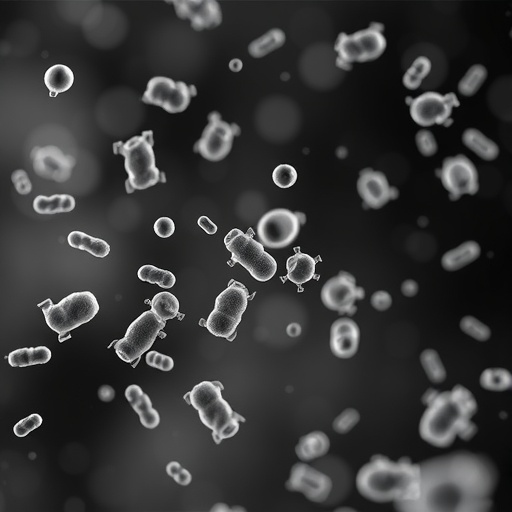
Waterborne parasites circulating silently in rivers and sewage systems may be far more genetically diverse—and far more widespread—than conventional testing has ever revealed. A new study from southwestern Colombia has combined portable nanopore sequencing with multilocus genotyping to map the hidden diversity of two of the world’s most important diarrheal pathogens, Giardia duodenalis and Cryptosporidium spp., in the surface and wastewater of the Río Pasto basin. The findings, published in the journal Parasites & Vectors, reveal alarmingly high detection rates, multiple co-circulating parasite lineages, and a picture of environmental contamination that could reshape how water quality is monitored across Latin America.
The research, led by Stivenn Gutiérrez, Vanessa Urrea, Luz H. Patiño and Juan David Ramírez of the Universidad del Rosario in Bogotá, together with collaborators at the Universidad de Nariño, the Universidad Nacional de Colombia and the University of South Florida, focused on a region where parasite transmission is poorly documented. Giardia duodenalis and Cryptosporidium species are single-celled protozoan parasites responsible for some of the most common waterborne diarrheal illnesses worldwide, with substantial public health consequences and zoonotic potential. Both organisms form tough, environmentally resistant cysts and oocysts that persist in water for months, resist routine chlorination, and can trigger outbreaks when sanitation infrastructure fails.
Traditional molecular surveillance of these parasites has relied on Sanger sequencing, a technology that reads the dominant genetic signal in a sample but struggles when multiple parasite strains or species are present simultaneously. Because water is a complex environmental matrix, mixed infections and minority variants are common—but Sanger-based genotyping frequently collapses this diversity into a single consensus sequence, underestimating the true range of genotypes circulating in a watershed. The Colombian team set out to address this blind spot by adopting Oxford Nanopore Technologies (ONT), a long-read sequencing platform that produces high-depth data in real time from a device small enough to fit in a backpack.
Between August 2022 and March 2023, the researchers collected 102 water samples over seven months from four points across the study area: three surface water sites representing the upper, middle and lower reaches of the Río Pasto basin, and one wastewater collection point in the city of Pasto, the capital of Nariño department. This sampling design allowed the team to track how parasite genetic diversity changed along the river’s course, from relatively pristine highland stretches to areas receiving urban discharge.
At the heart of the study was a technical innovation. The team designed and validated a novel set of primers targeting the 18S ribosomal RNA gene of Cryptosporidium, complementing previously published primer sets for three genetic loci in G. duodenalis: the glutamate dehydrogenase gene (gdh), the triose phosphate isomerase gene (tpi), and the beta giardin gene (bg). Using multiple loci rather than a single marker is what defines this as a multilocus approach, giving researchers several independent windows into the parasites’ genetics. PCR-amplified DNA from these targets was then sequenced on a MinION Mk1C nanopore device for 72 hours per run.
The bioinformatic pipeline was equally carefully constructed. Raw nanopore reads were filtered for quality at a Phred score of at least 10, ensuring that low-confidence base calls were removed before analysis. The surviving reads were taxonomically assigned using Centrifuge, a rapid classifier that aligns reads against curated reference databases of known parasite sequences. To guard against spurious assignments, the team imposed a strict threshold: a taxon was only considered genuinely present in a sample if at least 1,000 reads supported it. This conservative criterion reduces the risk that sequencing noise or cross-contamination would be mistaken for real detections.
The results for Giardia duodenalis were striking. Of the 102 water samples, 49—or 48 percent—yielded at least one PCR-positive amplicon for the parasite. Nanopore sequencing and quality filtering then delivered valid taxonomic assignments in 26 of 32 samples (81.3 percent) for the beta giardin locus, 35 of 40 samples (87.5 percent) for glutamate dehydrogenase, and 27 of 33 samples (81.8 percent) for triose phosphate isomerase. These high assignment rates demonstrate the robustness of the multilocus strategy even in environmentally degraded water samples where DNA is often fragmented and present at low concentrations.
Genetic assemblages of G. duodenalis—the parasite’s equivalent of subspecies, some of which differ in host range and zoonotic risk—were distributed in patterns that differed between water types. In surface water, assemblage A predominated across loci, accounting for a mean relative read abundance of 80.7 percent at the beta giardin marker and 53.8 percent at glutamate dehydrogenase. Assemblage A is significant because it is one of the assemblages most commonly associated with human infection. In wastewater, the picture shifted: assemblage B became more prevalent at the gdh locus with a mean abundance of 51.5 percent, while assemblage A remained dominant at beta giardin with 66.7 percent. Lower-level detections of assemblages C through E—typically associated with dogs, cats and livestock—also appeared, mostly through the gdh marker, hinting at animal contributions to water contamination in the basin.
At an even finer resolution, the sub-assemblage level revealed that AII was the most consistently dominant lineage across both surface water and wastewater and across all three loci. Crucially, the researchers documented co-occurrence of multiple sub-assemblages within single samples across all three genetic markers—exactly the kind of mixed signal that Sanger sequencing would have flattened into a single genotype. This confirms that single infections are the exception rather than the rule in environmental samples from this region.
For Cryptosporidium, the numbers were even more remarkable. Sixty-seven of the 102 samples (65.7 percent) tested positive by PCR, and 49 of those (73.1 percent) produced valid species-level assignments after nanopore sequencing. Cryptosporidium parvum—a species of major medical and veterinary importance, capable of infecting humans, cattle and wildlife—was the most abundant organism, with mean relative read abundances of 40.2 percent in surface water and 32.9 percent in wastewater. It was followed by C. andersoni, primarily a bovine parasite, and C. canis, a dog-associated species. The co-presence of human-relevant and animal-associated species in the same waters points toward a complex contamination landscape involving both human sewage and livestock runoff.
The co-detection statistics were particularly noteworthy. In 47 of the 49 assigned Cryptosporidium samples—95.9 percent—two or more species were detected simultaneously, most frequently the combination of C. parvum, C. andersoni and C. canis, which occurred together in 36.7 percent of assigned samples. The authors are appropriately cautious about interpreting this figure, noting that it may partly reflect the limited species-resolving power of single-locus 18S rRNA genotyping combined with the extraordinary sensitivity of high-depth long-read sequencing. In other words, the technology may be revealing true co-infections, but some apparent co-detections could also stem from closely related sequences that single-locus data cannot fully discriminate. Either way, the study shows that environmental Cryptosporidium populations are far more complex than single-marker methods suggest.
Crossing between the two parasites, the team found that in 27 of 69 assigned samples—39.1 percent—both at least one Cryptosporidium species and at least one Giardia assemblage were present concurrently. Nearly four in ten water samples therefore carried a double burden of the two most notorious protozoan diarrheal agents, reinforcing concerns about the cumulative microbial risk faced by communities that rely on the Río Pasto for agriculture, recreation and drinking water upstream of treatment.
The implications extend well beyond Colombia. The study demonstrates that a benchtop-scale nanopore workflow—novel primers, multilocus amplicon sequencing, conservative bioinformatic filtering—can deliver genotype-level environmental surveillance at a fraction of the cost and turnaround time of traditional sequencing pipelines. For low- and middle-income settings where Giardia and Cryptosporidium remain endemic and waterborne outbreaks are underreported, such portable, high-resolution monitoring could be transformative. It allows public health authorities to identify which assemblages and species are actually circulating, distinguish human-linked from animal-linked contamination, and target interventions under a One Health framework that integrates human, animal and environmental health.
The authors emphasize an important caveat: detecting parasite DNA does not by itself quantify infectious risk. Viability of cysts and oocysts, parasite concentrations in the water, and actual exposure pathways all require complementary measurement. Nevertheless, the documented breadth of genetic diversity in the Río Pasto basin provides a critical baseline for future surveillance and a proof of concept that multilocus nanopore sequencing can expose the mixed infections and minority variants that older methods have long overlooked. In a world increasingly focused on pathogen genomics, this study makes a compelling case that the future of waterborne disease monitoring may lie in small sequencers listening to the full chorus of parasites in a single river sample.
Cite Scienmag News
Kristina Jarvis. (September 8, 2026). Nanopore sequencing uncovers Giardia and Cryptosporidium diversity in Colombian waters. Scienmag. https://scienmag.com/nanopore-sequencing-uncovers-giardia-and-cryptosporidium-diversity-in-colombian-waters/
Kristina Jarvis. "Nanopore sequencing uncovers Giardia and Cryptosporidium diversity in Colombian waters." Scienmag, 8 September 2026, https://scienmag.com/nanopore-sequencing-uncovers-giardia-and-cryptosporidium-diversity-in-colombian-waters/. Accessed 8 September 2026.
Kristina Jarvis. "Nanopore sequencing uncovers Giardia and Cryptosporidium diversity in Colombian waters." Scienmag. September 8, 2026. https://scienmag.com/nanopore-sequencing-uncovers-giardia-and-cryptosporidium-diversity-in-colombian-waters/


