


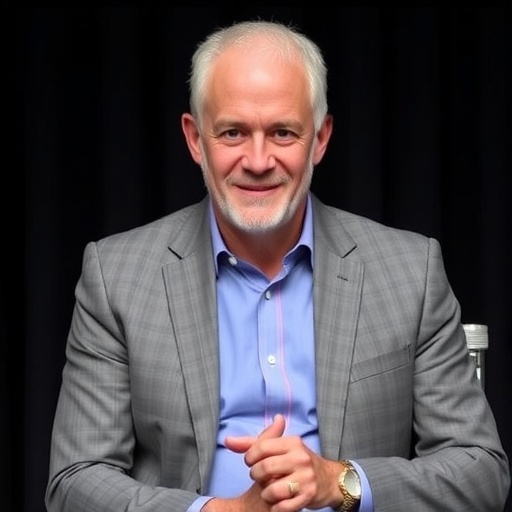
A former Australian international footballer turned one of the country’s most prominent human rights advocates has delivered a message that resonates far beyond the sporting world: the architecture protecting human dignity is being deliberately dismantled, and only deliberate human choices can rebuild it. Craig Foster AM, who earned 29 caps for the Socceroos before embarking on a career as a sports broadcaster and relentless campaigner for human rights, delivered the 10th Annual Human Rights Lecture at Curtin University in Perth, using the milestone occasion to argue that humanity itself is being quietly removed from the systems that govern modern life.
The lecture, titled “Reclaiming Humanity: Placing People at the Centre of a Fractured Rights and Economic Architecture,” ranged across war, extreme economic inequality, the erosion of democratic norms, and the accelerating deployment of artificial intelligence. Foster’s central thesis was deceptively simple but profound in its implications: the founding promise of the human rights movement, established in the aftermath of the Second World War, was that every person carries an inherent dignity that no state, market, or machine can take away. Yet that promise, he argued, is not fading through neglect or accident. It is being dismantled deliberately, system by system, with the human being replaced at the centre of each system by something else — a data point, a market, a weapon, an exception.
For an audience gathered in the Elizabeth Jolley Lecture Theatre on Curtin’s Perth campus, joined by thousands more streaming the event online, the setting was fitting. The Annual Human Rights Lecture has spent a decade drawing global figures and national leaders to Western Australia to interrogate the most pressing ethical questions of the era. This year’s iteration carried particular weight, marking both ten years of the lecture series and ten years of the Honourable Michael D. Kirby AC CMG, the former High Court justice and one of Australia’s most celebrated judicial figures, serving as Patron of Curtin’s Centre for Human Rights Education. Kirby’s decade of patronage has coincided with a period in which the global human rights framework, built through the Universal Declaration of Human Rights and subsequent international covenants, has faced mounting pressure from authoritarian resurgence, geopolitical fragmentation, and technological disruption.
Foster’s own trajectory gives his argument unusual moral force. As a footballer, he represented Australia at international level, and as a broadcaster he became one of the most recognizable voices in Australian sport. But it was his advocacy — most famously his campaign that helped secure the release of Bahraini refugee footballer Hakeem al-Araibi from detention in Thailand in 2019 — that transformed him into a figure respected far beyond sport. The al-Araibi case became a global campaign spanning governments, sporting bodies, and grassroots movements, and it demonstrated something Foster has never stopped arguing: that sport, precisely because of its enormous cultural reach and emotional power, can be one of the most effective vehicles for advancing human rights in the modern world.
In his lecture, Foster turned that lens toward the emerging frontiers of rights in the digital age. Artificial intelligence, he told the audience, has raised the stakes of an old question to urgent new heights. AI systems are being trained on the collective output of humanity — art, journalism, scholarship, conversation — extracted without consent or compensation from the very people whose creative labor makes the technology possible. At the same time, algorithmic systems are increasingly making decisions that determine human fates: who receives credit, who is granted bail, who is flagged for surveillance, who gets hired or dismissed. These decisions, Foster argued, are stripped of judgment and mercy, the distinctly human qualities that legal and ethical systems were designed to embed in consequential choices. The risk is not merely that machines will err, but that the moral vocabulary required to contest those errors will disappear from the decision-making process entirely.
The lecture situated these technological concerns within a broader diagnosis of global fracture. Wars continue to be prosecuted with devastating consequences for civilians, humanitarian law is routinely flouted, and extreme inequality has concentrated wealth and power at levels that hollow out the democratic institutions meant to hold economic power accountable. Foster’s argument was that these are not separate crises to be addressed by separate disciplines — security experts on war, economists on inequality, technologists on AI — but interconnected symptoms of a single underlying shift: the displacement of the human person from the centre of the systems that organize collective life. When markets are treated as ends rather than instruments, when data becomes a commodity detached from its human origins, and when machines are granted de facto authority over human outcomes, the person ceases to be the subject of the system and becomes merely its raw material.
Yet the lecture was not a counsel of despair. “Everything I describe has been built by human choices and can therefore be rebuilt,” Foster told the audience, a line that functioned as the hinge of his entire address. The systems producing injustice are artifacts of design, not laws of nature, and the same human agency that constructed them retains the power to reconstruct them differently. That reframing carries a practical implication for the human rights movement: advocacy must extend beyond naming violations to interrogating the design of the systems themselves — the economic incentives, the technical architectures, the legal exceptions — that make violations possible in the first place. It also implies that the defenders of human dignity must be present in the rooms where those systems are designed, from AI laboratories to trade negotiations to the governance structures of global sport.
Sport, fittingly, occupied a significant place in the address. Foster has long argued that football, as the world’s most popular game, operates on a scale that few institutions can match, touching billions of people across every continent and every level of society. That reach brings responsibilities: the sport’s governing bodies face persistent scrutiny over labor conditions, particularly around mega-events; over discrimination and abuse faced by players; over the rights of migrant workers; and over the growing entanglement of elite competition with state actors whose human rights records are deeply contested. The future of human rights in sport, Foster suggested, will depend on whether the game’s institutions choose to treat rights as a public-relations concern or as a structural obligation woven into how competitions are awarded, venues are built, and athletes are protected.
The response from Curtin’s academic leadership underscored the lecture’s significance. Associate Professor Yirga Gelaw Woldeyes, Director of the Centre for Human Rights Education, said it was an honour to have Foster deliver this year’s lecture, noting that as conflict, economic uncertainty, and the ethical challenges of AI test human rights, the address highlighted the need to keep people, dignity, and justice at the centre of decision making. Curtin’s Centre for Human Rights Education has built a national reputation for scholarship and teaching that connects human rights theory to lived experience, and the annual lecture series has become one of its flagship public engagements, deliberately placing academic expertise in conversation with advocates, activists, and the wider community.
Curtin Vice-Chancellor Professor Harlene Hayne framed the tenth anniversary as a milestone reflecting the university’s longstanding commitment to promoting informed discussion, critical thinking, and action on human rights issues. In an era when universities worldwide face pressure over their role in public debate, Curtin’s decade-long investment in a dedicated human rights lecture series — and its retention of a standing centre for human rights education under the decade-long patronage of Michael Kirby — signals an institutional judgment that these questions deserve sustained, rigorous, and public treatment rather than occasional attention.
The timing of the lecture could hardly be more consequential. The negotiation of international frameworks governing artificial intelligence is accelerating, with governments, industry, and civil society contending over questions of data ownership, algorithmic accountability, and the compensation of creators whose work trains commercial systems. Meanwhile, armed conflicts across multiple regions have strained international humanitarian law to breaking points, and the widening gap between extreme wealth and mass precarity continues to fuel political instability in established democracies. Into this landscape, Foster’s lecture offered both a diagnosis and a challenge: the tools of the human rights tradition, forged in the mid-twentieth century, remain the most comprehensive framework for protecting dignity — but only if advocates are willing to renovate that framework for the systems of the twenty-first.
What emerged from the evening at the Elizabeth Jolley Lecture Theatre was ultimately a call to agency. A former athlete who once measured his contribution in goals and caps has become a voice arguing for something larger: that humanity is not an optional consideration in the design of economies, technologies, and institutions, but the very standard by which they must be judged. Ten years of Curtin’s lecture series have provided a platform for such arguments; the next ten, on the evidence of this year’s address, will test whether societies choose to act on them.
Cite Scienmag News
Courtney Benton. (September 8, 2026). Craig Foster to deliver 2026 Human Rights Lecture. Scienmag. https://scienmag.com/craig-foster-to-deliver-2026-human-rights-lecture/
Courtney Benton. "Craig Foster to deliver 2026 Human Rights Lecture." Scienmag, 8 September 2026, https://scienmag.com/craig-foster-to-deliver-2026-human-rights-lecture/. Accessed 8 September 2026.
Courtney Benton. "Craig Foster to deliver 2026 Human Rights Lecture." Scienmag. September 8, 2026. https://scienmag.com/craig-foster-to-deliver-2026-human-rights-lecture/


