


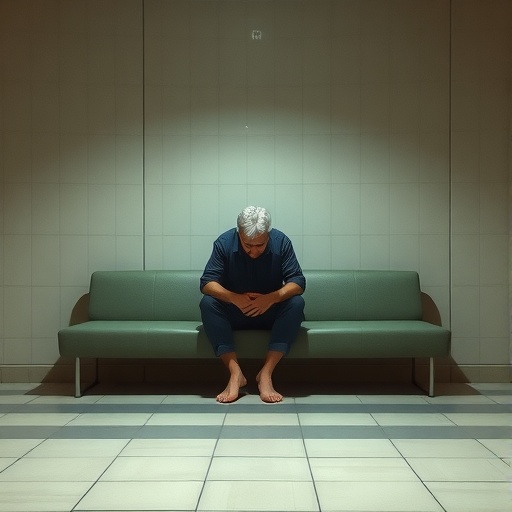
For people living with schizophrenia in South India, leisure is far more than a pastime. It is, in the words of the participants themselves, what keeps life from becoming monotonous. A new qualitative study published in BMC Psychiatry offers one of the most detailed portraits to date of how individuals diagnosed with schizophrenia experience, value and struggle to access leisure in a low-resource and culturally distinctive setting, and the findings carry important implications for mental health rehabilitation worldwide.
The research, led by occupational therapist Amar Nishad and colleagues at Manipal Academy of Higher Education, together with psychiatrist Anil Kumar Mysore Nagaraj of Kasturba Medical College, Mangalore, set out to fill a significant gap. While leisure participation is increasingly recognised in the international literature as a contributor to recovery, well-being and quality of life among people with severe mental illness, most of that evidence comes from high-income Western countries. Evidence from culturally diverse, resource-constrained settings such as India has remained strikingly thin, even though the country bears an enormous burden of schizophrenia and related psychotic disorders.
To understand the lived experience of leisure, the team adopted a descriptive phenomenological approach, a qualitative methodology designed to capture the essence of human experiences as they are perceived by those who live them. Thirteen adults diagnosed with schizophrenia, all in a stable phase of their illness, were purposively recruited from a tertiary hospital and a psychiatric rehabilitation centre in South India. Diagnosis was framed according to the International Classification of Diseases, 11th Revision, and clinical stability helped ensure that participants could engage meaningfully in extended conversation about their daily lives. The researchers collected data through in-depth, face-to-face interviews and subsequently analysed the transcripts using thematic analysis, a systematic process of coding and pattern identification that allows recurring ideas to crystallise into overarching themes. The study was prospectively registered in the Clinical Trials Registry–India under registration number CTRI/2024/05/068132, and the work received institutional ethics approval before any participant was approached.
From the analysis, five major themes emerged. First, participants described leisure as a meaningful and therapeutic activity in its own right. Rather than viewing free-time pursuits as trivial or optional, they characterised them as calming, restorative and purposeful, capable of regulating emotion, occupying the mind and lending structure to otherwise empty hours. One participant’s remark that life would become monotonous without leisure captures the sentiment that runs through the entire dataset: leisure was understood as a buffer against the emptiness, boredom and drift that many people with chronic mental illness report when daily activity narrows.
The second theme mapped the types and patterns of leisure participation. Here the cultural specificity of the findings becomes especially evident. Spiritual and religious activities, such as prayer, temple visits and devotional practices, featured prominently, as did family-oriented pastimes including shared meals, conversations and household involvement. Listening to music, watching television, walking and spending time in natural surroundings also appeared frequently. The researchers observed that these patterns diverge in meaningful ways from the leisure repertoires documented in Western studies, where individualistic and recreational activities often dominate. In this South Indian context, leisure was woven into family life and spiritual practice rather than pursued as a separate domain of personal enjoyment, a distinction with direct consequences for how rehabilitation services should be designed.
The third theme documented the benefits participants attributed to leisure, and these were strikingly multidimensional. Emotionally, leisure activities helped dampen anxiety, quiet racing or distressing thoughts and provide a sense of calm. Cognitively, they demanded and sustained attention, offering gentle mental exercise. Socially, they created opportunities for connection, belonging and conversation, countering the isolation that both symptoms and stigma impose. Participants also reported that leisure bolstered motivation and contributed to what occupational scientists call occupational balance, the equilibrium among work, rest, self-care and play that supports health. Within the framework of the Occupational Therapy Practice Framework, which the authors used to organise their clinical reasoning, these accounts place leisure squarely within the domain of occupations that sustain well-being, not merely as filler between obligations.
The fourth theme addressed the formidable barriers that stand between people with schizophrenia and fulfilling leisure. Fatigue emerged as a persistent obstacle, frequently intertwined with medication side effects, a reality of antipsychotic treatment that clinicians often underestimate when encouraging patients to become more active. Financial constraints limited participation in activities that require travel, materials or fees. Stigma, both enacted and internalised, kept many participants away from public spaces and community events, while limited access to structured opportunities in the surrounding environment compounded the problem. In a health system where mental health services are stretched thin through initiatives such as the District Mental Health Programme, leisure programming rarely features on the agenda at all.
Against those barriers, the study also identified facilitators. Family support proved decisive: relatives who encouraged participation, accompanied participants to activities or simply made space for them at home enabled engagement that would otherwise have been impossible. Personal interest and intrinsic enjoyment sustained involvement over time, and structured daily routines gave leisure a reliable place in the day. These facilitators echo a long-standing principle in psychiatric rehabilitation, namely that recovery is built less on clinical intervention alone than on the scaffolding of relationships, habits and accessible opportunities that surround the individual.
The fifth and final theme captured participants’ aspirations for the future. Far from being resigned to restricted lives, many articulated concrete hopes: to learn new skills, to return to activities abandoned at illness onset, to spend more time outdoors and to contribute to family and community life. The researchers argue that these aspirations represent an untapped clinical resource. When treatment planning incorporates a person’s own leisure goals, motivation and adherence tend to improve, and the recovery process becomes genuinely person-centred rather than symptom-centred.
The technical rigour of the study deserves note. By recruiting purposively from both a tertiary hospital and a rehabilitation centre, the team captured a range of service experiences. Descriptive phenomenology, combined with thematic analysis, allowed the researchers to bracket their assumptions and foreground participants’ own words. Reporting followed the Standards for Reporting Qualitative Research, and symptom severity was monitored using instruments such as the Brief Psychiatric Rating Scale in the broader clinical assessment. The authors nonetheless caution that findings from a single South Indian region, drawn from thirteen stable-phase participants, cannot be generalised wholesale to all people with schizophrenia, and that individuals experiencing acute illness may describe their relationship to leisure very differently.
Why does this matter beyond India? Schizophrenia affects roughly one in three hundred people worldwide, and functional recovery, defined by engagement in meaningful activity and social roles, lags far behind symptom control in most health systems. Leisure occupies a peculiar blind spot: it is neither work, which rehabilitation services vigorously target, nor self-care, which families typically manage, and so it falls through the cracks. Yet as this study demonstrates, leisure is precisely where emotional regulation, social connection and daily structure converge. For a person whose working life has been disrupted and whose social world has contracted, a devotional song, an evening walk or a family gathering may be the most consequential occupation of the day.
The practical recommendations that flow from the findings are concrete. The authors call for mental health services to integrate culturally meaningful, accessible and family-inclusive leisure opportunities into routine care. In practice, that means occupational therapists assessing leisure interests alongside functional skills, psychiatrists weighing the activity-limiting effects of medication regimens, community programmes designing low-cost group activities, and families being coached as partners rather than bystanders. It also means tackling stigma at the community level, since no amount of internal motivation can compensate for exclusion from public life.
The study, funded through open access support from Manipal Academy of Higher Education, arrives at a moment when global mental health policy, including the World Health Organization’s emphasis on community-based and rights-based care, is pushing services to look beyond hospital walls. Its message is deceptively simple: ask people with schizophrenia what they want to do with their free time, and build services around the answer. In the words of the participants, leisure keeps life from becoming monotonous. The research suggests clinicians and policymakers should take that phrase seriously, not as sentiment but as clinical guidance grounded in the lived experience of recovery.
Cite Scienmag News
Glenn Wilkins. (September 8, 2026). Leisure may feel monotonous for schizophrenia patients in South India. Scienmag. https://scienmag.com/leisure-may-feel-monotonous-for-schizophrenia-patients-in-south-india/
Glenn Wilkins. "Leisure may feel monotonous for schizophrenia patients in South India." Scienmag, 8 September 2026, https://scienmag.com/leisure-may-feel-monotonous-for-schizophrenia-patients-in-south-india/. Accessed 8 September 2026.
Glenn Wilkins. "Leisure may feel monotonous for schizophrenia patients in South India." Scienmag. September 8, 2026. https://scienmag.com/leisure-may-feel-monotonous-for-schizophrenia-patients-in-south-india/


