


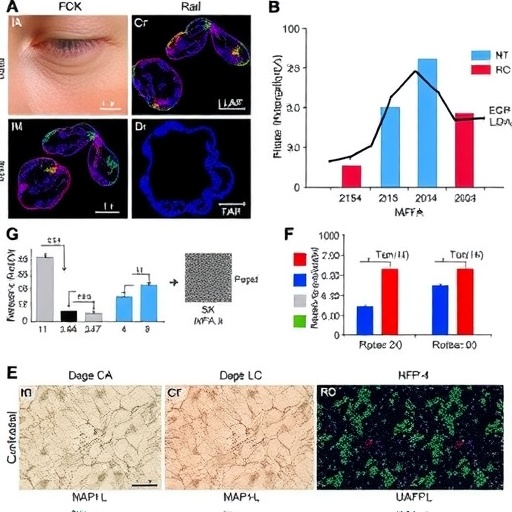
A team of researchers in South Korea has found that a little-known omega-3 fatty acid derivative, 17(S)-hydroxydocosahexaenoic acid, or 17(S)-HDHA, can protect human skin cells from one of the principal molecular drivers of premature aging: ultraviolet B radiation. The study, published in the journal Food Science and Biotechnology, shows that the compound dampens a key cellular signaling cascade involving the epidermal growth factor receptor and mitogen-activated protein kinases, thereby limiting the enzymatic destruction of collagen that characterizes photoaged skin.
The skin is the body’s largest organ and its first line of defense against environmental assault, but that exposure comes at a cost. Ultraviolet B radiation penetrates the outer layers of the skin and reaches the dermis, where fibroblast cells maintain the extracellular matrix, the structural scaffold rich in type I collagen that keeps skin firm and elastic. Chronic UVB exposure triggers a cascade of events that degrade this matrix, leading to the wrinkles, sagging, and uneven texture collectively known as photoaging. Because photoaging is driven by defined molecular pathways rather than the passage of time alone, it represents an attractive target for intervention, and decades of research have sought compounds that can interrupt the destructive signaling without harming healthy tissue.
The research team, led by Hoseong Kang and Tae-Gyu Lim of Sejong University, with collaborators from ICBIO Co., Ltd. and Kyungdong University, focused on 17(S)-HDHA, a hydroxylated metabolite of docosahexaenoic acid, the omega-3 fatty acid abundant in oily fish. DHA and its derivatives belong to a family of lipid mediators that includes resolvins, protectins, and maresins, molecules best known for their roles in actively resolving inflammation. Previous work has shown that these specialized pro-resolving mediators are produced in skin during tissue repair and that related DHA derivatives can modulate immune function and alleviate inflammatory conditions. What remained unclear was whether 17(S)-HDHA specifically could counter the degenerative processes of photoaging, and by what mechanism.
To answer that question, the investigators turned to network pharmacology, a computational approach that maps the interactions among a compound, its candidate protein targets, and disease-associated pathways. By integrating databases linking 17(S)-HDHA to known molecular targets and cross-referencing these with genes implicated in skin aging and skin inflammation, they identified the epidermal growth factor receptor, EGFR, as a hub target, a protein through which the compound’s effects on aging and inflammatory pathways appeared to converge. EGFR is a transmembrane receptor tyrosine kinase that, when activated, initiates signaling through downstream cascades including the MAPK pathway, comprising the ERK and p38 kinases, which in turn activate transcription factors such as c-Jun that control gene expression. UVB radiation is known to transactivate EGFR, setting off this chain reaction and ultimately stimulating the production of matrix metalloproteinases, the enzymes that chew up collagen. Chief among these enzymes is MMP-1, which initiates the degradation of type I collagen, the most abundant structural protein in the dermis.
Computational modeling lent support to the hypothesis that 17(S)-HDHA interacts directly with EGFR. Molecular docking simulations, which predict how small molecules fit into protein binding sites, suggested that 17(S)-HDHA occupies the ATP-binding region of the EGFR kinase domain, the same pocket targeted by clinically important EGFR inhibitors. This is a structurally plausible mode of inhibition: kinases rely on ATP binding to transfer phosphate groups and propagate signals, and molecules that lodge in the ATP pocket can lock the receptor into an inactive state. To move beyond prediction, the team performed an affinity pull-down assay, an experimental technique in which a compound is immobilized and used as bait to capture binding proteins from cell lysates. The assay confirmed that 17(S)-HDHA physically associates with EGFR, corroborating the docking results and establishing the receptor as a bona fide molecular interaction partner rather than a mere computational artifact.
With the target identified and the interaction validated, the researchers tested the compound’s functional effects in human dermal fibroblasts exposed to UVB irradiation. The results were striking on several fronts. In irradiated cells treated with 17(S)-HDHA, the expression of MMP-1, the collagen-degrading enzyme, was significantly suppressed. At the same time, the expression of COL1A1, the gene encoding the alpha-1 chain of type I collagen, was partially restored, suggesting that the compound not only halts destruction of the existing matrix but may also support the machinery that rebuilds it. Given that photoaging fundamentally reflects an imbalance between matrix degradation and matrix synthesis, a compound that shifts both sides of that ledger simultaneously is of considerable interest.
The signaling data explained how these protective effects arise. UVB exposure normally triggers the phosphorylation of EGFR and of the downstream MAPK kinases ERK and p38, as well as the phosphorylation of c-Jun, a component of the activating protein-1 transcription factor complex that drives MMP-1 transcription. Treatment with 17(S)-HDHA reduced the phosphorylation of all of these signaling proteins, indicating that the compound acts at or near the top of the cascade. By attenuating EGFR activation, the lipid mediator effectively turns down the volume on the entire downstream program that leads to collagen breakdown. This mechanism places 17(S)-HDHA in the same mechanistic family as other reported anti-photoaging agents that target EGFR/MAPK signaling, but it is notable as a molecule derived from an essential dietary fatty acid rather than a synthetic drug.
The findings carry implications for both the cosmetics industry and nutritional science. Omega-3 fatty acids have long been studied for their systemic health benefits, particularly in cardiovascular and inflammatory disease, and prior research has shown that eicosapentaenoic acid, another omega-3, can inhibit UV-induced MMP-1 expression in human dermal fibroblasts. The present study extends this line of inquiry to a specific oxygenated DHA metabolite and provides a detailed mechanistic account of its action. Because 17(S)-HDHA is a member of the specialized pro-resolving mediator family, molecules the body itself produces to resolve inflammation, it may offer a favorable safety profile compared with synthetic kinase inhibitors, which can carry significant side effects when administered systemically. The authors suggest that 17(S)-HDHA or related DHA derivatives could be developed as cosmetic ingredients for anti-inflammatory, anti-wrinkle, and skin barrier applications, an area in which DHA derivatives have already attracted commercial attention.
The research also exemplifies a workflow that is becoming increasingly common in food science and functional ingredient discovery. Rather than screening thousands of compounds blindly, the team used network pharmacology to narrow the field, docking studies to generate a mechanistic hypothesis, biophysical assays to validate binding, and cell-based experiments to confirm function. This rational, target-first approach reduces the time and cost of identifying active ingredients and provides mechanistic grounding that regulators and consumers increasingly demand. It also highlights how computational and experimental methods can complement one another: the docking prediction guided the pull-down experiment, and the pull-down result validated the model.
The study was supported by the National Research Foundation of Korea through grants RS-2024-00454095 and RS-2026-25469595, and by the Regional Innovation System & Education program through the Gangwon RISE Center, funded by the Ministry of Education and Gangwon State. The work was a collaboration among the Department of Food Science & Biotechnology at Sejong University, the Strategy Technology Center at ICBIO Co., Ltd., and Kyungdong University, with Hoseong Kang as first author and Wonchul Lim and Tae-Gyu Lim as corresponding and supervising authors.
As with any cell-culture study, important caveats remain before 17(S)-HDHA can be touted as an anti-aging treatment. Human dermal fibroblasts in a dish do not capture the full complexity of living skin, where the epidermis, immune cells, blood vessels, and the dermal matrix interact dynamically under UV exposure. Whether topical application or dietary intake can deliver sufficient concentrations of 17(S)-HDHA to the dermal fibroblasts where it matters, whether the compound is stable in formulated products, and whether the benefits observed in vitro translate to visible improvements in human skin are questions that will require further study, including experiments in tissue-engineered skin models and eventually clinical trials. The molecular docking findings, while corroborated by binding assays, describe a predicted interaction whose precise structural details await confirmation by higher-resolution methods.
Nevertheless, the study adds a compelling entry to the growing catalog of evidence that omega-3-derived lipid mediators are more than metabolic byproducts; they are active signaling molecules with tangible protective functions. For a compound born from fish-oil biochemistry to converge on EGFR, a receptor famous in cancer biology and now recognized as a central mediator of UV-induced skin damage, underscores how deeply interconnected cellular signaling networks are, and how a single well-chosen molecule can quiet a harmful cascade at its source. As the search for safe, effective anti-photoaging ingredients continues, 17(S)-HDHA has now earned a firm place on the list of candidates worth watching.
Cite Scienmag News
Beatrice Stafford. (September 8, 2026). 17(S)-HDHA counters UVB-induced skin aging via EGFR/MAPK pathway regulation. Scienmag. https://scienmag.com/17s-hdha-counters-uvb-induced-skin-aging-via-egfr-mapk-pathway-regulation/
Beatrice Stafford. "17(S)-HDHA counters UVB-induced skin aging via EGFR/MAPK pathway regulation." Scienmag, 8 September 2026, https://scienmag.com/17s-hdha-counters-uvb-induced-skin-aging-via-egfr-mapk-pathway-regulation/. Accessed 8 September 2026.
Beatrice Stafford. "17(S)-HDHA counters UVB-induced skin aging via EGFR/MAPK pathway regulation." Scienmag. September 8, 2026. https://scienmag.com/17s-hdha-counters-uvb-induced-skin-aging-via-egfr-mapk-pathway-regulation/


