


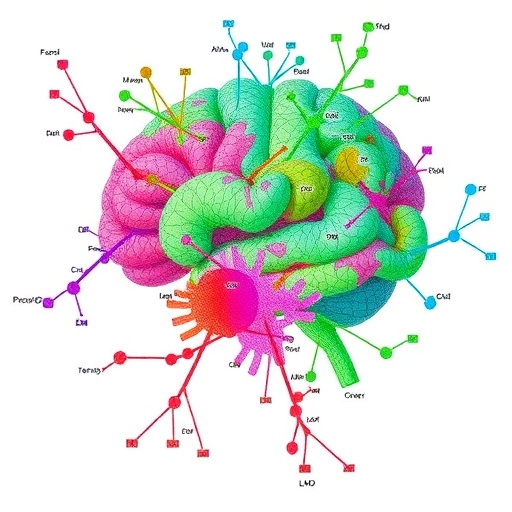
Scientists have mapped an intricate web of competing genetic regulators in the brains of Alzheimer’s disease model mice, and in doing so, identified a single molecular pathway that, when silenced, dramatically reduces the brain inflammation and neuronal death that define the devastating condition. The study, published in BMC Neuroscience, used whole-transcriptome sequencing to simultaneously measure every major class of RNA molecules in the hippocampus of APP/PS1 transgenic mice, revealing a landscape of more than 6,000 differentially expressed RNAs and distilling from them a specific regulatory axis centered on the immune gene CD14.
The research addresses one of the most persistent frustrations in Alzheimer’s science: although decades of work have catalogued the plaques of amyloid-beta protein and tangles of tau that accumulate in diseased brains, the molecular mechanisms that translate these pathological hallmarks into progressive cognitive decline remain poorly understood, and effective therapies remain stubbornly absent. The team behind the new work reasoned that part of the answer might lie not in the protein-coding genes alone, but in the vast, once-dismissed “dark matter” of the genome—the non-coding RNAs that now appear to act as master conductors of gene expression.
At the heart of the study is a concept known as competing endogenous RNA, or ceRNA. The logic is elegantly simple. MicroRNAs, or miRNAs, are short RNA molecules that bind to messenger RNAs—the instructions from which proteins are built—and suppress their translation or mark them for destruction. But circular RNAs and long non-coding RNAs can carry binding sites for the same miRNAs. When these non-coding transcripts are abundant, they act as molecular sponges, mopping up miRNAs and thereby freeing messenger RNAs to produce their proteins. The result is a complex communication network in which thousands of transcripts indirectly regulate one another by competing for a limited pool of miRNA inhibitors. Disruptions to this network, the researchers hypothesized, could lie upstream of the catastrophic inflammation seen in Alzheimer’s brains.
To test this, the team performed whole-transcriptome sequencing on hippocampal tissue from APP/PS1 transgenic mice, a widely used model in which mice carry human genes for mutant amyloid precursor protein and presenilin 1, driving the formation of amyloid plaques and memory impairment that resemble the human disease. The sequencing effort was exhaustive. When the researchers compared the diseased animals to healthy controls, they found 376 differentially expressed messenger RNAs, 491 long non-coding RNAs, 5,253 circular RNAs, and 21 microRNAs whose levels had shifted significantly. The sheer scale of the circular RNA signal—more than five thousand distinct circRNA species altered in the diseased hippocampus—underscores how dynamic this class of molecules is in neurodegeneration.
These thousands of altered transcripts were then integrated computationally into ceRNA networks, with predictions of which molecules could plausibly bind one another based on complementary seed sequences. Functional enrichment analysis using the Gene Ontology and KEGG pathway databases revealed that the genes embedded in these networks clustered with striking consistency around pathways of programmed cell death—encompassing NF-κB inflammatory signaling and the assembly of molecular complexes known as inflammasomes. This was a crucial clue. Neuroinflammation, driven largely by activated microglial cells, the brain’s resident immune cells, is increasingly recognized not as a mere byproduct of Alzheimer’s disease but as an active driver of neuronal loss.
From the tangle of predicted interactions, one axis rose above the rest: circular RNA 13083, microRNA-298-5p, and the messenger RNA for CD14, a receptor well known to immunologists for its role in recognizing bacterial components and amplifying inflammatory responses. In the ceRNA framework, circRNA_13083 acts as a sponge for miR-298-5p. When the circular RNA is abundant, it sequesters the microRNA, allowing CD14 messenger RNA to be translated freely and CD14 protein levels to climb. The researchers’ computational predictions placed this axis at a key regulatory node within the disease-associated network, and laboratory validation followed.
In vitro experiments using both microglial and neuronal models of Alzheimer’s disease confirmed that CD14 expression is elevated in the diseased state. The team then used small interfering RNAs to deliberately knock down CD14 and observed what happened when cells were exposed to aggregated amyloid-beta 1-42, the toxic peptide that accumulates in Alzheimer’s plaques. The results were striking. Silencing CD14 significantly attenuated the activation of NF-κB, a transcription factor that functions as a master switch for inflammation. It also reduced the assembly of the NLRP3 inflammasome, a multi-protein machine that, when triggered, activates caspase-1 and drives the maturation and secretion of two of the most potent pro-inflammatory signaling molecules in the brain: interleukin-1 beta and interleukin-18.
Quantitative real-time PCR confirmed the changes in gene expression for CD14, components of the NF-κB pathway, and markers of the NLRP3 inflammasome, while enzyme-linked immunosorbent assays quantified the drop in secreted IL-1β and IL-18 protein. But perhaps the most compelling evidence came from a series of conditioned medium transfer experiments. The researchers collected the liquid environment in which microglia had been grown—with or without CD14 silencing—and applied it to healthy HT-22 neuronal cells. Medium from amyloid-stimulated microglia with intact CD14 damaged the neurons; medium from microglia in which CD14 had been knocked down allowed significantly improved HT-22 cell survival, measured by CCK-8 viability assays. In other words, CD14 was not merely a marker of inflammation but a functional conduit through which activated microglia inflict harm on their neuronal neighbors.
The findings position CD14 as a potential therapeutic target in Alzheimer’s disease, an appealing proposition given that the gene sits at the intersection of several pathological processes. By promoting CD14 expression through the ceRNA mechanism, dysregulated circular RNAs like circRNA_13083 may tip the balance toward chronic microglial activation, inflammasome-driven cytokine release, and the programmed cell death of neurons. Interruption of this cascade at the CD14 node simultaneously dampens NF-κB signaling, prevents NLRP3 inflammasome assembly, reduces inflammatory cytokine output, and shields neurons from microglia-mediated toxicity. Whether the same dynamics operate in human brains, and whether CD14 can be safely modulated in patients, are questions that will require substantial further work, and the authors are careful to describe the axis as “potentially implicated” rather than definitively proven in human disease.
The study also carries broader methodological significance. Whole-transcriptome sequencing, by capturing messenger RNAs, long non-coding RNAs, circular RNAs, and microRNAs in a single experimental pass, allows researchers to view the cell’s regulatory circuitry as an integrated whole rather than in fragments. The extensive ceRNA networks reconstructed here—spanning thousands of circular and long non-coding RNAs interacting with dozens of microRNAs to shape the expression of hundreds of protein-coding genes—suggest that Alzheimer’s disease involves a system-wide rewiring of post-transcriptional regulation, not merely the altered expression of a handful of culprit genes. Such network-level views may help explain why single-target drug approaches have repeatedly fallen short in clinical trials for the disease.
All experimental procedures were approved by the institutional animal ethics committee and conducted in accordance with national guidelines for laboratory animal care and the ARRIVE recommendations. The work was supported by the National Natural Science Foundation of China and the Tianjin Science and Technology program. The team, led by corresponding author Yuan Ma and including co-first authors KeFei Duan, Fangfang Zhan, Yaodan Zhang and Xinghang Wang from institutions spanning Beijing, Fujian, Guangzhou, Henan, and Chifeng, has made the article open access, allowing researchers worldwide to mine the transcriptomic datasets and network predictions for new therapeutic hypotheses.
As the search for Alzheimer’s treatments continues, studies like this one highlight a shift in strategy: away from attacking plaques and tangles in isolation and toward understanding the regulatory networks that govern how brain cells respond to them. If a single immune receptor such as CD14 can be shown to sit at a critical junction in that network—connecting circular RNAs, microRNAs, inflammatory signaling, and neuronal survival—it may offer a point of intervention that is both biologically grounded and, with the rise of RNA-based therapeutics, increasingly within technological reach.
Cite Scienmag News
Cassandra Pierce. (September 7, 2026). Whole-transcriptome analysis uncovers ceRNA networks linked to Alzheimer’s disease. Scienmag. https://scienmag.com/whole-transcriptome-analysis-uncovers-cerna-networks-linked-to-alzheimers-disease/
Cassandra Pierce. "Whole-transcriptome analysis uncovers ceRNA networks linked to Alzheimer’s disease." Scienmag, 7 September 2026, https://scienmag.com/whole-transcriptome-analysis-uncovers-cerna-networks-linked-to-alzheimers-disease/. Accessed 7 September 2026.
Cassandra Pierce. "Whole-transcriptome analysis uncovers ceRNA networks linked to Alzheimer’s disease." Scienmag. September 7, 2026. https://scienmag.com/whole-transcriptome-analysis-uncovers-cerna-networks-linked-to-alzheimers-disease/


