


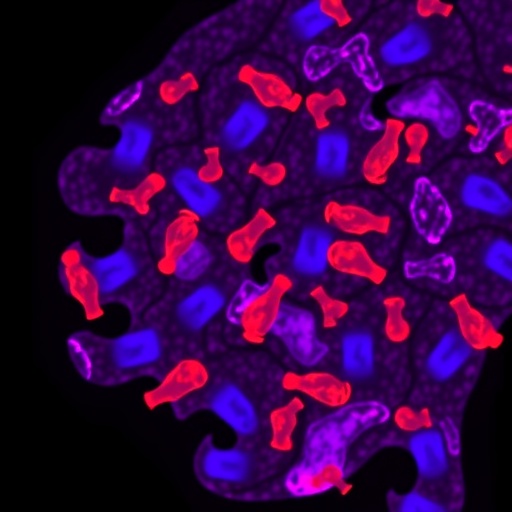
In the fast-moving world of breast cancer immunotherapy, few biomarkers have generated as much enthusiasm as tumor-infiltrating lymphocytes, the immune cells that swarm into tumors and signal that the body’s own defenses are engaged against the disease. Now, a newly published correspondence in the journal Breast Cancer Research and Treatment is urging clinicians and researchers to pause and look more carefully at how this promising marker is being measured and interpreted, particularly in early-stage triple-negative breast cancer, one of the most aggressive and difficult-to-treat forms of the disease.
The letter, authored by Malaha Ali of the Department of Medicine at Liaquat University of Medical and Health Sciences in Jamshoro, Pakistan, takes aim at the methodological foundations of a recent real-world study that examined whether tumor-infiltrating lymphocytes could predict pathological complete response in patients with early triple-negative breast cancer treated with a neoadjuvant regimen modeled on the landmark KEYNOTE-522 trial. That study, published earlier in 2026 by Albert and colleagues in the same journal, reported findings on the predictive value of these immune cells in a diverse patient population, and its conclusions have already begun to influence discussions about how immunotherapy should be deployed in clinical practice.
Triple-negative breast cancer, which lacks the three receptors that drive most other breast cancers—the estrogen receptor, the progesterone receptor, and the HER2 protein—has historically carried a grim prognosis. The arrival of immune checkpoint inhibitors, drugs that unleash T cells against tumors by blocking the molecular brakes that keep them dormant, transformed the treatment landscape. The KEYNOTE-522 trial demonstrated that adding the immunotherapy agent pembrolizumab to chemotherapy before surgery significantly increased rates of pathological complete response, the disappearance of all invasive cancer in the breast and lymph nodes at the time of operation, an outcome strongly associated with improved long-term survival. Since then, oncologists have searched for reliable ways to identify which patients will benefit most, both to personalize care and to avoid exposing patients to the toxicities of intensive combination therapy when it is unlikely to help.
Tumor-infiltrating lymphocytes have emerged as the leading candidate biomarker for this purpose. These cells, assessed on routine hematoxylin and eosin-stained tissue slides, reflect the pre-existing anti-tumor immune response. High levels of stromal tumor-infiltrating lymphocytes have been repeatedly associated with better responses to neoadjuvant chemotherapy and with improved survival outcomes in triple-negative disease. The biological logic is compelling: tumors already infiltrated by activated lymphocytes are more likely to respond when checkpoint inhibitors remove the inhibitory signals that render those lymphocytes ineffective. In theory, measuring these cells could allow oncologists to stratify patients before treatment begins, intensifying therapy for those with immune-cold tumors and considering de-escalation for those with immune-hot disease.
Yet, as Ali’s correspondence makes clear, translating this biological promise into clinical practice depends entirely on the rigor of the studies that connect the biomarker to patient outcomes. The letter raises a series of methodological concerns about how the recent real-world analysis was designed, conducted, and interpreted. Real-world studies, which examine patients treated outside the carefully controlled environment of randomized clinical trials, occupy an increasingly important place in oncology research because they capture the heterogeneity of actual clinical populations, including patients who would have been excluded from pivotal trials. However, they are also far more vulnerable to bias, confounding, and inconsistency in how key variables are defined and measured.
Among the central issues highlighted in the correspondence is the question of how pathological complete response itself is defined and adjudicated across different institutions and pathologists. Although international consensus guidelines exist for assessing tumor-infiltrating lymphocytes, adherence to these standards varies widely in routine practice, and inter-observer variability can be substantial, particularly at lower lymphocyte levels where the distinction between an immune-hot and an immune-cold tumor can hinge on subjective visual estimation. When a predictive analysis rests on a biomarker measured inconsistently across a diverse cohort, the resulting associations may be attenuated, exaggerated, or simply unstable. Small imbalances in how slides are scored, which tumor sections are sampled, and how pre-treatment versus on-treatment biopsies are handled can all shift the apparent relationship between lymphocyte infiltration and treatment response.
The letter also addresses the problem of confounding, a persistent threat in observational and real-world research. In a clinical trial, randomization ensures that known and unknown factors that influence outcomes are distributed evenly between treatment groups. In a real-world cohort, no such protection exists. Patients with different tumor sizes, nodal statuses, comorbidities, performance statuses, and socioeconomic circumstances receive different treatments and experience different outcomes for reasons that have nothing to do with the biomarker under study. Without careful adjustment—through multivariable regression, propensity score methods, or other statistical techniques designed to balance the comparison groups—an apparent link between high lymphocyte infiltration and pathological complete response could reflect the underlying characteristics of the patients rather than any genuine predictive effect of the immune cells themselves.
Quantitative bias analysis, a technique increasingly recommended in the epidemiological literature, features in the methodological discussion as a tool for assessing how robust findings are to plausible levels of unmeasured confounding. A recent methodological review published in The BMJ by Brown and colleagues emphasized that researchers should move beyond simply asserting that confounding was unlikely and instead quantify how strong an unmeasured confounder would need to be to overturn their conclusions. Applying this kind of sensitivity analysis to biomarker-outcome studies in oncology, Ali argues, would give clinicians a far more honest picture of how much confidence they can place in the results before changing practice.
The correspondence also underscores the importance of adequate statistical power and pre-specified analytical plans. Studies of predictive biomarkers frequently involve subgroup analyses, in which the association between the biomarker and outcome is examined separately within different treatment arms or patient subgroups. Such analyses are inherently exploratory and prone to false-positive findings when conducted post hoc, particularly in modest-sized cohorts. If a real-world study did not pre-specify its hypotheses and analytical strategy, or if it tested multiple associations without appropriate statistical correction, the reported predictive value of tumor-infiltrating lymphocytes may be less reliable than it appears. These concerns are not merely academic; they determine whether oncologists can responsibly use the biomarker to guide treatment intensity for individual patients.
Why does this matter so much right now? Because the stakes of biomarker-driven decision-making in early triple-negative breast cancer are extraordinarily high. On one side lies the risk of undertreatment: denying or de-intensifying pembrolizumab-based therapy to a patient whose tumor appears immune-cold but who would nonetheless have benefited, with potentially fatal consequences in a disease that recurs aggressively. On the other side lies the burden of overtreatment: subjecting patients to a year of immunotherapy with its attendant immune-related adverse effects—thyroid dysfunction, pneumonitis, hepatitis, and more—when their likelihood of benefit is low. Only a biomarker validated with methodological rigor can navigate safely between these risks. Ali’s letter is a reminder that the evidence base for such decisions must be built carefully, brick by brick, with transparent methods and honest acknowledgment of uncertainty.
The broader lesson extends well beyond this single study or this single biomarker. The past decade has seen an explosion of real-world evidence studies in oncology, driven by electronic health records, national cancer registries, and insurance claims databases. These data sources offer unprecedented scale and diversity, but they also demand a correspondingly higher standard of methodological sophistication from researchers and a more critical eye from reviewers, editors, and readers. Guidelines for reporting observational studies, for applying propensity score methods, and for conducting quantitative bias analysis exist precisely because the pitfalls are real and the consequences of ignoring them are measured in patient outcomes. The correspondence by Ali joins a growing chorus of methodologists calling for these standards to be applied consistently in translational oncology research.
For patients with early triple-negative breast cancer and the clinicians who treat them, the message is one of constructive caution rather than discouragement. Tumor-infiltrating lymphocytes remain one of the most biologically plausible and clinically promising biomarkers in breast cancer immunotherapy, and the accumulated evidence, including the pivotal KEYNOTE-522 trial itself, strongly supports their prognostic and likely predictive significance. But the leap from association to action—from knowing that immune-hot tumors fare better to deciding that an individual patient’s treatment should change based on a single slide read in a community pathology laboratory—requires evidence of a quality that only rigorous methodology can provide. Ali’s correspondence, published in Breast Cancer Research and Treatment, serves as a timely call for the field to invest in that rigor, ensuring that when tumor-infiltrating lymphocytes finally take their place in treatment guidelines, they arrive on foundations that patients and clinicians can trust.
Cite Scienmag News
Nathaniel Bowman. (September 7, 2026). Predicting pathology response in triple-negative breast cancer using tumor-infiltrating lymphocytes. Scienmag. https://scienmag.com/predicting-pathology-response-in-triple-negative-breast-cancer-using-tumor-infiltrating-lymphocytes/
Nathaniel Bowman. "Predicting pathology response in triple-negative breast cancer using tumor-infiltrating lymphocytes." Scienmag, 7 September 2026, https://scienmag.com/predicting-pathology-response-in-triple-negative-breast-cancer-using-tumor-infiltrating-lymphocytes/. Accessed 7 September 2026.
Nathaniel Bowman. "Predicting pathology response in triple-negative breast cancer using tumor-infiltrating lymphocytes." Scienmag. September 7, 2026. https://scienmag.com/predicting-pathology-response-in-triple-negative-breast-cancer-using-tumor-infiltrating-lymphocytes/


