


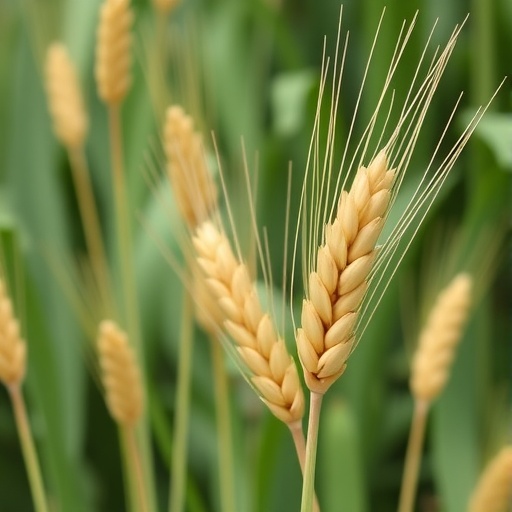
A devastating fungal disease that can wipe out wheat harvests and poison the grain we eat has met a formidable new opponent. Scientists in China have developed a novel wheat line, designated R111, that carries exceptionally stable resistance to Fusarium head blight, and they have pinpointed the genetic region responsible. Using an integrated arsenal of genomic and transcriptomic tools, the research team mapped a previously unknown resistance locus on wheat chromosome 6A and identified two promising candidate genes that may underpin the plant’s defensive prowess. The work, published in BMC Plant Biology, offers breeders fresh genetic material, ready-to-use molecular markers, and a roadmap for cloning a gene that could help protect one of the world’s most important staple crops.
Fusarium head blight, commonly abbreviated FHB, is caused primarily by the fungus Fusarium graminearum and ranks among the most destructive diseases of wheat globally. The pathogen attacks the flowering spikes of the plant, causing the grain to shrivel and turn a chalky white or pink. Beyond the direct yield losses, which can be catastrophic in humid growing seasons, the fungus contaminates grain with mycotoxins such as deoxynivalenol, compounds that pose serious health risks to humans and livestock and are strictly regulated in food and feed. Fungicide applications can reduce disease pressure but are costly, timing-sensitive, and not always effective under heavy inoculum. The most sustainable and environmentally sound strategy, the researchers emphasize, is breeding cultivars with genuine genetic resistance. The obstacle has long been the narrow genetic basis of FHB resistance available in the wheat gene pool, which has slowed breeding progress worldwide for decades.
To widen that genetic base, the team turned to distant hybridization, crossing the wheat cultivar MY11 with rye, a wild relative known for contributing valuable traits to wheat improvement. Through this process they developed line R111, which displays strong and stable FHB resistance in the field. A critical question immediately arose: was the resistance coming from rye chromosomal segments introgressed into the wheat genome, as is often the case with rye-derived traits? Cytological analysis provided a clear answer. Using non-denaturing fluorescence in situ hybridization, or ND-FISH, with a panel of probes including Oligo-Ku, Oligo-pSc200, and Oligo-pSc250, which specifically label rye chromatin, the researchers examined R111’s chromosomes and found no visible rye chromatin at all. This means the resistance is genuinely wheat-derived, arising either from novel variation generated during the wide-crossing process or from recombination events that brought together favorable wheat alleles, making R111 a uniquely valuable resource.
With the resistance confirmed as endogenous to wheat, the team set out to find where in the genome it resides. They employed bulked segregant exome sequencing, or BSE-seq, a cost-effective mapping strategy in which DNA from pools of highly resistant and highly susceptible offspring are sequenced and compared to identify genomic regions that consistently differ between the two groups. The analysis converged on a strikingly narrow window at the top of chromosome 6A, the interval spanning positions 0 to 4.5 megabases. The team named this quantitative trait locus TaFhb-6A. Within this region, 56 high-confidence genes were annotated, a manageable number for subsequent candidate gene analysis and, ultimately, map-based cloning.
Mapping alone, however, does not prove that a locus works, so the researchers built validation populations by crossing R111 with susceptible wheat lines and genotyping the progeny. Using Kompetitive Allele-Specific PCR, or KASP, markers, a genotyping technology that fluorescently distinguishes the two allele variants at a SNP position, they tracked the inheritance of the TaFhb-6A region across multiple populations. The results were consistent and compelling: plants carrying the R111 allele at the locus showed significantly enhanced FHB resistance, confirming that TaFhb-6A is a genuine, major contributor to the resistance phenotype rather than an artifact of the mapping process. This validation also means the KASP markers themselves are immediately usable for marker-assisted selection in breeding programs.
To understand what the resistance locus actually does, the researchers integrated transcriptome profiling of infected tissue with sophisticated computational analysis. They inoculated both R111 and the susceptible parent MY11 with Fusarium graminearum and sequenced RNA from the spikelets at multiple time points, including zero, 24, and 72 hours post-inoculation. Quality control of the RNA-seq data was rigorous, with high Q30 scores and good mapping rates to the Chinese Spring wheat reference genome. Differential expression analysis revealed a cascade of genes activated by the fungus, and Gene Ontology and KEGG enrichment analyses highlighted defense-related pathways that were more strongly or more rapidly induced in the resistant line.
The final layer of analysis was weighted gene co-expression network analysis, or WGCNA, a method that clusters thousands of genes into modules based on correlated expression patterns and then links those modules to traits of interest. The network analysis identified modules, notably the blue and yellow modules, whose membership was enriched for genes involved in immune responses and metabolic pathways associated with stress. Cross-referencing these co-expression modules with the 56 genes in the TaFhb-6A interval, and layering in the SNP variation data distinguishing R111 from MY11, the team narrowed the field to two stand-out candidates.
Both candidates are protein kinases, a class of enzymes central to cellular signaling in plant immunity. The first, TraesCS6A03G0005200, encodes a serine/threonine-protein kinase, while the second, TraesCS6A03G0009000, encodes a receptor-like protein kinase, the type of molecule that typically sits in the plant cell membrane and recognizes pathogen molecules to launch downstream defense signaling. Crucially, both genes carry multiple missense mutations in R111 relative to MY11, meaning the encoded proteins differ at the amino acid level in ways that could alter their function. Even more tellingly, both genes showed significantly higher expression in resistant R111 than in susceptible MY11 after fungal inoculation, a pattern consistent with a faster or stronger immune signaling response in the resistant line.
Supporting physiological evidence reinforced the genomic story. The team measured the activities of key antioxidant enzymes, including peroxidase, catalase, and ascorbate peroxidase, as well as levels of malondialdehyde, a marker of oxidative damage to cell membranes, in wheat spikes both near and distant from the infection zone. These measurements suggested that R111 mounts a more effective antioxidative defense following infection, limiting the cellular damage that allows the fungus to spread through the spike. This type of whole-organism phenotyping, combined with molecular data, strengthens the case that the candidate kinase genes participate in a coordinated, multi-front defense response.
The implications for wheat breeding are substantial. Because TaFhb-6A is flanked by validated KASP markers, breeders can now screen seedlings for the resistance allele without waiting for pathogen challenge, dramatically accelerating the development of resistant varieties. The markers were validated in multiple genetic backgrounds, an important distinction from QTLs that work only in one cross. Moreover, the two candidate genes provide concrete targets for functional validation, gene editing, and eventual cloning, which could open the door to precisely engineering resistance or deploying the allele across elite wheat cultivars worldwide. The discovery also diversifies the resistance toolbox: with few major FHB resistance loci currently deployed in breeding, a novel wheat-derived locus reduces the risk of resistance breakdown and offers stacking opportunities alongside existing sources such as Fhb1.
The study also demonstrates the power of multi-omics integration in modern crop genetics. No single technique could have delivered this result: BSE-seq located the region, KASP genotyping validated its effect, cytogenetics ruled out rye introgression, RNA sequencing captured the defense response in action, and WGCNA distilled order from thousands of expression profiles to spotlight candidate genes. For a crop whose genome is more than five times the size of the human genome and replete with repetitive elements, this convergent approach is increasingly the standard for moving from raw phenotype to actionable gene. It is also a reminder that wide crosses with crop wild relatives can generate new allelic combinations even without retaining foreign chromatin, expanding the ways breeders can mine genetic diversity.
As climate change increases the frequency of warm, humid weather favorable to Fusarium infection in major wheat belts, and as mycotoxin regulations tighten globally, the demand for durable host resistance will only grow. Line R111 and the TaFhb-6A locus give the international wheat community a new weapon, new molecular tools, and a clear genetic target. The work, funded by the National Natural Science Foundation of China and other national programs, is open access, ensuring that breeders and researchers everywhere can build on it. Whether the next step is cloning the kinase gene, editing it into elite varieties, or stacking it with other resistance loci, this study marks a significant advance in the ongoing battle to keep bread wheat safe from one of agriculture’s most persistent fungal threats.
Cite Scienmag News
Alan Morgan. (September 7, 2026). New multi-omics study reveals wheat QTL TaFhb-6A conferring scab resistance. Scienmag. https://scienmag.com/new-multi-omics-study-reveals-wheat-qtl-tafhb-6a-conferring-scab-resistance/
Alan Morgan. "New multi-omics study reveals wheat QTL TaFhb-6A conferring scab resistance." Scienmag, 7 September 2026, https://scienmag.com/new-multi-omics-study-reveals-wheat-qtl-tafhb-6a-conferring-scab-resistance/. Accessed 7 September 2026.
Alan Morgan. "New multi-omics study reveals wheat QTL TaFhb-6A conferring scab resistance." Scienmag. September 7, 2026. https://scienmag.com/new-multi-omics-study-reveals-wheat-qtl-tafhb-6a-conferring-scab-resistance/


