


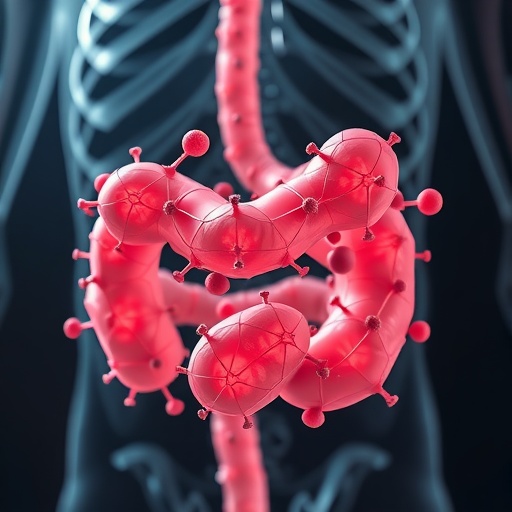
Microplastics have become one of the most pervasive contaminants of the modern era, detected everywhere from the deepest ocean trenches to the highest mountain peaks, and increasingly, inside our own bodies. Now, in what could prove to be a watershed moment in the fight against plastic pollution, a team of researchers has engineered an edible, plant- and shellfish-derived fibre framework that captures microplastics in the digestive tract and flushes them out of the body before they can do harm. The innovation, described in a study published in Nature Nanotechnology, offers the first integrated platform to simultaneously trap ingested microplastics, repair the damage they inflict on the gut lining, and restore the beneficial bacteria that plastic particles appear to disrupt.
The scale of the problem the researchers set out to address is difficult to overstate. Microplastics — fragments smaller than five millimetres, and often far smaller — have infiltrated global food systems, entering the human body through food, water and even the air we breathe. Once swallowed, these particles do not simply pass through. Studies have found microplastics in human blood, lungs, liver, placenta and brain tissue, suggesting that particles crossing the intestinal barrier can disseminate systemically. Yet despite mounting evidence that microplastic accumulation is linked to inflammation, gut barrier dysfunction and disturbances of the microbiome, no practical strategy has existed to prevent bioaccumulation in the first place. Current approaches have largely focused on reducing exposure, a goal that has proven elusive in a world where plastic production continues to climb.
The new study tackles the problem from a different angle entirely: rather than trying to keep microplastics out of the mouth, the researchers designed a scavenger that works inside the gastrointestinal tract, intercepting the particles after ingestion and escorting them out with the faeces. The material, designated Alg-Ch, is an oral framework built from two abundant natural biopolymers — alginate, a gel-forming polysaccharide extracted from brown seaweed, and chitin, the structural fibre found in crustacean shells and fungal cell walls. Alginate was shaped into microfibres, chitin into nanofibrous sheets, and the two were combined at a ratio of one part alginate to ten parts chitin. The architecture was assembled through lyophilization — freeze-drying — a process that induces hydrogen bonding and physical entanglement between the alginate microfibres and the chitin nanonetwork, locking them into a stable, porous scaffold without the need for synthetic crosslinking agents.
What makes the framework remarkable is that it is not a passive filter but a dynamically responsive one, exploiting the changing chemistry of the digestive system to capture microplastics through two distinct mechanisms. In the strongly acidic environment of the stomach, the chitin nanonetwork becomes protonated, acquiring positive charges that attract and bind microplastic particles — many of which carry negatively charged surface groups — through electrostatic adsorption. When the material then travels into the intestine, where the pH rises and becomes nearly neutral to slightly alkaline, the alginate component takes over. At intestinal pH, alginate swells dramatically, forming a hydrated gel matrix that physically ensnares particles too large or too weakly charged to be held electrostatically. The result is a scavenger whose capture strategy shifts automatically as it moves through the body, requiring no external trigger, no electronics and no drug.
The breadth of particles the material can capture is striking. In laboratory tests, Alg-Ch bound spherical polystyrene beads of 500 nanometres in diameter bearing three different surface chemistries — plain polystyrene, carboxylated polystyrene and aminated polystyrene — demonstrating that neither negative nor positive surface modification could allow particles to escape. The framework also captured microplastics of different compositions, including polyethylene terephthalate, the polymer used in beverage bottles, and polymethyl methacrylate, used in acrylic products. Crucially, real-world microplastics are rarely perfect spheres: most environmental particles are irregular fragments, fibres and flakes of varying size and polymer identity. Alg-Ch proved capable of trapping irregular polystyrene fibres as well as polypropylene and polyethylene fragments, the two most widely produced plastics on Earth. The capture capacities were substantial: 816.6 milligrams of microplastic per gram of material in simulated gastric conditions and 1,114.5 milligrams per gram in intestinal conditions. Even in the presence of food, which complicates binding by introducing competing proteins, fats and particles into the mix, the material retained more than 47 per cent of its capture efficacy — an important consideration for a scavenger intended to be taken with meals.
The next step was to determine whether the material could perform inside a living body. In experiments with mice, the researchers administered Alg-Ch orally and tracked fluorescently labelled microplastics through the digestive tract. Within just two hours, the framework had reduced microplastic fluorescence in the colon by approximately 50 per cent, indicating that a large fraction of the plastic particles had been sequestered and moved out of the colonic tissue. At the same time, the animals showed accelerated faecal elimination of the particles, confirming the intended mechanism: microplastics bound to the fibre framework were carried out of the body in the stool rather than lingering in the gut where they could damage tissue or cross into the bloodstream.
Perhaps the most consequential findings concern the long-term consequences of microplastic exposure — and the possibility of reversing them. In mice subjected to a 13-week intervention with Alg-Ch, the framework did more than simply remove particles; it appeared to undo much of the damage they cause. Microplastic exposure is known to disrupt the tight junctions — the molecular seals between the cells lining the intestinal wall — that prevent bacteria and toxins from leaking into circulation. The intervention restored the expression of three key tight-junction proteins, ZO-1, occludin and claudin-5, effectively rebuilding the gut’s defensive barrier. Consistent with this repair, the animals’ blood showed decreased levels of inflammatory signalling molecules, including interleukin-6, tumour necrosis factor and interleukin-1β, as well as reduced serum lipopolysaccharide, a component of bacterial membranes whose presence in the blood is a hallmark of a leaky gut. The microbiome, too, showed signs of rehabilitation: populations of short-chain fatty acid-producing bacterial genera — microbes widely regarded as beneficial for gut and metabolic health — recovered during the intervention.
Safety, of course, is the make-or-break question for any material intended to be swallowed regularly. Here the study offers reassuring evidence. Throughout the 13-week period, the mice showed no loss of body weight, and the researchers found no evidence of organ toxicity or histopathological lesions — microscopic tissue damage — in the examined animals. Both alginate and chitin have long histories of safe use in food, dietary supplements and wound dressings, and the freeze-dried framework contains no synthetic additives, which the researchers suggest may underpin its biocompatibility. The biomaterials are cheap, abundant and amenable to scalable manufacturing, factors that could matter enormously if the technology is ever to be deployed at a population level.
The implications extend well beyond a dietary supplement for the worried consumer. The authors frame the platform as a scalable strategy to mitigate the risks of ingested microplastics and, ultimately, to reduce the global health burden of plastic pollution. Because the framework works mechanically — by binding and sweeping particles away — rather than chemically degrading plastics into potentially harmful by-products, it sidesteps a major pitfall of earlier remediation concepts. And because it unifies three therapeutic functions in a single material — mechanical sequestration of microplastics, repair of the intestinal barrier and rehabilitation of the microbiome — it addresses the full cascade of harm that plastic particles trigger, from initial contact to systemic inflammation.
Significant hurdles remain before Alg-Ch could reach human use. The mouse studies, while extensive, will need to be replicated in larger animal models and eventually in clinical trials, and questions about optimal dosing, timing relative to meals, and long-term effects on nutrient absorption will need careful answers. The material’s efficacy in the presence of food, though maintained above 47 per cent, suggests that real-world performance in a complex human diet may vary. Still, the study represents a conceptual breakthrough: proof that a rationally designed, fully biological material can act as a dynamic, pH-responsive trap for one of the defining pollutants of our age — and may even help heal the damage it causes along the way. As microplastics continue to accumulate in ecosystems and human tissues alike, an edible sponge made of seaweed fibre and crustacean shell may prove to be one of the most pragmatic defences science has yet devised.
Cite Scienmag News
Morgan Morrow. (September 6, 2026). Micro–nanofibre framework traps and clears gastrointestinal microplastics. Scienmag. https://scienmag.com/micro-nanofibre-framework-traps-and-clears-gastrointestinal-microplastics/
Morgan Morrow. "Micro–nanofibre framework traps and clears gastrointestinal microplastics." Scienmag, 6 September 2026, https://scienmag.com/micro-nanofibre-framework-traps-and-clears-gastrointestinal-microplastics/. Accessed 6 September 2026.
Morgan Morrow. "Micro–nanofibre framework traps and clears gastrointestinal microplastics." Scienmag. September 6, 2026. https://scienmag.com/micro-nanofibre-framework-traps-and-clears-gastrointestinal-microplastics/


