


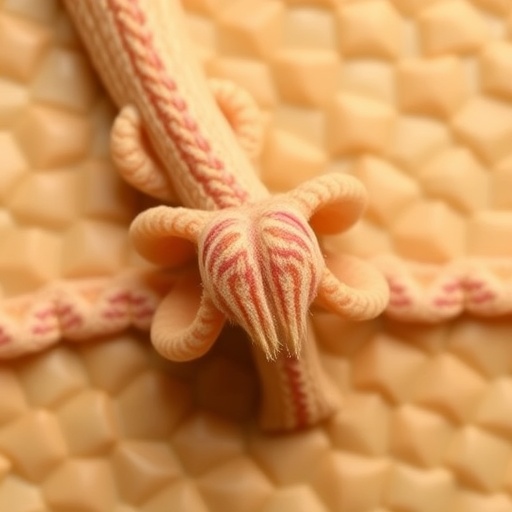
In a discovery that reshapes how scientists understand the mechanical resilience of the tissues that line our skin and organs, physicists have captured, in unprecedented detail, how networks of keratin protein filaments spanning many cells act as a coordinated shock-absorbing system—and how stretching these tissues triggers the controlled release of otherwise entangled molecular structures from around the cell nucleus. The study, published in Nature Physics by a team led from Germany, combines state-of-the-art live-cell imaging, mechanical stretching experiments, and quantitative biophysical modeling to reveal a previously underappreciated layer of organization in epithelial tissues: a supracellular keratin system whose dynamics unfold over minutes and whose architecture directly governs how genetic material is stored and protected inside individual cells.
Epithelia are the thin sheets of cells that form barriers throughout the body. Skin, the lining of the gut, the cornea, and countless glandular surfaces are all built from these sheets, which must withstand constant deformation—stretching, compression, shear—without losing their integrity. Cells achieve this mechanical robustness through an internal scaffold known as the cytoskeleton, which is composed of three major filament systems: actin microfilaments, microtubules, and intermediate filaments. Keratins are the prototypical intermediate filaments of epithelial cells, forming an intricate, cage-like network that surrounds the nucleus and extends through the cytoplasm to desmosomes and hemidesmosomes, the molecular rivets that link neighboring cells to one another and to the underlying basement membrane. While much attention in mechanobiology has focused on actin and myosin, the new work shifts the spotlight to keratin, demonstrating that this network is not a passive scaffold but an active, dynamically remodeling system that responds to tissue-level strain.
The experimental strategy at the heart of the study involved subjecting epithelial cell sheets to controlled mechanical stretch while monitoring the behavior of fluorescently labeled keratin filaments with high temporal resolution. Rather than examining single cells in isolation, the researchers deliberately studied confluent sheets—layers of cells joined tightly together—so that forces could propagate from cell to cell, mimicking the conditions that real tissues experience when they are pulled, bent, or distended. This choice proved decisive. When the sheets were stretched, the keratin networks of individual cells did not respond as independent entities. Instead, the team observed the formation of keratin bundles that spanned multiple cells, threading through regions of cell-cell contact and creating a continuous filamentous meshwork at the scale of the entire tissue. The researchers describe this architecture as “supracellular” bundling: a structure whose functional unit is not the cell but the collective.
The kinetics of this bundling process turned out to be strikingly systematic. Upon application of stretch, keratin filaments began to align and aggregate into thicker bundles on timescales of minutes. Real-time imaging showed that existing filaments were recruited into nascent bundles, which then matured, thickened, and reoriented in a manner consistent with the direction and magnitude of the applied strain. Quantitative image analysis allowed the researchers to extract metrics such as bundle thickness, orientation anisotropy, and network connectivity, and to track how these quantities evolved over time. The measurements revealed that bundling is not an instantaneous elastic response but a slow, progressive reorganization—more akin to a structural remodeling program than to a simple passive deformation. This distinction matters, because it implies that epithelial tissues possess a form of mechanical memory: their filament architecture at any given moment reflects the recent history of the forces they have experienced.
A central and perhaps most surprising finding of the study concerns what happens to the cell nucleus during this process. In many cell types, the nucleus is enveloped by a dense meshwork of keratin and other intermediate filaments, a structure often called the perinuclear keratin cage. This cage has been hypothesized to protect the genome from mechanical insults, limiting excessive deformation of the nucleus and thereby reducing the risk of DNA damage. But a rigid, permanent cage would also come at a cost: it would constrain the nucleus’s ability to move, rotate, or change shape, and it could interfere with the regulated access of molecular machinery to chromatin. The new results show that nature resolves this tension with elegance. When epithelial sheets were stretched, the perinuclear keratin cage underwent a controlled loosening—the authors describe it as a form of “uncaging”—in which the filamentous envelope around the nucleus partially disassembled or reorganized away from the nuclear periphery, transiently releasing the nucleus from its confining mesh.
The uncaging process was tightly coupled to the supracellular bundling response. As keratin filaments were drawn into tissue-spanning bundles, the local density of filaments immediately surrounding the nucleus decreased, effectively redistributing keratin from the nuclear envelope outward into the tension-bearing network of the stretched tissue. In biophysical terms, stretch appears to act as a signal that reassigns keratin from a protective, nucleus-centered configuration to a load-bearing, tissue-centered configuration. The nucleus, freed from its cage, was observed to deform and reposition in ways that it could not while encaged, and the researchers tracked these nuclear dynamics as a direct readout of the uncaging process. Importantly, the effect was reversible: when the mechanical load was released, the keratin network gradually reconstituted its perinuclear architecture, re-establishing the cage and returning the nucleus to its mechanically shielded state.
To understand the physical principles underlying these observations, the team developed theoretical models that treat the keratin network as a viscoelastic filament system subject to strain-induced bundling. Keratin filaments possess distinctive mechanical properties: individual filaments are remarkably extensible and can strain harden, becoming stiffer as they are stretched, a behavior rooted in their hierarchical coiled-coil structure. The models indicate that when a network of such filaments is deformed, local increases in filament density promote lateral associations between filaments, driving bundle formation. Because these bundles are anchored at cell-cell junctions, strain propagates across the tissue and coordinates bundling over supracellular distances. The same redistribution that strengthens the tissue-wide network necessarily depletes filaments from the perinuclear region, producing the uncaging effect as a mechanical corollary of supracellular reinforcement. In this framework, the cell does not choose between protecting its genome and reinforcing its tissue—the response to stretch accomplishes both simultaneously, at the cost of a transient period of nuclear vulnerability.
The implications of this work extend across several domains of biology and medicine. First, it provides a mechanistic explanation for the extraordinary toughness of epithelial barriers, including the epidermis of the skin, which must endure repeated stretching without failing. Mutations in keratin genes are known to cause blistering diseases such as epidermolysis bullosa simplex, in which skin fragments under trivial mechanical stress, and the new findings suggest that such pathologies may involve not only the loss of individual filament integrity but also the disruption of supracellular bundling and its coordinated nuclear-protective functions. Second, the observation of stretch-induced nuclear uncaging raises intriguing questions about mechanotransduction—the process by which cells convert mechanical signals into biochemical ones. A nucleus that is transiently released from its keratin cage may experience altered chromatin organization, changed nuclear deformation, and modified access of transcription factors to DNA, potentially linking tissue-level mechanics directly to gene expression programs. Third, the finding that epithelial sheets store a history of mechanical loading in their keratin architecture may inform how engineers and biologists think about tissue development, wound healing, and the mechanics of tumors, all contexts in which tissues are chronically deformed.
Methodologically, the study exemplifies a modern trend in biophysics: the convergence of live-cell imaging, precision mechanical perturbation, and computational analysis to dissect problems that cannot be addressed by any single approach. The researchers’ ability to resolve keratin bundling kinetics in real time, across cell boundaries, in intact sheets represents a significant technical achievement, made possible by advanced fluorescence microscopy and careful image quantification. By pairing these measurements with mechanistic modeling, they were able to move beyond correlation and propose a coherent physical account of how filament networks reorganize under load. The work also underscores the value of studying cells in their collective, tissue-like context rather than as isolated units—a perspective that is increasingly recognized as essential for understanding mechanobiology in vivo.
Looking forward, the researchers and the field more broadly face compelling questions. How do cells sense tissue-level stretch and convert it into the local biochemical events that drive keratin bundling? Which molecular players—crosslinking proteins, kinases that regulate keratin phosphorylation, junctional complexes—orchestrate the redistribution of filaments between the perinuclear cage and the supracellular network? And what are the functional consequences of transient nuclear uncaging for genome stability and cell fate? The answers will matter not only for fundamental biology but also for diseases in which mechanical stress and epithelial fragility intersect, from inherited skin disorders to fibrosis and cancer invasion. For now, the study stands as a vivid demonstration that the tissues of our bodies are wired for mechanics at a scale larger than the single cell, and that even the innermost guardian of the genome—the nucleus—is an active participant in that design. When a tissue is stretched, its keratin scaffold mobilizes, bridges cells, and briefly unlatches the nuclear cage, before quietly reassembling the architecture of protection once the load has passed.
Cite Scienmag News
Denise Maddox. (September 6, 2026). How stretched epithelia bundle keratin and release nuclear constraints. Scienmag. https://scienmag.com/how-stretched-epithelia-bundle-keratin-and-release-nuclear-constraints/
Denise Maddox. "How stretched epithelia bundle keratin and release nuclear constraints." Scienmag, 6 September 2026, https://scienmag.com/how-stretched-epithelia-bundle-keratin-and-release-nuclear-constraints/. Accessed 6 September 2026.
Denise Maddox. "How stretched epithelia bundle keratin and release nuclear constraints." Scienmag. September 6, 2026. https://scienmag.com/how-stretched-epithelia-bundle-keratin-and-release-nuclear-constraints/


