


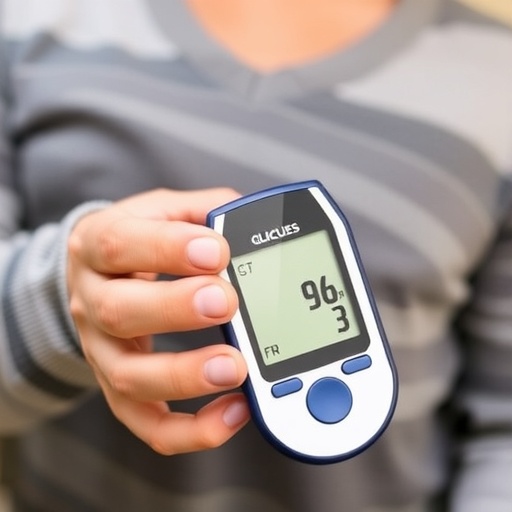
For decades, one of the quiet anxieties accompanying the adoption of continuous glucose monitoring (CGM) has been a question that patients and clinicians alike have hesitated to ask aloud: does the technology that so dramatically improves blood sugar control also come at the cost of the bathroom scale? A major new real-world study drawing on thousands of adults with type 1 diabetes across Europe now offers the most nuanced answer yet, and the findings are broadly reassuring. By applying a sophisticated statistical technique known as group-based multi-trajectory modelling to longitudinal data from more than 4,000 CGM initiators and a matched control group, researchers have shown that the modest average weight gain observed after starting CGM conceals a striking diversity of individual responses—and that, far from promoting weight gain, CGM may actually protect against it for most people.
The research, published in The Lancet Regional Health – Europe, pooled data from the German/Austrian/Luxembourgian/Swiss Diabetes Patient Follow-up (DPV) Registry and from two Belgian real-world studies, the FUTURE and RESCUE trials, which together formed a joint Belgian cohort. In total, 4,178 adults with type 1 diabetes who started CGM—either alongside multiple daily insulin injections or insulin pumps—were followed for up to 24 months, alongside 2,104 propensity score-matched controls who did not use CGM. Matching on age, sex, diabetes duration, baseline weight and baseline HbA1c allowed the investigators to isolate, as far as possible in a retrospective design, the effect of CGM itself rather than the effects of simply living with type 1 diabetes through time.
On the surface, the average numbers seemed to confirm the old anxiety. In the DPV cohort, mean weight rose by 1.8 kg over 24 months after CGM initiation, accompanied by a small but statistically significant HbA1c reduction of 0.2 percent (about 1.7 mmol/mol). The Belgian cohort showed a more modest mean weight increase of 1.0 kg with a 0.07 percent HbA1c improvement. Even the matched controls, who never touched a CGM sensor, gained an average of 1.2 kg over the same period. These averages, however, told only part of the story. Real-world evidence had previously suggested an average body mass index increase of roughly 0.4 kg/m² after CGM initiation, and historical data from the landmark Diabetes Control and Complications Trial (DCCT) showed that intensive insulin therapy itself produced weight gains of 1.5 to 1.8 BMI units—a legacy that has coloured expectations of glucose-monitoring technologies ever since.
To move beyond averages, the team applied group-based multi-trajectory modelling, an application of finite mixture modelling that assumes the study population comprises a set of latent subgroups, each following a distinct polynomial trajectory over time, estimated by maximum likelihood. The number of groups and their polynomial orders were selected using the Bayesian information criterion, with a minimum group size of five percent of participants and average posterior probabilities of group membership exceeding 0.7. When applied simultaneously to the two outcome variables—body weight and HbA1c—the model revealed three clearly separable trajectories that replicated across all three cohorts. The first group, labelled “some weight gain with HbA1c decrease,” achieved the largest glycaemic improvements. The second and by far the largest group, “stable weight and HbA1c,” accounted for between 69.8 and 83.2 percent of participants depending on the cohort. The third and clinically most concerning group, “weight gain with stable HbA1c,” represented roughly one in ten CGM users.
The magnitude of change in these subgroups differed sharply. In the DPV-CGM cohort, individuals in the weight-gain group gained an average of 11.1 kg over 24 months while their HbA1c remained essentially unchanged. The Belgian counterpart gained 8.2 kg. Yet the most striking comparison emerged between CGM initiators and their matched controls: while only 9.9 percent of DPV-CGM participants and 10.4 percent of Belgian CGM users fell into the unfavourable weight-gain trajectory, the figure among matched controls without CGM was 20.5 percent—roughly double. Conversely, the proportion achieving the desirable combination of HbA1c improvement with limited weight gain was higher among CGM users. When the two CGM cohorts were pooled and analysed through a multivariate random-effects meta-analysis with hierarchical cohort-level random intercepts, the pooled estimates placed 77.8 percent of CGM initiators in the stable trajectory and only 9.6 percent in the substantial-weight-gain trajectory.
Who ends up on the adverse path? Multinomial logistic regression, using the stable group as reference, identified early weight dynamics as the dominant predictor. Every additional kilogram gained above the cohort average during the first six months after CGM initiation nearly doubled the odds of belonging to the weight-gain-with-stable-HbA1c subgroup, with odds ratios of 1.85 in the DPV-CGM cohort, 1.91 in the Belgian cohort and 1.98 in the combined DPV analysis. Baseline characteristics mattered as well: those in the adverse subgroup were heavier at the outset, with the highest baseline weight and the largest proportion of participants in the obesity category (BMI ≥30 kg/m²), and they tended to be younger with shorter diabetes duration. Meanwhile, individuals in the metabolically favourable subgroup—who lost 2.3 to 2.4 percentage points of HbA1c in the DPV cohort—started with the highest baseline HbA1c (9.6 percent in DPV-CGM) and the lowest baseline weight, and each percentage point of HbA1c above the cohort average reduced the odds of belonging to that group by roughly 95 percent, underscoring how much headroom for improvement distinguished this population.
Perhaps the most provocative finding came from the direct comparison of matched populations within the DPV registry. In a multinomial model fitting both CGM users and controls, individuals who initiated CGM were almost three times more likely (odds ratio 2.80, 95 percent confidence interval 1.56–5.04) to belong to the group achieving substantial HbA1c reductions without excessive weight gain than their non-CGM counterparts. The fitted models showed strong explanatory power, with Nagelkerke pseudo R² values between 0.58 and 0.66. Complementary cross-lagged panel analysis, which examines bidirectional influences between two variables across repeated time points, found that weight and HbA1c largely predicted their own future values, with little cross-variable coupling—except in the adverse DPV-CGM subgroup, where higher HbA1c at 12 months predicted greater weight at 24 months, at a rate of nearly one additional kilogram per percentage point of HbA1c above the mean. This hints at a dynamic interplay between deteriorating glucose control and accelerating weight gain in vulnerable patients.
The clinical interpretation offered by the researchers is twofold. First, the notion that CGM inherently causes weight gain does not survive scrutiny when individual trajectories rather than population averages are examined. Prior real-world reports of an average BMI increase of about 0.4 kg/m² after CGM initiation—equivalent to roughly 1.1 kg in a person of 1.7 metres—are, in this analysis, driven largely by a small minority, while the substantial majority maintain stable weight and glycaemia. Second, and more urgently actionable, the first six months after CGM initiation constitute a critical early-warning window. A patient who gains approximately 1.5 kg in that period nearly doubles their risk of joining the subgroup that ultimately gains 8 to 11 kg over two years. The authors argue that clinicians should treat early weight trajectory as a red flag and consider timely interventions for this subset—potentially including adjunctive weight-management pharmacotherapy or, in selected cases, referral for metabolic surgery—to prevent the emergence of what the field calls “double diabetes,” a phenotype combining the insulin deficiency of type 1 diabetes with the insulin resistance and central adiposity of type 2 diabetes, and with it an elevated risk of cardiovascular and microvascular complications.
The study’s design carries both strengths and caveats worth weighing. Its reliance on robust longitudinal real-world data from three European sources lends ecological validity that randomised trials, with their tightly protocolised conditions and shorter horizons, often lack. The consistency of the three-trajectory structure across independently collected cohorts, confirmed formally by meta-analytic pooling, strengthens the case that these patterns reflect genuine biology and behaviour rather than statistical artefact. Yet the retrospective design leaves open the possibility of unmeasured confounding, including social determinants of health, physical activity and dietary habits that could shape both weight and glucose trajectories. The predominantly European cohorts, with limited ethnic diversity and similar healthcare structures, may constrain generalisability. Moreover, most participants used multiple daily injections rather than insulin pumps, and fewer than two percent were on hybrid closed-loop systems, which have demonstrated glycaemic benefits beyond what CGM paired with injections can achieve—making evaluation of weight outcomes under automated insulin delivery an obvious priority for future research.
For the millions of adults with type 1 diabetes weighing whether to adopt CGM, and for the clinicians advising them, the message is clearer than it has ever been. Continuous glucose monitoring, by replacing episodic fingerstick snapshots with a continuous stream of interstitial glucose data, enables finer insulin titration, better detection of overnight and postprandial excursions, and generally more confident self-management—all without, for the great majority of users, a penalty in body weight. Indeed, the data suggest the technology may be part of the solution to the growing problem of overweight and obesity in type 1 diabetes, since people without CGM were twice as likely to drift onto a substantial weight-gain path. What remains is a shift in clinical practice: away from population averages and toward personalised monitoring of individual trajectories, with early weight trends after CGM initiation serving as a simple, inexpensive signal of who needs intensified metabolic support before excess weight becomes entrenched.
Cite Scienmag News
Ophelia Keating. (September 6, 2026). Glucose monitoring linked to weight and blood sugar changes in type 1 diabetes. Scienmag. https://scienmag.com/glucose-monitoring-linked-to-weight-and-blood-sugar-changes-in-type-1-diabetes/
Ophelia Keating. "Glucose monitoring linked to weight and blood sugar changes in type 1 diabetes." Scienmag, 6 September 2026, https://scienmag.com/glucose-monitoring-linked-to-weight-and-blood-sugar-changes-in-type-1-diabetes/. Accessed 6 September 2026.
Ophelia Keating. "Glucose monitoring linked to weight and blood sugar changes in type 1 diabetes." Scienmag. September 6, 2026. https://scienmag.com/glucose-monitoring-linked-to-weight-and-blood-sugar-changes-in-type-1-diabetes/


