


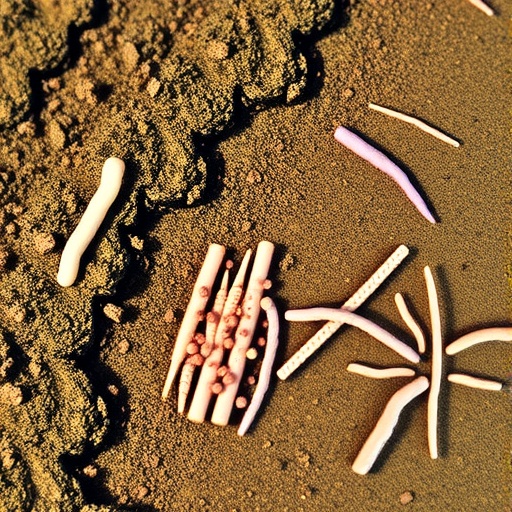
Tidal flats are among the most inhospitable habitats on Earth’s surface, places where communities of microorganisms must endure being alternately drowned in seawater and baked in the sun, twice a day, every day, while salinity, temperature and oxygen levels swing dramatically around them. Yet despite these punishing conditions, the microscopic engines that power carbon, nitrogen and sulfur cycling in these ecosystems keep running with remarkable reliability. A new study published in the journal Microbiome reveals how they manage it, and in doing so offers one of the most detailed portraits yet of functional redundancy in natural microbial communities.
An international research team led by Yong-Lian Ye, Kuo-Jian Ma and Yun-Han Fu of the Second Institute of Oceanography in Hangzhou, working with colleagues at Zhejiang Sci-Tech University and the National Deep Sea Center, analyzed 276 tidal-flat samples collected from 92 sites spanning the entire Chinese coastline. This sampling campaign stretched across four distinct climatic zones, from temperate northern shores to subtropical southern mudflats, giving the researchers an unusually broad natural laboratory in which to ask a deceptively simple question: when microbial species differ dramatically from place to place, why do the ecological functions they perform remain so similar?
The answer, the researchers show, lies in functional redundancy, the phenomenon in which multiple, taxonomically distinct microorganisms carry genes for the same biogeochemical processes. If one species is lost, another can step in to perform the same job. Redundancy has long been theorized as an insurance policy for ecosystem stability, but quantifying it rigorously, and understanding how it varies across functions, regions and community types, has proven difficult. To tackle this, the team developed a novel analytical framework that measures not just whether redundancy exists, but how much of it there is for any given function, and which microbial lineages are actually underwriting it.
The technical core of the study rests on metagenomic analysis combined with metagenome-assembled genomes, or MAGs. Rather than simply cataloging which microbes were present, the researchers reconstructed draft genomes from the environmental DNA, allowing them to assign specific metabolic capabilities, encoded as KEGG functional modules, to particular organisms. By mapping the distribution of functional genes across these genomes and across sampling sites, they could calculate a functional diversity score for each metabolic pathway at each location, effectively measuring how many independent genetic “owners” each process had in any given community.
The first striking finding was the sheer spatial variability of the microbial communities themselves. Community composition changed significantly across different regions of the Chinese coastline, and while latitude and geographic distance left detectable fingerprints on the data, the dominant forces shaping these communities were environmental filtering and stochastic assembly, the random processes of dispersal and ecological drift that govern which species successfully colonize a given patch of sediment. Temperature emerged as the single most important environmental driver, consistent with the team’s sampling design, which deliberately crossed climatic boundaries.
And yet, despite all this turnover in species identity, the functions of the microbial communities remained strikingly similar from one region to the next. Where northern sites and southern sites differed wildly in which organisms were present, the genetic potential for carbon fixation, sulfate reduction, nitrogen transformation and other essential processes was broadly conserved. This dissociation between taxonomic diversity and functional similarity is the classic signature of functional redundancy, and the Chinese coastline data provided the team with ample statistical power to quantify it at an unprecedented scale.
When the researchers applied their framework to rank the major biogeochemical functions by their degree of redundancy, a clear hierarchy emerged: carbon metabolism showed the highest redundancy, followed by sulfur metabolism, with nitrogen metabolism exhibiting the least. In practical terms, this means that carbon-cycling genes are distributed most widely across the tidal-flat microbiome, with many unrelated lineages capable of contributing, whereas nitrogen-cycling functions depend on a narrower set of microbial contributors and are therefore more vulnerable to disruption if those particular organisms are lost.
Digging deeper, the team identified three distinct patterns of redundancy across the coastal sites. Some functions displayed consistently high redundancy everywhere; others remained stubbornly low regardless of location; and a third group showed redundancy levels that tracked latitude, rising or falling predictably with climatic gradients. This tripartite classification is one of the study’s most novel contributions, demonstrating that functional redundancy is not a single, uniform property of an ecosystem but a mosaic of different patterns, each with its own underlying ecological logic.
The explanation, the authors argue, lies in the composition of functional contributors, the specific set of microbial lineages that carry the genes for each process. By dissecting which organisms contributed to each KEGG module in each region, the researchers showed that redundancy patterns were fundamentally shaped by how functional genes are distributed across the tree of life. Processes carried by many unrelated lineages, or by broadly distributed generalist microbes, tend to be highly redundant. Processes concentrated in specialists, organisms restricted to particular niches or regions, show lower redundancy or latitudinal sensitivity. Shifts in the balance between generalists and specialists along the coastline were sufficient to explain most of the observed variation in redundancy patterns.
The implications of this work extend well beyond Chinese mudflats. Tidal flats are under intense pressure worldwide from land reclamation, aquaculture, pollution and climate change, and their microbial communities perform services of global importance, including the burial and transformation of organic carbon and the removal of excess nitrogen from coastal waters. Understanding which functions are buffered by redundancy, and which hang on the fortunes of a few specialist lineages, provides a predictive tool for assessing ecosystem vulnerability. A community whose nitrogen-cycling capacity depends on a small suite of temperature-sensitive specialists, for example, may be far more fragile under ocean warming than its high species diversity would suggest.
The study also delivers a methodological gift to the field. The quantitative framework for delineating functional redundancy and its underlying contributor composition is general enough to be applied to other ecosystems, from deep-sea sediments to soil. Because the framework ties redundancy explicitly to the identity and distribution of contributing lineages, it converts a once-vague ecological concept into something measurable, comparable and trackable over time. The researchers suggest that a shift in the primary functional contributor, the lineage doing the heaviest lifting for a given process, could itself alter a community’s redundancy pattern, meaning that monitoring contributor composition could serve as an early-warning signal of approaching functional instability.
The scale of the underlying dataset lends particular weight to these conclusions. The team cataloged environmental variables for every sample, annotated genes across all metagenomes, performed taxonomic and quality assessments on dozens of medium- and high-quality MAGs, and used machine-learning approaches including random forest analysis to link key functional modules to genome distribution. Rarefaction analyses confirmed that sequencing depth was sufficient to capture community diversity, and distance-based redundancy modeling quantified the contribution of individual environmental variables to community structure. The result is a layered body of evidence in which redundancy is not merely asserted but traced, gene by gene, to the organisms that carry it.
The research, funded by the National Natural Science Foundation of China and several Zhejiang provincial programs, underscores a principle that ecologists have suspected for decades but rarely had the data to demonstrate at continental scale: in microbial ecology, who the species are matters less than what genes they carry and how those genes are spread across the community’s evolutionary branches. The stability of an ecosystem, in this view, is written not in its species list but in the redundancy of its genetic instruction set.
For tidal flats, which sit at the volatile boundary between land and sea and rank among the most productive and carbon-rich ecosystems on the planet, that message carries urgency. As coastlines warm and are reshaped by human activity, the invisible workforce of bacteria and archaea in these sediments will be re-sorted by environmental filtering and chance. The new study suggests that whether the vital work of cycling carbon, sulfur and nitrogen continues uninterrupted will depend on how deeply the redundancy well runs, and on which microbes hold the genetic keys to each essential process.
Cite Scienmag News
Drew Townsend. (September 5, 2026). Coastal tidal flats host varied microbes with multiple functional redundancy patterns. Scienmag. https://scienmag.com/coastal-tidal-flats-host-varied-microbes-with-multiple-functional-redundancy-patterns/
Drew Townsend. "Coastal tidal flats host varied microbes with multiple functional redundancy patterns." Scienmag, 5 September 2026, https://scienmag.com/coastal-tidal-flats-host-varied-microbes-with-multiple-functional-redundancy-patterns/. Accessed 5 September 2026.
Drew Townsend. "Coastal tidal flats host varied microbes with multiple functional redundancy patterns." Scienmag. September 5, 2026. https://scienmag.com/coastal-tidal-flats-host-varied-microbes-with-multiple-functional-redundancy-patterns/


