


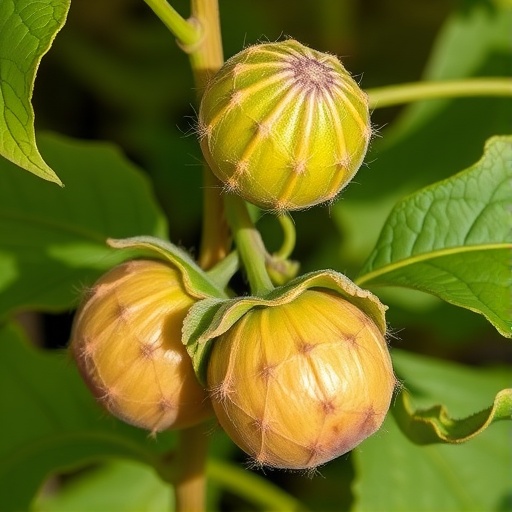
Researchers in China have identified two chitinase genes that act as central guardians of walnut leaves against a destructive fungal pathogen, offering new molecular targets for breeding disease-resistant walnut varieties. The study, published in BMC Plant Biology, provides the first genome-wide characterization of the chitinase gene family in walnut, a crop of major economic importance in the arid walnut-growing regions of Xinjiang, where Alternaria leaf spot disease has become a serious obstacle to sustainable production.
The research team, led by Tianlei Li and corresponding authors Jing He and Bin Wang, with colleagues from Gansu Agricultural University and the Xinjiang Academy of Agricultural Sciences, set out to understand why some walnut trees resist the fungus Alternaria tenuissima while others succumb. The fungus causes leaf spot disease that severely hinders walnut cultivation, and fungicide-based control strategies are costly and environmentally burdensome. Understanding the genetic basis of natural resistance, the researchers reasoned, could open a path toward molecular breeding approaches that reduce dependence on chemical inputs.
To uncover the molecular basis of resistance, the team compared the physiological and transcriptomic responses of two very different walnut genotypes: a resistant wild walnut and a susceptible cultivated variety known as ‘Xinxin No.2’. The contrast between the two was striking. When both plants were challenged with the pathogen, the wild walnut displayed visibly slower lesion spread, meaning the necrotic spots caused by the fungus expanded far more slowly across its leaves than across those of the cultivated variety. This slowed progression of disease symptoms was accompanied by a markedly stronger enzymatic defense response.
The biochemical measurements revealed that the resistant wild walnut maintained substantially higher activity of defense-related enzymes throughout the infection process. Among these, chitinase stood out. Chitinases are enzymes that hydrolyze chitin, the structural polymer that makes up fungal cell walls. By breaking down chitin, these enzymes directly attack the integrity of invading fungi. In the wild walnut, chitinase activity remained 30 to 45 percent above the levels measured in ‘Xinxin No.2’ throughout the entire course of pathogen infection. This sustained enzymatic edge suggested that chitin hydrolysis plays a vital role in the host’s defense strategy against A. tenuissima.
Transcriptomic analysis, which measures the activity of thousands of genes simultaneously, reinforced this conclusion at the molecular level. The researchers found that genes involved in amino sugar and nucleotide sugar metabolism were significantly enriched in their differential expression data. This metabolic pathway is directly connected to chitin processing, since chitin is itself an amino sugar polymer. The enrichment pattern provided independent evidence that the ability to degrade fungal chitin is a cornerstone of walnut resistance, prompting the team to focus their search on the chitinase gene family itself.
Using genome-wide screening of the walnut genome, the researchers identified 24 chitinase genes, designated JrCHI genes, in walnut. Based on their protein sequence features, these genes were classified into two major families: glycoside hydrolase family 18, commonly abbreviated GH18, and glycoside hydrolase family 19, or GH19. These two families differ in structure, catalytic mechanism and evolutionary origin, but both are capable of cleaving chitin. The classification of the walnut chitinase complement into GH18 and GH19 families provides the first comprehensive catalog of this gene family in walnut and complements existing research on other members of the Juglandaceae, the plant family to which walnuts belong.
A closer look at the regulatory regions of these genes added another layer of insight. The promoters of the JrCHI genes, the DNA sequences that control when and where genes are switched on, carried numerous response elements associated with two key plant defense hormones: jasmonic acid, or JA, and salicylic acid, or SA. These hormones orchestrate distinct branches of the plant immune system. Salicylic acid signaling is typically deployed against biotrophic pathogens, which feed on living tissue, while jasmonic acid signaling generally governs defense against necrotrophic pathogens, which kill host tissue and feed on the dead cells. Because A. tenuissima is a necrotrophic fungus, the prominence of JA response elements in the chitinase promoters was a suggestive clue about which hormonal pathway might be regulating these genes during infection.
From the 24 genes, the researchers narrowed their focus to two candidates, JrCHI6 and JrCHI24, whose expression rose markedly after pathogen infection. To test how these genes are regulated, the team applied exogenous hormone treatments, spraying plants with defense-related signaling molecules and measuring the gene response. The results were decisive: methyl jasmonate, a cell-permeable derivative of jasmonic acid, alone induced the expression of both JrCHI6 and JrCHI24, while salicylic acid barely altered their transcript abundance. Given that jasmonic acid signaling is the primary defense axis against necrotrophic pathogens, the researchers concluded that JrCHI6 and JrCHI24 are most likely driven by JA-mediated immunity in the response to A. tenuissima.
But correlation is not causation, and the team went on to establish function directly through genetic manipulation. Using transient overexpression, they introduced extra copies of JrCHI6 and JrCHI24 into the leaves of the susceptible ‘Xinxin No.2’ variety. The result was a measurable improvement in leaf spot resistance: leaves carrying the overexpressed chitinase genes fared significantly better against the pathogen than control leaves. Moreover, the overexpression increased the expression of JrPR3 and JrPR4, two pathogenesis-related marker genes associated with jasmonic acid and ethylene defense signaling. This shift in defense marker expression indicated that boosting the two chitinase genes had activated a broader hormonal defense program, not merely added enzymatic activity in isolation.
The complementary experiment provided equally compelling evidence from the opposite direction. In the resistant wild walnut, the researchers used virus-induced gene silencing, a technique that uses a viral vector, in this case based on tobacco rattle virus, to suppress the activity of specific target genes. When JrCHI6 and JrCHI24 were silenced, the wild walnut’s resistance was greatly compromised, demonstrating that these two genes are not merely associated with resistance but are functionally required for it. Together, the overexpression and silencing experiments establish JrCHI6 and JrCHI24 as core functional genes mediating chitinase-dependent resistance against A. tenuissima in walnut.
The significance of this work extends beyond basic plant biology. Walnut is a valuable nut crop, and Alternaria leaf spot disease reduces both yield and quality in affected orchards. Conventional breeding for disease resistance is slow and resource-intensive, and the identification of specific resistance genes provides elite genetic resources that breeders can use to accelerate the development of resistant cultivars. Marker-assisted selection, for example, could use the presence and expression patterns of JrCHI6 and JrCHI24 to screen seedlings for resistance traits long before they encounter the pathogen in the field. Genetic engineering approaches could likewise deploy these genes to enhance resistance in susceptible commercial varieties such as ‘Xinxin No.2’.
The study also contributes to a broader understanding of how plants deploy chitinases as part of their immune arsenal. Chitin, as a fungal-specific molecule, is a classic pathogen-associated molecular pattern, and plants possess receptors that detect chitin fragments released during infection, triggering immune responses. Chitinases add a direct antimicrobial dimension to this recognition system, degrading the fungal cell wall and potentially releasing additional chitin fragments that amplify immune signaling. The finding that the amino sugar and nucleotide sugar metabolism pathway was significantly enriched in the resistant genotype’s transcriptomic response underscores how central chitin processing is to this defense. The JA-dependence of JrCHI6 and JrCHI24 induction also fits neatly with established immunology: necrotrophic fungi like A. tenuissima are classically countered by jasmonate-mediated defenses, and the walnut chitinase system appears to be wired into exactly this pathway.
The research was supported by the Key Industry Talent Support Program in Xinjiang’s Agricultural Sector through the Walnut Industry Technology System, reflecting the practical agricultural motivation behind the work. As the first genome-wide identification of the chitinase gene family in walnut, the study fills a gap in knowledge about the Juglandaceae and lays the molecular groundwork for future resistance breeding. For walnut growers in Xinjiang and beyond, the two genes at the heart of this study may one day translate into orchards that can hold the line against Alternaria leaf spot with far less chemical intervention, guided by a deeper understanding of the genetic machinery that wild walnuts have evolved over millennia.
Cite Scienmag News
Juliet Wilcox. (September 5, 2026). Walnut CHI genes JrCHI6 and JrCHI24 confer resistance to Alternaria tenuissima. Scienmag. https://scienmag.com/walnut-chi-genes-jrchi6-and-jrchi24-confer-resistance-to-alternaria-tenuissima/
Juliet Wilcox. "Walnut CHI genes JrCHI6 and JrCHI24 confer resistance to Alternaria tenuissima." Scienmag, 5 September 2026, https://scienmag.com/walnut-chi-genes-jrchi6-and-jrchi24-confer-resistance-to-alternaria-tenuissima/. Accessed 5 September 2026.
Juliet Wilcox. "Walnut CHI genes JrCHI6 and JrCHI24 confer resistance to Alternaria tenuissima." Scienmag. September 5, 2026. https://scienmag.com/walnut-chi-genes-jrchi6-and-jrchi24-confer-resistance-to-alternaria-tenuissima/


