


The Fannie and John Hertz Foundation, widely regarded as one of the most influential forces in American doctoral education, has announced that it will host two online information sessions for prospective applicants to the 2027 Hertz Fellowship, one of the most selective and generously structured awards available to graduate students in science, mathematics, and engineering. The sessions, scheduled for Thursday, September 10, at 6:00 p.m. EDT, and Monday, September 14, at 12:00 p.m. EDT, are designed to give candidates a detailed, first-hand understanding of the fellowship application, the expectations placed on recipients, and the distinctive culture of the Hertz community. Applications for the 2027 fellowship are now open and will remain so through October 30, 2026, giving students a finite but workable window to prepare what is widely considered one of the most intellectually demanding fellowship applications in the United States.
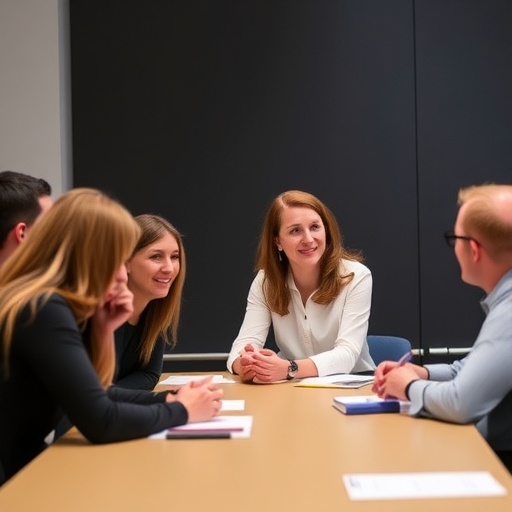
The sessions will be led by Derek Haseltine, Director of the Hertz Fellowship, who will be joined by current Hertz Fellows. Rather than a conventional webinar format, the sessions have been structured around interaction: after a short introduction covering the fellowship and the mechanics of the application, participants will move into breakout rooms where Hertz Fellows will facilitate open question-and-answer discussions. This format reflects a deliberate philosophy at the foundation, one that treats the application process not as a bureaucratic hurdle but as the first stage of a mentoring relationship. Prospective applicants will have the rare opportunity to speak directly with people who have already navigated the process, earned the award, and gone on to careers at the highest levels of research, entrepreneurship, and public service.
The topics scheduled for the breakout rooms reveal a great deal about the fellowship’s character and the kinds of questions that most often occupy applicants’ minds. One group will focus on the timing of the application, addressing how the fellowship fits the circumstances of college seniors, students taking gap years, and first-year graduate students, each of whom occupies a different position along the pipeline toward doctoral study. Another session, offered on September 10 only, will address the particular challenges faced by dual-degree MD/PhD applicants, a population whose extended training timelines and dual commitments raise questions that standard fellowship guidance often leaves unanswered. Choosing a graduate school that aligns with one’s research interests, and choosing a research project once enrolled, will also be explored, reflecting the foundation’s view that the fellowship is not merely a funding instrument but a framework for shaping an entire scientific career.
Additional breakout rooms will tackle questions of personal sustainability and identity in research careers. A session on building resiliency in graduate school acknowledges what many experienced researchers know well: that doctoral training can be psychologically grueling, and that the ability to withstand setbacks, failed experiments, rejected papers, and long stretches of uncertainty is as essential to scientific success as intellectual brilliance. A dedicated session for those underrepresented in STEM reflects the foundation’s ongoing effort to widen the demographic and disciplinary reach of its fellowship community. Finally, a session on coordination with other fellowships will address the practical realities of stacking or sequencing awards, a topic of considerable importance given that many strong applicants will also be weighing offers from the National Science Foundation Graduate Research Fellowship program, the Department of Defense’s National Defense Science and Engineering Graduate fellowships, and institutional awards.
The Hertz Fellowship itself occupies a unique position in the American research landscape. Established more than sixty years ago by the Fannie and John Hertz Foundation, the fellowship is explicitly committed to advancing American scientific and technological leadership by identifying the nation’s most promising young technical minds and giving them the freedom to pursue their most ambitious ideas. Unlike many fellowships that specify fields or constrain research direction, the Hertz Fellowship is famously open-ended: recipients may pursue doctoral studies in any of the applied physical, biological, or engineering sciences at any institution in the United States. That freedom extends to the money itself. Hertz Fellowships provide five years of support, structured so that Fellows can follow their intellectual curiosity across disciplines and institutions without the financial pressures that often push early-career researchers toward safer, more incremental projects.
The selection process has become legendary for its rigor. Beyond the standard review of academic records, essays, and letters of recommendation, Hertz finalists are subjected to a multi-day examination process that includes extended technical interviews probing not just what candidates know, but how they think. Interviewers frequently pose open-ended problems drawn from real research frontiers, watching for creativity, logical precision, the ability to recover from dead ends, and a certain playful courage in the face of the unfamiliar. The foundation has long argued that this method identifies a quality that transcripts cannot measure: the capacity for genuine scientific invention. The argument is supported by outcomes. Over its history, the fellowship has produced a remarkable roster of alumni, including Nobel laureates, founders of transformative technology companies, leaders of national laboratories, and researchers whose work has shaped fields from artificial intelligence and materials science to molecular biology and quantum information.
For the foundation, the upcoming sessions are also part of a broader effort to demystify the application and, implicitly, to broaden the pool of people who consider applying. The Hertz Foundation’s announcement states plainly that it wants every prospective applicant to fully understand the fellowship and feel confident in assembling a strong application. That framing matters. Selective fellowships have historically drawn disproportionate numbers of applicants from a narrow set of elite institutions, and outreach efforts such as these are increasingly recognized as important tools for ensuring that extraordinary talent at less prominent universities has the information and encouragement needed to compete. The inclusion of breakout rooms specifically devoted to underrepresented students and to non-traditional pathways, such as gap years and first-year graduate applications, signals a deliberate push in this direction.
The timing of the sessions, roughly seven weeks before the October 30 application deadline, is strategic as well. Information gathered in September can meaningfully shape the essays, recommendation strategies, and school-selection decisions that applicants must finalize in the following weeks. Fellowship advisors at universities often note that one of the most common mistakes in applications like the Hertz is generic writing, essays that describe ambition in abstract terms without connecting it to concrete technical problems the applicant has grappled with. Hearing directly from Fellows about what distinguished successful applications, and about how the foundation evaluates intellectual independence rather than conventional prestige, can help candidates calibrate their materials in ways that generic advice cannot.
For students still deciding whether doctoral study in the applied sciences is right for them, the sessions also serve a wider informational purpose. Discussions about how to choose a research project, how to align graduate school choice with research interests, and how to balance fellowship obligations with other funding sources offer guidance that extends well beyond the Hertz application itself. In an era when the economics of doctoral education are under scrutiny, when many PhD students face stipend pressures and uncertain career pipelines, fellowships that grant genuine financial independence have acquired an outsized significance. The Hertz model, which frees recipients to take intellectual risks and discourages narrowly defined, grant-driven research at the earliest career stage, is often cited as a counterexample to prevailing trends in graduate training.
Prospective applicants who wish to attend either of the two sessions can register online through the Hertz Foundation’s fellowship website, with separate registration links for the September 10 evening session and the September 14 midday session. The foundation has also opened a direct channel for other questions about the fellowship or the events, directing inquiries to fellowshipinfo@hertzfoundation.org. With the application window now open through the end of October 2026, and with the fellowship’s reputation for identifying the architects of America’s future technical leadership intact after more than six decades, the two September sessions represent a low-cost, high-value opportunity for anyone contemplating one of the most consequential applications in American graduate education. For students whose ambitions reach beyond incremental science, an evening or midday spent in conversation with Hertz Fellows may well be the first step in a career measured in decades of impact.
Cite Scienmag News
Reid Dalton. (September 5, 2026). Hertz Fellowship opens 2027 applications with info sessions for candidates. Scienmag. https://scienmag.com/hertz-fellowship-opens-2027-applications-with-info-sessions-for-candidates/
Reid Dalton. "Hertz Fellowship opens 2027 applications with info sessions for candidates." Scienmag, 5 September 2026, https://scienmag.com/hertz-fellowship-opens-2027-applications-with-info-sessions-for-candidates/. Accessed 5 September 2026.
Reid Dalton. "Hertz Fellowship opens 2027 applications with info sessions for candidates." Scienmag. September 5, 2026. https://scienmag.com/hertz-fellowship-opens-2027-applications-with-info-sessions-for-candidates/


