


In one of the largest investigations of its kind, researchers at Shanghai Normal University have mapped the environmental and psychological correlates of adolescent mental health difficulties on a scale rarely attempted, drawing on self-reported data from 8,981 Chinese secondary school students. The study, published in Child Psychiatry & Human Development, applied a battery of machine-learning feature selection methods and a Bayesian network analysis to identify which of dozens of candidate variables—from sleep quality to cyberbullying—maintain a direct statistical association with a single latent dimension of broad psychological vulnerability known as the general psychopathology factor, or p factor.
The p factor is a construct that has reshaped how psychiatric researchers think about mental disorder over the past decade. Rather than treating depression, anxiety, aggression, and attention problems as fully independent conditions, the p factor framework holds that a shared dimension of liability underlies much of the comorbidity observed across diagnoses. First formalized in a landmark 2014 paper, the concept has since been replicated in children, adolescents, and adults across multiple cohorts, including the large Adolescent Brain Cognitive Development study in the United States. Individuals scoring high on the p factor tend to experience more severe symptoms, greater functional impairment, and poorer long-term outcomes, which makes identifying its ecological correlates a matter of considerable public health interest.
What distinguishes the new study is its explicitly ecological framing, rooted in Bronfenbrenner’s model of human development and its more recent neo-ecological extensions that incorporate digital environments. The research team, led by Yunjing Li, Shuo Gong, and Haijiang Li, measured variables across four nested levels of adolescent life: individual characteristics such as impulsivity and repetitive negative thinking; family factors including childhood trauma and interparental conflict; school-related pressures such as academic stress and learning burnout; and the broader social environment, encompassing peer victimization and the emerging domain of digital social pressures. Self-report instruments captured each of these domains, and the outcome of interest was a latent general psychopathology factor extracted from a broad panel of symptom measures.
The analytical pipeline was deliberately conservative. With dozens of potential predictors and nearly nine thousand participants, the authors faced a well-known statistical hazard: multicollinearity, the situation in which correlated predictors distort or obscure one another’s effects in standard regression models. To address this, the team ran a sequential feature-selection procedure combining three complementary techniques. First, univariate screening filtered variables on the basis of their bivariate association with the p factor. Next, LASSO regression—a method that shrinks coefficients toward zero and effectively eliminates weak predictors—narrowed the field further. Finally, the Boruta algorithm, a wrapper method built on random forests that compares each real variable’s importance against that of randomized “shadow” features, confirmed which variables carried genuine signal. This triple-stage procedure yielded 31 candidate variables deemed robust enough to enter the network model.
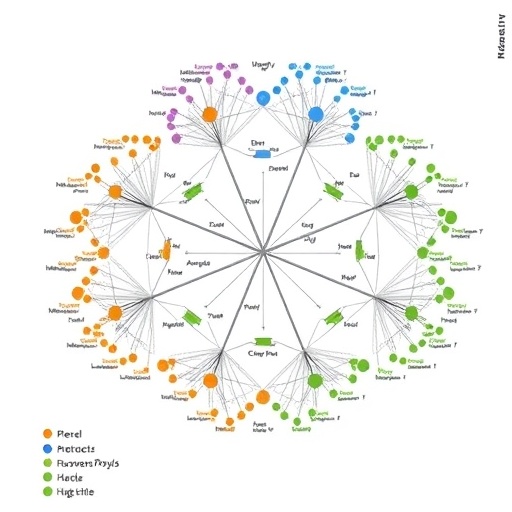
The centerpiece of the analysis was a Bayesian network, a graphical model that represents variables as nodes and conditional dependencies as edges. Unlike correlation matrices or regression tables, Bayesian networks estimate which associations persist after conditioning on all other measured variables—in effect, distinguishing direct links from indirect ones. The team used Bayesian inference with appropriate priors on the covariance structure, an approach that provides evidence for both the presence and the absence of edges and has gained traction in psychometric network research in recent years. Of the 31 variables entered into the network, 24 emerged with direct conditional associations with the p factor, forming a dense web of connections that spanned every ecological level the researchers had measured.
The composition of those 24 variables is striking. Sleep quality showed the strongest association with the p factor of any variable in the network, a finding consistent with a growing meta-analytic literature linking adolescent sleep disturbance to depression, anxiety, and diminished well-being. Repetitive negative thinking—the ruminative, self-focused loop of intrusive worries—also featured prominently, echoing evidence that this cognitive style functions as a transdiagnostic predictor of both internalizing symptoms and, in some studies, suicidal ideation. Impulsivity and aggression-related traits appeared alongside them, reflecting the p factor’s known overlap with the general personality dimension of neuroticism and with deficits in self-regulation.
The family and school domains contributed their own distinct nodes. Childhood trauma and interparental conflict both retained direct associations after conditioning on the full set of covariates, in line with longitudinal work showing that early adversity and exposure to hostile family dynamics elevate risk for transdiagnostic psychopathology. On the school side, learning burnout and academic stress remained significant, corroborating systematic review evidence that academic pressure is a meaningful risk factor for adolescent mental health problems—a finding of particular relevance in East Asian educational contexts, though the researchers note that their cross-sectional design cannot adjudicate causal direction. Peer verbal victimization also held its ground in the network, consistent with prospective studies showing that bullying exposure predicts broad, rather than diagnosis-specific, psychopathology.
Perhaps the most contemporary element of the study is its inclusion of digital social pressures among the surviving correlates. Drawing on recent neo-ecological theory, which argues that online contexts now constitute a genuine developmental microsystem rather than a mere extension of offline life, the researchers measured dimensions of digital stress related to social media use, availability demands, and online social comparison. These digital variables survived the feature-selection gauntlet and maintained direct edges to the p factor in the network, lending empirical weight to the argument that the online environment deserves equal analytical status with family, school, and neighborhood when modeling adolescent risk.
The methodological choices carry implications for how the field studies youth mental health. By combining feature selection with network modeling, the study avoided some of the overfitting pitfalls that afflict large variable sets in regression-style analyses, and by using a Bayesian framework the authors could quantify confidence in each edge rather than relying solely on significance tests. The result is a map of conditional associations rather than a list of raw correlations—an important distinction, because many variables that correlate strongly with the p factor in isolation, such as certain demographic characteristics or single symptom measures, dropped out once the network accounted for shared variance among the remaining predictors.
The authors are careful about interpretation. The design is cross-sectional, meaning the edges in the network represent statistical dependencies at a single point in time, not causal pathways. It remains possible, for instance, that poor sleep exacerbates general psychopathology, that psychopathology degrades sleep, or that both are driven by an unmeasured third factor such as chronotype or physiological stress reactivity. Similarly, the sample was school-based and drawn from China, which raises questions about generalizability to other cultural and educational settings. Self-report measures, while efficient at this scale, are subject to shared-method variance, and the latent p factor was modeled from self-reported symptoms rather than clinical diagnoses.
Even with those caveats, the findings suggest practical entry points for prevention. Because sleep quality showed the single strongest conditional association, school- and family-based interventions targeting sleep hygiene—later school start times, reduced evening screen exposure, consistent bedtimes—may offer a broadly acting lever against the full spectrum of psychological difficulties, rather than any single disorder. The prominence of repetitive negative thinking points to cognitive-behavioral and metacognitive techniques that specifically interrupt rumination, which meta-analytic evidence suggests can reduce both depressive and anxious symptoms in young people. The survival of family conflict, academic stress, and peer victimization nodes argues for multi-tiered prevention programs that engage parents, teachers, and peer groups simultaneously rather than treating the adolescent in isolation.
The study also foreshadows a shift in how mental health surveillance might be conducted. The research was supported in part by a Chinese Ministry of Education project explicitly aimed at developing large-scale models for adolescent mental health prevention, and the network approach used here—identifying a small set of high-yield, conditionally informative variables from a much larger pool—is precisely the kind of strategy that could underpin screening tools deployed across entire school systems. If future longitudinal work confirms that the edges identified here correspond to causal pathways, the p factor map produced by this team could help prioritize which interventions deliver the widest protection for the greatest number of young people.
Cite Scienmag News
Glenn Wilkins. (September 5, 2026). Ecological Network Study Maps Factors Shaping Adolescent Mental Health. Scienmag. https://scienmag.com/ecological-network-study-maps-factors-shaping-adolescent-mental-health/
Glenn Wilkins. "Ecological Network Study Maps Factors Shaping Adolescent Mental Health." Scienmag, 5 September 2026, https://scienmag.com/ecological-network-study-maps-factors-shaping-adolescent-mental-health/. Accessed 5 September 2026.
Glenn Wilkins. "Ecological Network Study Maps Factors Shaping Adolescent Mental Health." Scienmag. September 5, 2026. https://scienmag.com/ecological-network-study-maps-factors-shaping-adolescent-mental-health/


