


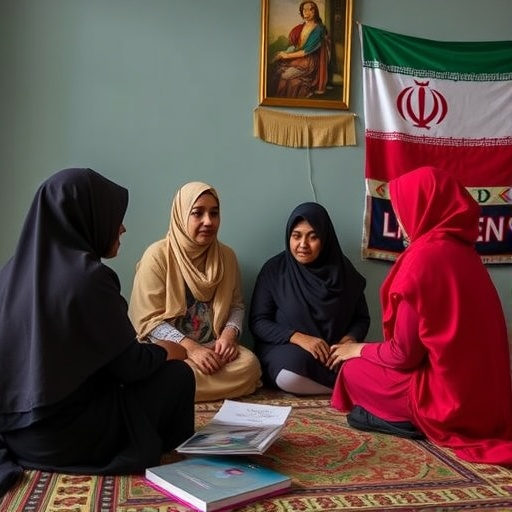
Menstrual health has long been treated as a private matter, whispered about rather than legislated for, yet a new study from Iran argues that it belongs squarely within the machinery of national policy. Researchers have developed and formally appraised PEEN, the National Menstrual Health Management Program, a rights-based and equity-oriented framework designed to embed menstrual health into the reproductive health, education, labor, legal, and social policy systems of Iran. Published in the International Journal for Equity in Health, the study describes a rigorous multiphase methodology that moves from the lived experiences of menstruators to international policy analysis and finally to structured expert consensus, producing what its authors describe as the first unified national menstrual health program proposed for the country.
The motivation behind the work stems from a widely acknowledged gap. Across much of the world, menstrual health policies remain fragmented, often reduced to the distribution of menstrual products while neglecting legal recognition, stigma, menstrual literacy, equity for vulnerable groups, and coordinated governance across sectors. In Iran, despite the existence of various health and educational activities touching on menstruation, no single national program has addressed menstrual health as a right or provided coordinated support for women and girls. The research team, drawn from institutions including Iran University of Medical Sciences, Tehran University of Medical Sciences, and Shahid Beheshti University of Medical Sciences, set out to fill that vacuum with a program grounded in both local testimony and global evidence.
The methodological architecture of the study is one of its most distinctive features. The researchers employed a qualitative evidence-synthesis and expert-consensus design spanning multiple phases. The qualitative foundation rested on 26 individual interviews, of which 15 were with menstruators and 11 with key informants such as health professionals, legal specialists, and policymakers. These were supplemented by seven focus group discussions involving 31 participants in total. Through qualitative content analysis, the team generated 2,776 initial codes from the transcripts, a raw repository of experiences and expert opinions that was progressively abstracted into five overarching themes.
Those themes capture the conceptual heart of the program. They include recognition of menstruation as a right; menstrual justice, reproductive health, and sustainable development; empowerment in menstrual management; normalization, described as a movement from humiliation to dignity; and moving forward through the development of laws. Together, they signal a deliberate reframing of menstruation not as a hygiene problem to be managed quietly but as a matter of human rights, gender equity, and social justice. The emphasis on dignity and normalization reflects findings from the interviews that stigma and silence impose costs on health, education, work, and overall quality of life, independent of any physical symptoms.
To situate the Iranian context within global practice, the team conducted a systematic review of international menstrual health policies and programs. Beginning with 832 records, the review screened and evaluated the literature according to predefined criteria, ultimately identifying 27 eligible documents. This corpus allowed the researchers to map the policy domains that other countries have pursued and, importantly, to identify the implementation gaps that have limited the effectiveness of product-centered approaches elsewhere. The systematic review followed PRISMA reporting standards, adding a layer of transparency to the search and selection process.
The synthesis stage represented the intellectual core of the project. Qualitative findings from the interviews and focus groups were systematically mapped against the global evidence, and the convergence of the two streams produced a preliminary draft of the PEEN program structured around four interdependent components. The acronym itself encodes the design: Policy, Empowerment, Equity, and Normalization. Policy refers to supportive laws and institutional frameworks; Empowerment covers education and the practical capacity to manage menstruation safely; Equity addresses fairness and access for vulnerable and underserved groups; and Normalization targets the reduction of stigma through positive social and cultural change. The researchers stress that these components are interdependent rather than independent, each reinforcing the others in a coherent national strategy.
Refinement of the draft relied on the Nominal Group Technique, a structured consensus method designed to balance expert independence with collective judgment. A panel of seven experts, supported by three research facilitators, reviewed the preliminary program in iterative rounds. A notable conceptual shift emerged during this process: the experts clarified that PEEN should be presented as a set of national program components rather than a sequence of steps, a decision that reframes the program as a simultaneous, multisectoral framework rather than a staged rollout. All retained components met the predefined consensus threshold of 70 percent, and the panel ultimately reached full agreement on the necessity, applicability, and scientific soundness of each component.
Methodological quality was then appraised with the AGREE II instrument, the Appraisal of Guidelines for Research and Evaluation II, a validated tool used internationally to assess the rigor and transparency of guideline and program development. Three independent experts conducted the appraisal, and the program scored between 83 and 100 percent across the AGREE II domains. The authors present these scores as evidence that the development process met accepted standards of methodological quality and reporting transparency, an important credential for a framework that will require political and institutional buy-in to move forward.
The ethical scaffolding of the study is also noteworthy. Conducted in accordance with the Declaration of Helsinki, the research received ethical approval from the Ethics Committee of Tehran University of Medical Sciences. Written informed consent was obtained from all adult participants, and for participants aged 15 to 17, the researchers obtained adolescent assent alongside written consent from a parent or legal guardian, a procedural detail that reflects the study’s inclusion of younger menstruators whose voices are often absent from policy research. All quotations were anonymized, and the authors declare no competing interests. The research received no specific funding from public, commercial, or not-for-profit granting agencies.
What distinguishes PEEN from many existing menstrual health initiatives is its insistence that product provision alone is insufficient. The plain-language summary accompanying the study emphasizes that women and girls face difficulties that extend far beyond access to pads or tampons: lack of information, entrenched stigma, and the absence of supportive laws and services all compound one another. By framing menstrual health as a rights and equity issue, the program aligns itself with a growing international consensus, reflected in the systematic review, that menstrual health intersects with education, workplace policy, water and sanitation infrastructure, and sustainable development goals.
The authors are careful about the limits of their work. PEEN, at this stage, is a proposed framework, not an implemented program. Because it has not yet been piloted, the study concludes that prospective evaluation is required to assess the feasibility, acceptability, cost, implementation requirements, and potential effects of the program in real-world settings. Pilot testing, the researchers argue, is the logical next step before any national rollout, and they position PEEN as an evidence-based starting point for policymakers rather than a finished prescription.
The significance of the study may extend well beyond Iran’s borders. Many countries grapple with the same fragmented, product-centric approach that the Iranian team identified, and the multiphase methodology employed here, combining qualitative synthesis, systematic review, structured consensus, and formal appraisal, offers a replicable template for other national contexts. The finding that qualitative analysis of lived experience can be systematically integrated with global policy evidence, and then refined through transparent consensus procedures, demonstrates a pathway for developing health programs that are both scientifically defensible and culturally grounded.
For the researchers, the ultimate ambition is institutional. By naming menstrual health within the mandates of health ministries, education systems, labor law, and social policy, PEEN seeks to make menstrual well-being a permanent fixture of governance rather than an episodic campaign. The study’s authors thank the women and girls who shared their experiences, whose testimony of silence, shame, and unmet need forms the evidentiary bedrock of the program. If the framework advances to pilot implementation, Iran could become one of a small number of countries with a national program that treats menstruation explicitly as a matter of rights, dignity, and equity, offering a model that advocates elsewhere are likely to watch closely.
Cite Scienmag News
Courtney Benton. (September 4, 2026). Iran designs rights-based national menstrual health program through expert consensus. Scienmag. https://scienmag.com/iran-designs-rights-based-national-menstrual-health-program-through-expert-consensus/
Courtney Benton. "Iran designs rights-based national menstrual health program through expert consensus." Scienmag, 4 September 2026, https://scienmag.com/iran-designs-rights-based-national-menstrual-health-program-through-expert-consensus/. Accessed 4 September 2026.
Courtney Benton. "Iran designs rights-based national menstrual health program through expert consensus." Scienmag. September 4, 2026. https://scienmag.com/iran-designs-rights-based-national-menstrual-health-program-through-expert-consensus/


